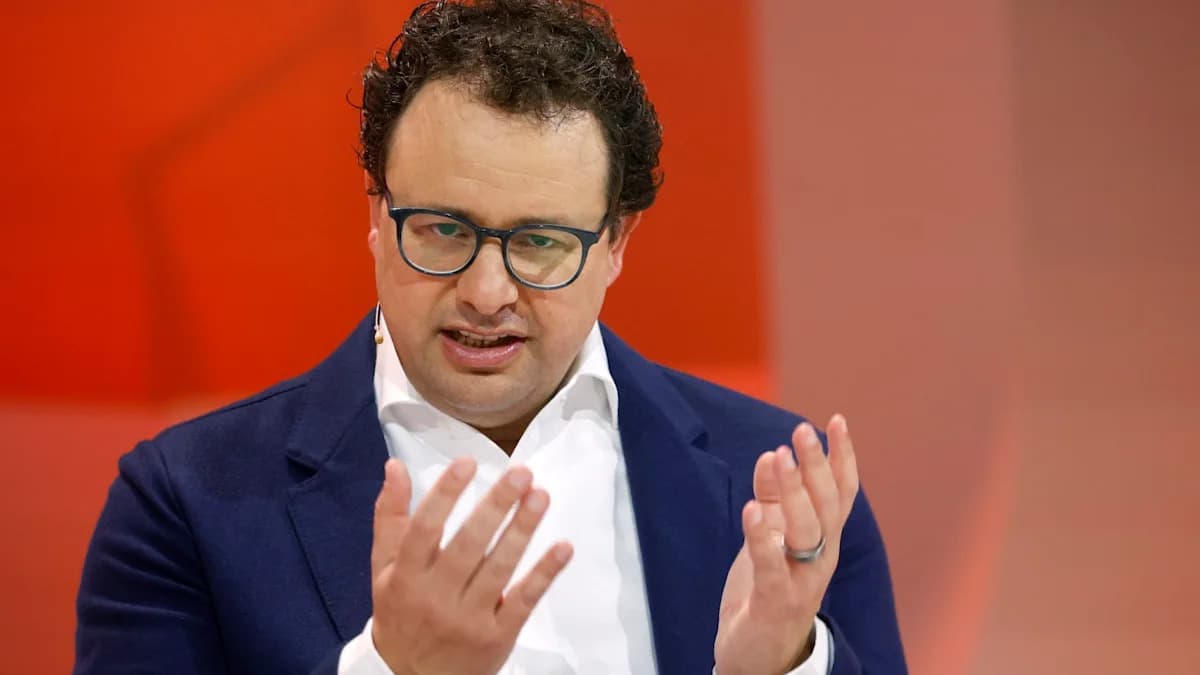
Former Anthropic researcher warns AI could become 'scary' within a year
Jacob Coxon calls for international coordination to address risks as capabilities advance rapidly.
Former Anthropic researcher issues stark AI timeline warning
A former researcher from leading AI safety company Anthropic has warned that artificial intelligence capabilities could become "quite scary" within six months to a year, according to an interview with Meet the Press.
Jacob Coxon, who previously worked at Anthropic, used his appearance on the Sunday news program to advocate for what he described as "global coordination" to mitigate emerging AI risks. The interview, which aired on September 13, 2026, represents one of the more specific public timeline warnings from someone with inside knowledge of frontier AI development.
Why it matters
Coxon's warning carries particular weight given his background at Anthropic, a company founded specifically to address AI safety concerns and develop more interpretable AI systems. When researchers leave major AI labs to speak publicly about risk timelines, it often signals internal concerns about the pace of capability advancement relative to safety measures. His call for international coordination also reflects growing recognition that AI governance cannot be solved by individual companies or nations alone.
The case for coordinated response
While the brief interview excerpt does not detail specific capabilities Coxon finds concerning or what "quite scary" entails, his emphasis on global coordination suggests he views the challenge as requiring multilateral frameworks rather than fragmented national approaches.
The timing of Coxon's public statements—characterizing him as an "AI whistleblower" in the segment—comes as policymakers worldwide grapple with how to regulate rapidly advancing AI systems while maintaining innovation. His six-month to one-year timeline is notably more compressed than many public projections from AI company executives, who often frame transformative capabilities as further out.
Context from the AI safety community
Coxon joins a small but growing number of researchers who have left major AI labs to speak more freely about safety concerns. His decision to go public through a mainstream news platform like Meet the Press, rather than technical forums, indicates an effort to reach policymakers and the general public directly.
The details of Coxon's concerns and what specific coordination mechanisms he advocates for were not elaborated in the available interview content. However, his framing suggests alignment with researchers who argue that competitive pressures between AI labs may be accelerating capability development faster than safety research can keep pace.
The interview was first reported by NBC News as part of Meet the Press programming on September 13, 2026.
This is an original analysis by the Omega editorial team. Source reporting: AI Watch.
Want systems like this working for your business?
Book a Call