Ford Rehires 350 Veteran Engineers After AI Quality Tools Fail
The automaker is using experienced specialists to train staff and reprogram automation systems that couldn't match human expertise in defect detection.
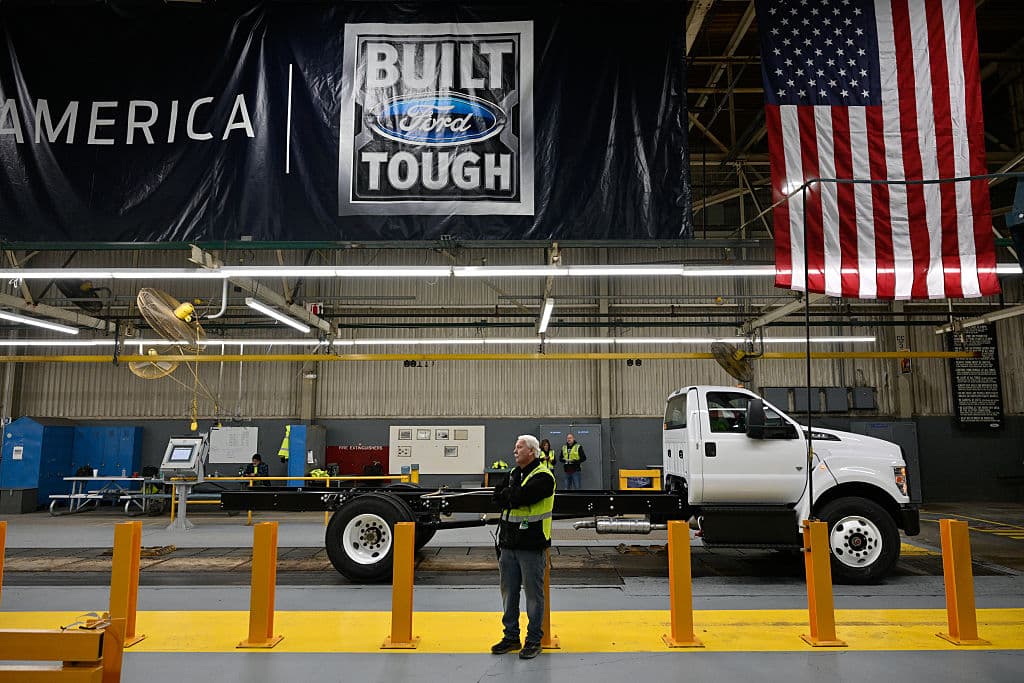
Ford reverses course on AI-driven quality control
Ford has brought 350 veteran engineers back into its operations after discovering that artificial intelligence and automated quality systems couldn't deliver the defect detection the company needed. Some of the rehired specialists are former Ford employees, while others had been working at supplier companies.
The decision represents a significant course correction for the automaker, which had been increasingly relying on AI to handle quality assurance tasks. According to Bloomberg, Ford's chief operating officer Kumar Galhotra told reporters the company had been "relying more and more on automated quality systems" but found the results disappointing.
The rehired engineers—whom Ford refers to as "gray beard" specialists—now focus on identifying potential failure points before components reach the assembly line. This proactive approach marks a return to hands-on engineering expertise that automated systems struggled to replicate.
Why it matters
Ford's experience offers a reality check for manufacturers racing to automate quality control with AI. While the technology shows promise, this case demonstrates that complex manufacturing environments still require human judgment and experience—particularly in identifying subtle defects that could cascade into larger problems. The $1 billion in anticipated cost savings suggests that premature automation may actually be more expensive than maintaining experienced human oversight.
Learning from automation failures
Charles Poon, Ford's vice president of vehicle hardware engineering, acknowledged the company's miscalculation. "Mistakenly we thought that by just introducing artificial intelligence and ingesting the design requirements that we had, that that would produce a high-quality product," he said.
Ford isn't abandoning AI entirely. Instead, the company is using the veteran engineers to train younger employees and improve how its AI tools are programmed. This hybrid approach aims to combine institutional knowledge with automation capabilities.
The strategy appears to be working. Ford projects the rehiring initiative will reduce costs by $1 billion this year. The company also claimed the top position among mainstream brands in this week's JD Power Initial Quality Survey, suggesting the quality improvements are measurable.
The limits of automation
The case illustrates a broader challenge facing manufacturers: AI systems trained on design specifications may miss the nuanced, experience-based insights that veteran engineers bring to quality control. These specialists draw on years of seeing how designs perform in real-world conditions—knowledge that's difficult to codify in training data.
For other companies pursuing aggressive automation strategies, Ford's experience suggests that experienced human oversight remains essential, at least during the transition period. The most effective approach may be using veteran employees to create better training systems for both AI tools and junior staff, rather than viewing automation and human expertise as competing alternatives.
These details were first reported by Bloomberg.
This is an original analysis by the Omega editorial team. Source reporting: AI Watch.
Want systems like this working for your business?
Book a Call