Florida Man Wrongfully Arrested After 93% Face Recognition Match
A commercial crabber spent months fighting charges after FACES, one of America's oldest police facial recognition systems, misidentified him in a crime 300 miles from his home.
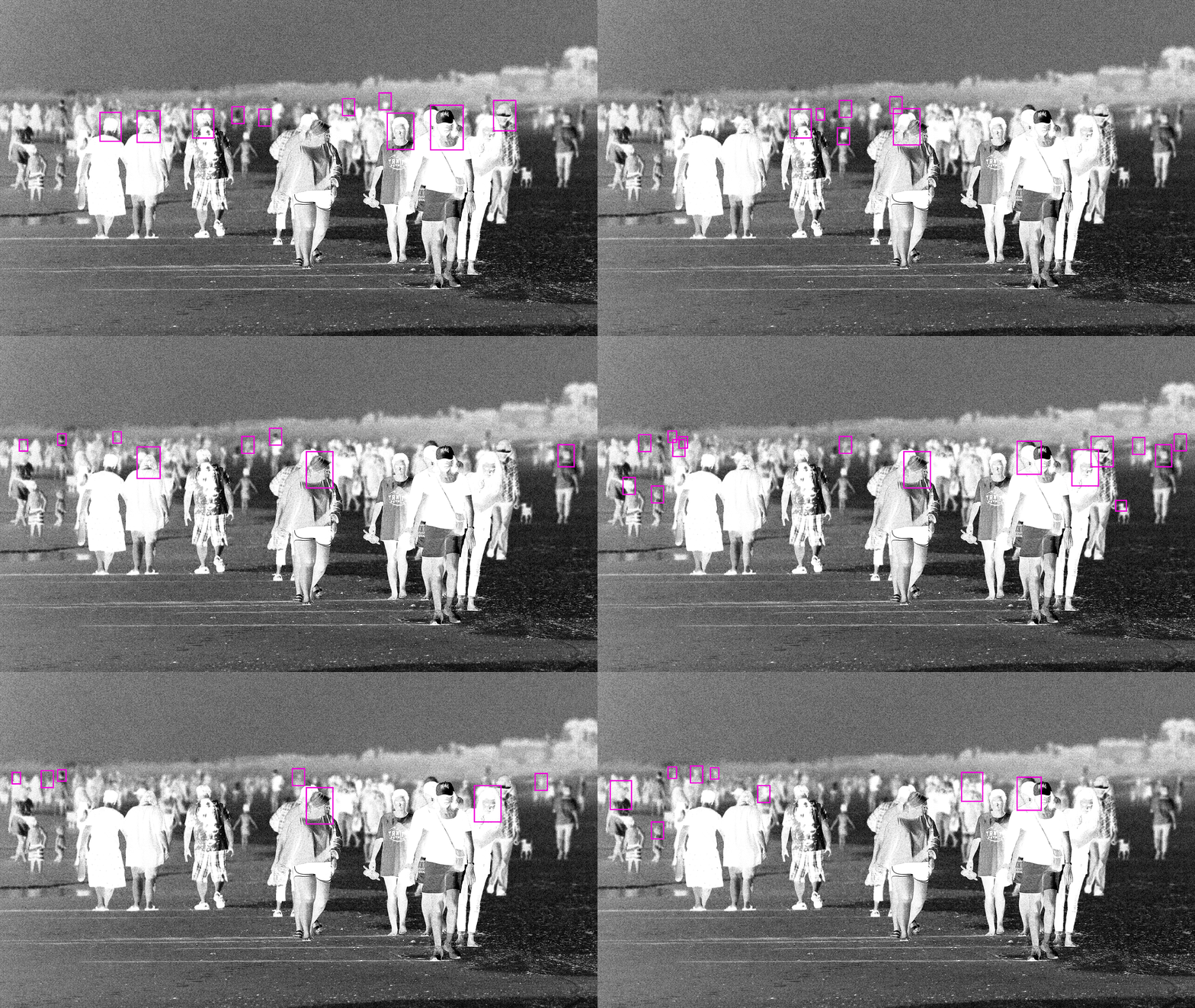
A Florida commercial crabber was arrested and held overnight after a facial recognition system incorrectly matched him to a suspect in a child luring case that occurred more than 300 miles from his home, according to a lawsuit filed Wednesday by the American Civil Liberties Union.
Robert Dillon, 52, of Fort Myers, was arrested in August 2024 following a "93 percent match" generated by FACES, a facial recognition database operated by Florida's Pinellas County Sheriff's Office. The system, which has been in operation since 2001 and contains tens of millions of Florida mugshots and driver's license photos, is one of the longest-running police face recognition tools in the United States.
How the misidentification unfolded
The case began in November 2023, when a man allegedly approached a girl under 12 at a Jacksonville Beach McDonald's and repeatedly asked her to leave with him. After the girl refused and called for her mother, the suspect left before police arrived.
A Jacksonville Beach police officer sent surveillance photos to surrounding agencies. A Jacksonville Sheriff's Office sergeant ran the images through FACES, which returned Dillon's name with a 93 percent confidence score. These scores indicate how similar two images appear to the algorithm—not the probability that they show the same person.
According to the complaint, several facts contradicted the match. A McDonald's manager told investigators the suspect was a "regular customer" she had seen multiple times. Dillon says he had never visited Jacksonville Beach. License plate reader searches for two vehicles registered to Dillon found no hits in the county around the time of the incident. The complaint alleges these negative results were omitted from the warrant application.
Six months passed with no additional investigation before an officer submitted the warrant in July 2024. A judge signed it, and Dillon was arrested the following month.
The human cost
Dillon was arrested at his home in front of his wife, held overnight in a cold cell, and transported in what the complaint describes as a caged, unlit van. He pledged the title to his truck to make bond. The arrest occurred during peak stone crab season, causing him to fall behind on rent and nearly lose his home. His mugshot remained online for nearly a year until a TV reporter intervened.
Dillon pleaded not guilty in October 2024. The State Attorney's Office dropped all charges weeks later. The investigating officer was promoted by year's end.
Why it matters
Dillon's case represents at least the 15th known wrongful arrest in the United States attributed to face recognition technology, according to the ACLU. Earlier this year, the same Jacksonville Sheriff's Office wrongfully arrested a North Carolina man based on an 85 percent match in an auto theft case. That individual spent nearly three months in jail and lost his home, job, and custody of his two children before charges were dropped.
The lawsuit highlights systemic oversight gaps in FACES operations. A 2016 Georgetown Law study found that Pinellas County Sheriff's Office conducted no audits of database searches and required no reasonable suspicion to run queries. Florida agencies have also used FACES to scan peaceful protesters, according to reporting by the Sun Sentinel and Pulitzer Center.
The lawsuit seeks compensatory and punitive damages and asks a court to order all three agencies involved to overhaul their face recognition policies. Jacksonville Sheriff T.K. Waters told local news after the case was dropped that a face recognition hit alone would not constitute probable cause in his office.
"No one should lose their freedom or be scared to leave their house because an algorithm got it wrong," said Nate Wessler, deputy director of the ACLU's Speech, Privacy, and Technology Project.
These details were first reported by WIRED.
This is an original analysis by the Omega editorial team. Source reporting: WIRED.
Want systems like this working for your business?
Book a Call
