Fermilab to Deploy AI for Particle Accelerator Control
DOE-funded project aims to use machine learning to optimize superconducting cavities, cutting costs and improving beam stability across national laboratories.
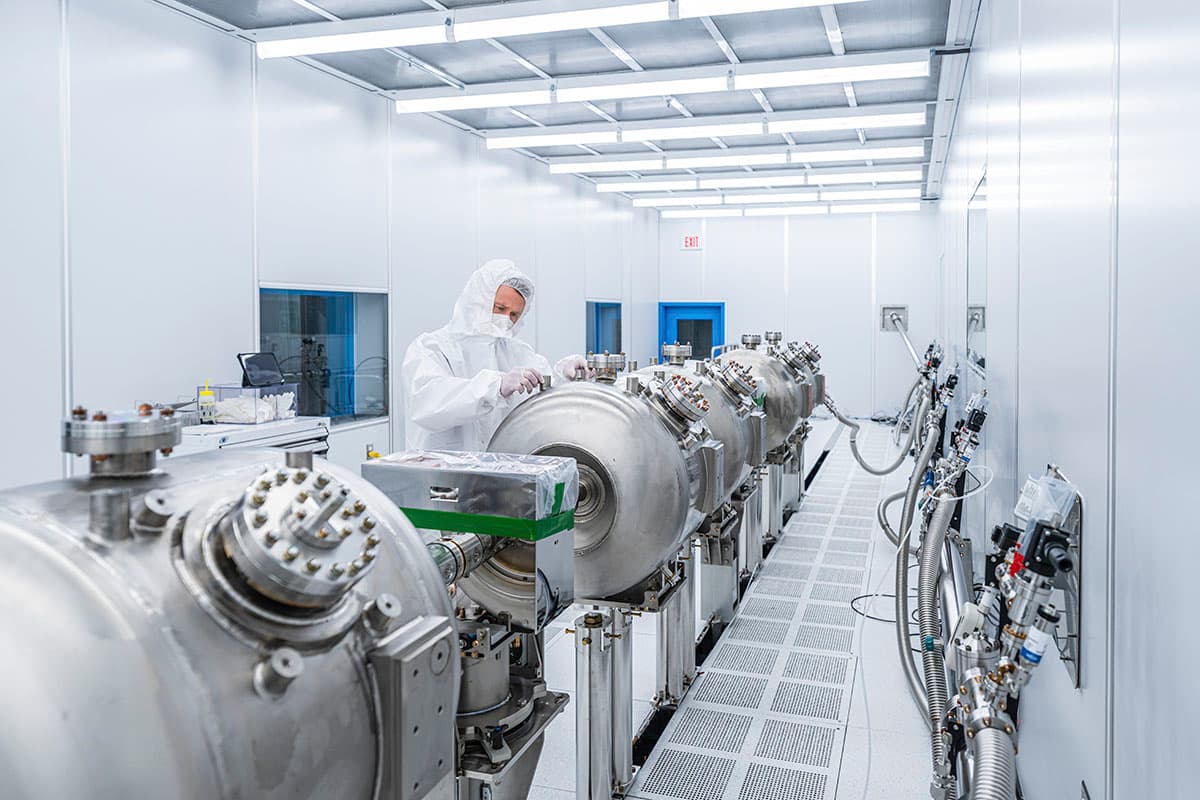
Fermi National Accelerator Laboratory will lead a Department of Energy-funded initiative to apply artificial intelligence to a critical challenge in particle physics: keeping accelerators precisely tuned as they propel subatomic particles to near light-speed.
The project, selected under DOE's Genesis Mission program, targets superconducting radio-frequency (SRF) cavities—the components that transfer energy to particle beams through carefully timed electromagnetic pulses. When these cavities drift off their resonant frequency due to pressure changes, vibrations, or field variations, they waste power and can cause beam shutdowns. The Fermilab-led team will develop AI and machine learning algorithms to automate resonance control with far greater precision than current methods allow.
Why it matters
Particle accelerators underpin experiments that probe fundamental physics, but they're expensive to operate. Better resonance control could save millions of dollars annually in power costs while improving beam stability and extending equipment lifespans. The research also addresses a talent shortage in low-level radio-frequency engineering by training specialists at the intersection of AI and accelerator technology—skills that transfer to industrial applications like semiconductor manufacturing.
How resonance control works
SRF cavities must maintain a specific resonant frequency to efficiently build up the electromagnetic fields that accelerate particles. Even small deviations consume power that could otherwise increase beam energy. Scientists currently use mechanical tuners to squeeze cavities back into tune, but AI promises to learn and adapt to each cavity's behavior over time.
"Controlling resonance is a critical area of development for particle accelerator facilities, potentially saving millions of dollars a year on operating costs, optimizing power consumption and improving beam stability for accurate scientific results and increasing equipment lifetimes," said Matthias Liepe, a Cornell University professor collaborating on the research.
Large accelerators contain more than 100 cavities, each with unique characteristics. Machine learning can tailor control strategies to individual cavities and adjust as conditions change.
Testing ground at PIP-II
The Proton Improvement Plan-II accelerator at Fermilab will serve as a key testbed. PIP-II is designed to deliver the world's most intense neutrino beam for the Deep Underground Neutrino Experiment. The accelerator will initially run cavities at full field strength between beam pulses, but reducing field strength during gaps would cut power and cooling costs significantly.
The challenge: frequency shifts during field ramp-up and ramp-down make resonance control harder. The research team will test whether AI-enhanced controls can handle pulsed operation reliably while avoiding unplanned shutdowns.
Building a shared framework
Beyond performance gains, the project aims to establish common data standards for resonance control across DOE facilities. Currently, each laboratory measures cavity detuning differently, preventing data pooling and limiting controller portability between machines.
"An AI layer built on that platform benefits every facility running it," said Dan Wang, institutional lead from Lawrence Berkeley National Laboratory. "That is what we want to show the Genesis Mission community: better and lower-cost operation of SRF cavities, but also how AI can close fast control loops on real hardware."
The collaboration includes Lawrence Berkeley National Laboratory, SLAC National Accelerator Laboratory, Argonne National Laboratory, Brookhaven National Laboratory, Cornell University, Michigan State University, Toyota Technological Institute at Chicago, University of Michigan, Japan's High Energy Accelerator Research Organization, and industry partner xLight Inc.
Details were first reported by Fermi National Accelerator Laboratory.
This is an original analysis by the Omega editorial team. Source reporting: AI Watch.
Want systems like this working for your business?
Book a Call