Federal Judge Blocks Vermont AI Election Law Enforcement
A preliminary injunction halts the attorney general's investigation into a satirical video, testing new synthetic media regulations.
A federal judge has blocked Vermont's attorney general from enforcing the state's new AI-generated media law against a political satirist, marking the first significant legal test of regulations designed to combat synthetic election content.
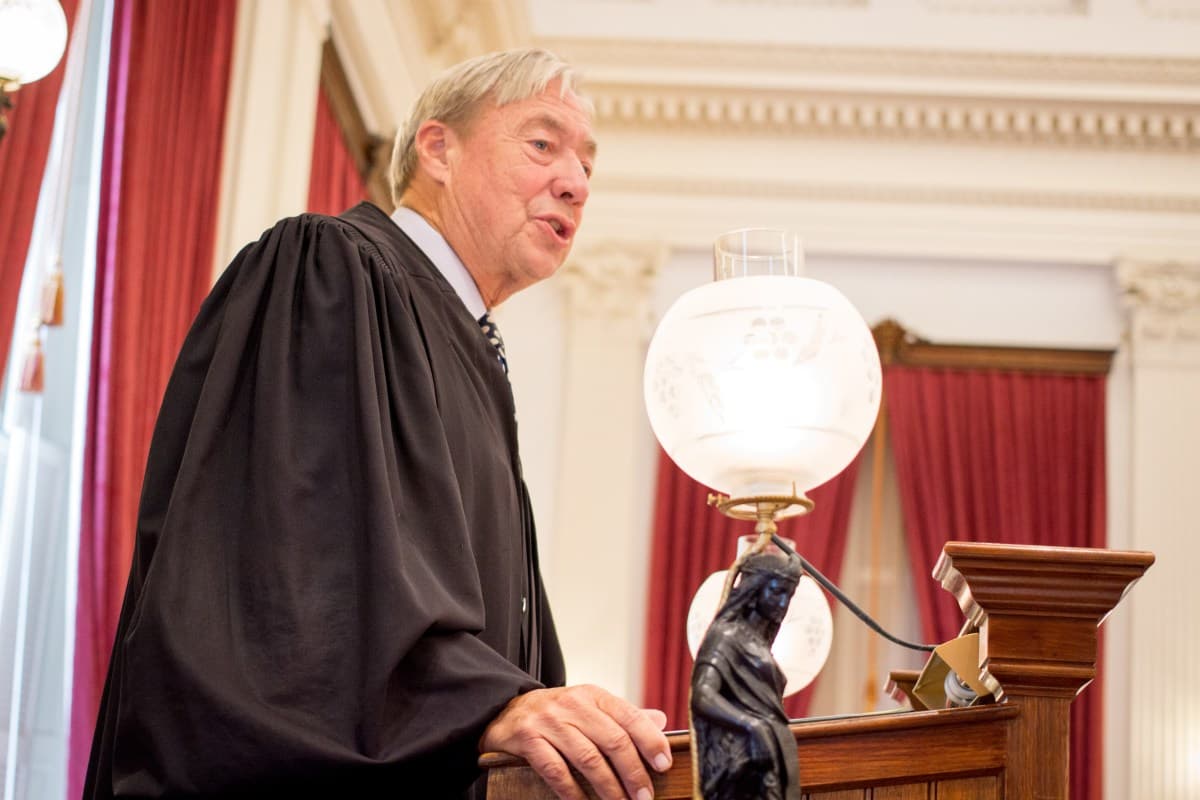
Senior U.S. District Judge William K. Sessions III issued a preliminary injunction Tuesday preventing Attorney General Charity Clark from pursuing an investigation into Hank Poitras, who creates political commentary videos under the name "Planet Hank." The ruling centers on a June video that used AI-generated likenesses of U.S. Rep. Becca Balint and then-Republican congressional candidate Mark Coester.
The satirical video at issue
Poitras posted the video titled "Mark Helps Vermont Take Out The Trash" on June 7, two months before Vermont's August 11 primary election. The video depicts an AI-generated version of Coester criticizing Balint's campaign before using an excavator to lift her into a trash bin outside the Vermont Statehouse. A narrator concludes: "Help fight back against evil. Help Vermont take out the trash."
Five days after publication, the attorney general's office notified Poitras of an investigation into whether the video violated Act 75, Vermont's synthetic media disclosure law enacted in March. The office offered to close the investigation if Poitras added a disclaimer identifying the content as digitally manipulated. Instead, Poitras filed a lawsuit on July 8 challenging the law as a First Amendment violation.
Judge's reasoning on protected speech
Sessions found that Poitras would likely prove the investigation violated his First Amendment rights. The judge wrote that the video's "ridiculous nature" qualified it as protected satirical speech, noting that the voice-over, unnatural appearances of the depicted individuals, and the events themselves created an unmistakably satirical character.
The ruling also indicated the video appeared to qualify for Act 75's explicit exemption for satire and parody. Act 75 requires synthetic media that damages a political candidate's reputation and is published within 90 days of an election to carry a disclaimer. However, the law includes exceptions for clearly satirical content.
Sen. Brian Collamore, who sponsored the legislation, said the judge's decision aligned with lawmakers' intent. "One of the provisions was an exemption to the law if it was clearly satirical," Collamore said, adding that most reasonable people would consider Poitras' video satirical.
Why it matters
This preliminary injunction exposes the tension between regulating deceptive AI-generated election content and protecting political satire. As states rush to address synthetic media threats to election integrity, Vermont's experience demonstrates the difficulty of crafting enforceable standards that survive First Amendment scrutiny. The case could influence how other jurisdictions approach similar legislation, particularly regarding exemptions for parody and the threshold for what constitutes obviously satirical content.
Broader legal challenge continues
The preliminary injunction applies only to the specific June 7 video and the resulting investigative demand. Poitras' lawsuit challenges Act 75 more broadly, alleging five First Amendment violations and one 14th Amendment violation. His attorney, Brady Toensing, said they intend to seek a permanent injunction preventing enforcement of Act 75 against Poitras and others.
Lauren Jandl, Clark's chief of staff, said the attorney general's office is reviewing the decision and determining next steps. "The Attorney General's Office supported the synthetic media disclosure law because transparency and the integrity of elections are critical," Jandl wrote.
Mark Coester, who lost the Republican primary to Gerald Malloy, said the investigation was unjustified despite the video's unflattering portrayal of him. "It's just really sad that it's the citizens that pay the price for legislation that's unconstitutional in the first place," Coester said.
These details were first reported by VTDigger.
This is an original analysis by the Omega editorial team. Source reporting: AI Watch.
Want systems like this working for your business?
Book a Call