Federal Court Overturns Pentagon Ban on Anthropic AI Models
Judge ruled the Defense Department's designation of Claude as a supply chain risk was illegal after the company refused to remove safety restrictions.
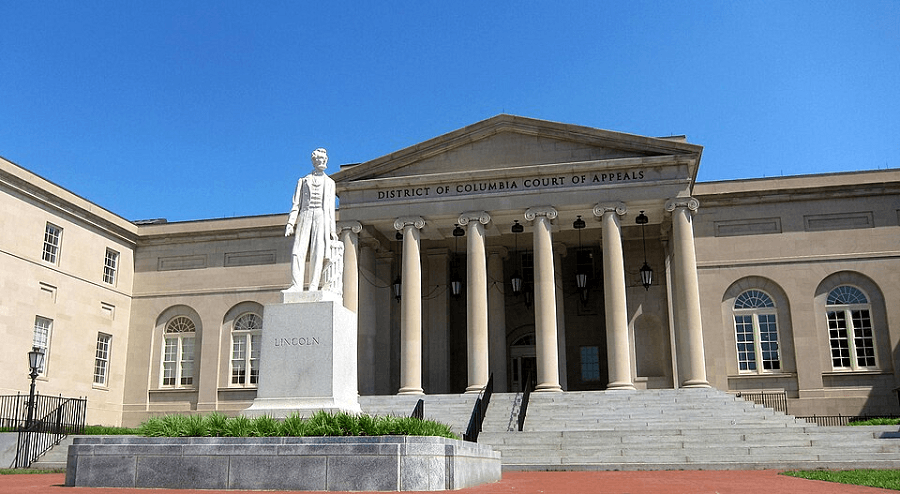
Court strikes down Defense Department restrictions
A federal judge has overturned the Pentagon's ban on Anthropic's Claude AI models, ruling that the Defense Department acted illegally when it designated the company as a supply chain risk. Judge Rita Lin of the U.S. District Court for the Northern District of California issued the ruling late Thursday, calling the Pentagon's actions "illegal and baseless."
The dispute originated in fall 2025 when the Defense Department sought to integrate Claude into GenAI.mil, an internal government AI platform. Negotiations broke down over Anthropic's terms of use, which prohibit customers from using Claude for mass surveillance of Americans or developing autonomous weapons systems.
The contract dispute that triggered federal action
When the Pentagon requested that Anthropic replace its safety provisions with language permitting "all lawful uses" of Claude, the company declined. President Donald Trump subsequently banned federal agencies from using Anthropic's models, while Defense Secretary Pete Hegseth designated the company as a supply chain risk. That designation extended the prohibition to defense contractors as well.
Anthropic filed suit in March to challenge the ban. During court proceedings, the Defense Department advanced two primary arguments. First, officials claimed Anthropic maintained "backdoor access" to its technology once deployed in national security systems. The Pentagon later conceded this assertion was false.
"It is now clear that Anthropic undisputedly lacks any such access," Judge Lin wrote in her order, noting that Claude poses no greater security risk than any other AI model.
First Amendment concerns in AI policy
The Pentagon's second justification centered on Anthropic CEO Dario Amodei's public criticism of government AI policies. In January, Amodei published an essay warning about risks from AI-enabled surveillance and autonomous weapons, then discussed these concerns in multiple media interviews.
Judge Lin rejected this reasoning entirely. "Neither the Constitution nor the federal statute invoked by Defendants allows them to impose sweeping penalties based principally on Anthropic's critique of the Administration's views," she wrote.
The court also highlighted inconsistencies in the Pentagon's position. The Defense Department had been using Claude since March 2025 and had indicated Anthropic might be designated as essential to national security shortly before announcing the ban.
Why it matters
This ruling establishes important precedent for how AI companies can set ethical boundaries on their products without facing government retaliation. The decision affirms that federal agencies cannot penalize companies for public policy advocacy or impose supply chain restrictions based on demonstrably false security claims. For the defense industry, the case clarifies that AI safety provisions in commercial terms of use do not automatically constitute national security risks.
Path forward remains unclear
While Judge Lin's order reverses the ban, full resolution requires additional action. Anthropic filed a parallel complaint with the U.S. Court of Appeals for the D.C. Circuit in March. According to reporting by CNBC, that judge must also rule in the company's favor before the Pentagon's restrictions are officially lifted.
"We welcome the court's ruling that this supply chain risk designation was unlawful," Anthropic said in a statement. "We remain focused on working productively with the government to harness AI for our national security so all Americans benefit from this technology."
The details of the court ruling were first reported by SiliconANGLE.
This is an original analysis by the Omega editorial team. Source reporting: AI Watch.
Want systems like this working for your business?
Book a Call
