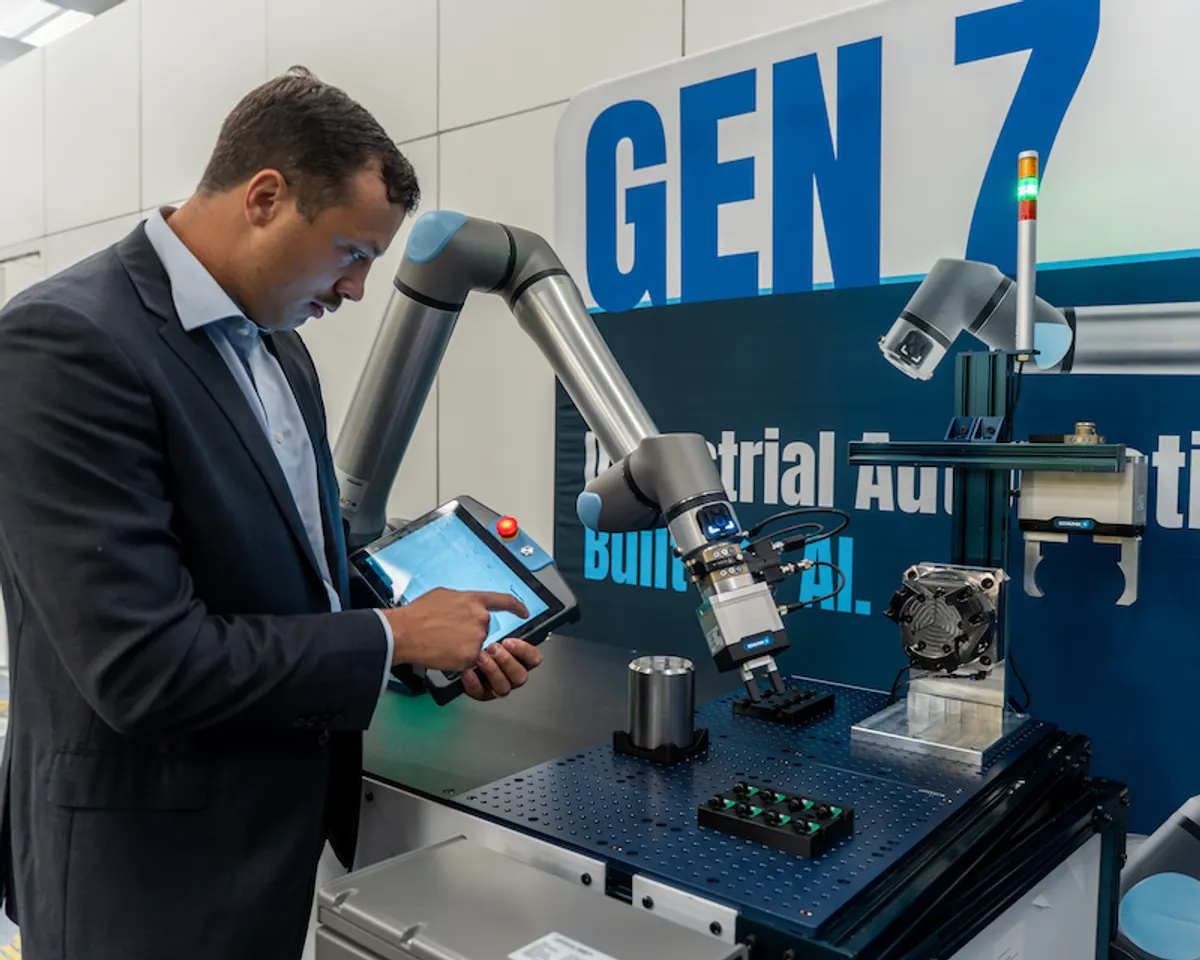
Europe Targets Industrial AI to Revive Manufacturing Sector
Companies like Siemens and Schneider are deploying AI on factory floors to optimize production and reduce waste as the region fights to maintain competitiveness.
Europe pivots to shop-floor AI as competitive strategy
European manufacturers are making a strategic bet on industrial artificial intelligence as pressure mounts to improve efficiency and preserve the region's manufacturing base. Rather than competing in consumer-facing AI applications dominated by U.S. tech giants, European industrial technology firms are focusing on bringing machine learning directly to production lines.
At a Kellanova potato chip facility in Kutno, Poland, AI systems from Siemens AG now manage the complexities of producing 100 million Pringles cans with consistent quality despite constantly varying agricultural inputs. The system uses sensors, lasers, and cameras to monitor variables including humidity and protein content, then continuously adjusts recipes in real time to compensate for changing raw material characteristics before quality issues emerge or waste occurs.
The approach represents a practical application of AI that addresses a fundamental manufacturing challenge: maintaining product consistency when working with natural materials that vary by season, weather, and source.
Why it matters
Europe's industrial sector faces mounting competitive pressure from lower-cost manufacturers in Asia and more digitally advanced operations in the United States. Industrial AI represents one of the few technology domains where European companies maintain strong positions through established relationships with manufacturers and deep domain expertise in production processes. Success in this niche could help preserve high-value manufacturing jobs and technical leadership even as the region lags in consumer AI applications.
Predictive maintenance gains traction
German laser manufacturer Trumpf has implemented AI-powered predictive maintenance systems to minimize production disruptions. By analyzing equipment performance data, these systems can identify potential failures before they occur, allowing maintenance to be scheduled during planned downtime rather than responding to unexpected breakdowns that halt production.
The industrial AI market differs fundamentally from consumer applications. Rather than processing natural language or generating images, these systems must integrate with legacy industrial equipment, operate in harsh factory environments, and deliver measurable returns through reduced downtime, lower waste rates, and improved quality control.
European firms leverage existing advantages
Companies like Siemens and Schneider Electric enter the industrial AI race with significant advantages: decades of relationships with manufacturers, deep understanding of production processes, and existing installed bases of industrial control systems. These firms are now adding AI capabilities to equipment and software that already sits on factory floors across the continent.
The strategy acknowledges Europe's limited ability to compete with the massive compute resources and consumer data pools that fuel AI development in the United States and China. Instead, European industrial technology companies are applying AI to solve specific, high-value problems where their domain expertise provides competitive moats.
These details were first reported by Bloomberg.
This is an original analysis by the Omega editorial team. Source reporting: AI Watch.
Want systems like this working for your business?
Book a Call