EU proposes social media ban for children under 13
Commission President Ursula von der Leyen announced the measure during her State of the European Union address, targeting Big Tech's influence on minors.

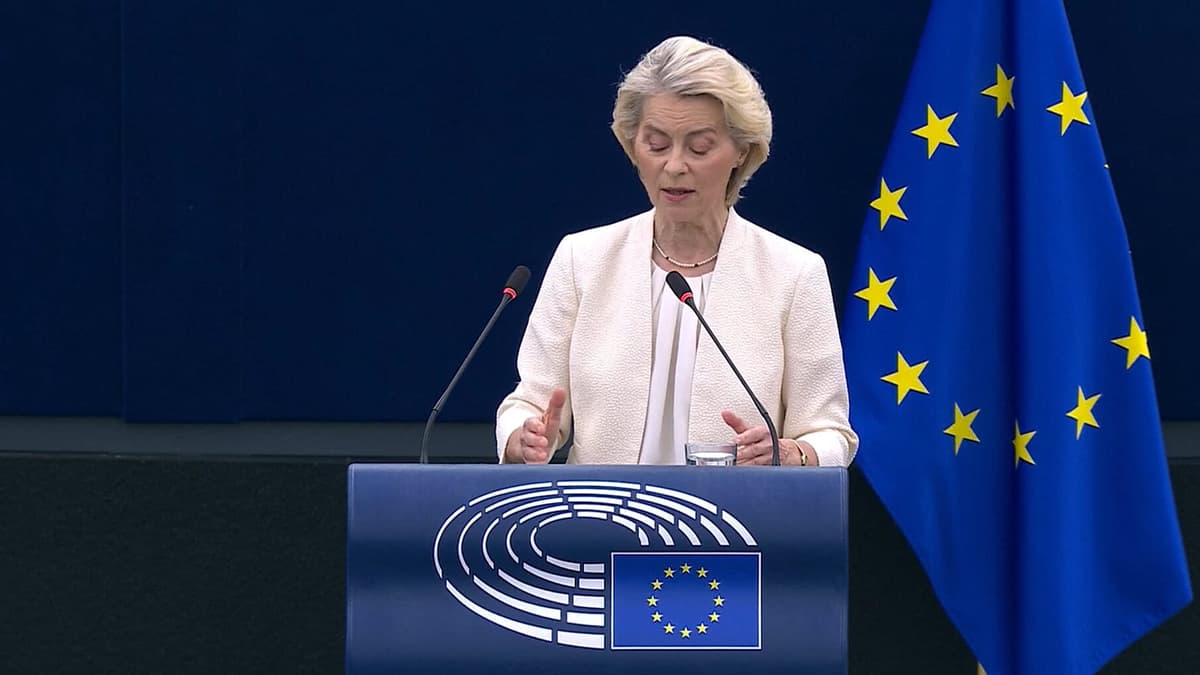
European Commission President Ursula von der Leyen unveiled a proposal Wednesday to prohibit children under 13 from accessing social media platforms, online games, and chatbots, marking one of the most aggressive regulatory moves yet against Big Tech's reach into young users' lives.
The announcement came during von der Leyen's annual State of the European Union speech in Strasbourg, where she directly challenged the notion that technology companies wield unstoppable influence over digital spaces.
The proposal's structure
Under the plan, children aged 13 to 15 would be permitted to use "mini accounts" supervised by guardians. Von der Leyen framed the measure as a necessary intervention against what she characterized as predatory platform design.
"We do not have to accept addictive features. We do not have to accept children being drawn into ever more extreme content. We do not have to accept that girls have their photos used for AI-generated sexualized images," von der Leyen said during her address.
The proposal now moves to the EU's 27 member nations for a vote.
Why it matters
This proposal represents the EU's most direct attempt to regulate children's access to digital platforms at the bloc level, potentially setting a global precedent for age-based restrictions. If approved, it could force major technology companies to implement strict age verification systems across their European operations and fundamentally reshape how platforms design features for younger demographics. The measure also signals Europe's willingness to impose structural limitations on technology companies rather than relying solely on content moderation or transparency requirements.
Potential friction with the U.S.
The move could intensify tensions between Brussels and Washington. The proposal arrives at a moment when U.S. President Donald Trump has repeatedly criticized European technology regulations as overreach. Von der Leyen's explicit rejection of Big Tech's perceived dominance—stating "I am aware that many perceive the power of Big Tech as overwhelming and impossible to roll back. I disagree"—suggests the Commission is prepared for potential diplomatic friction.
The proposal builds on the EU's existing framework of digital regulations, including the Digital Services Act and Digital Markets Act, which have already imposed significant compliance requirements on large technology platforms operating in Europe.
Details of the proposal were first reported by The Associated Press.
This is an original analysis by the Omega editorial team. Source reporting: The Verge.
Want systems like this working for your business?
Book a Call