ENvue Medical Debuts Robotic AI System for Feeding Tube Placement
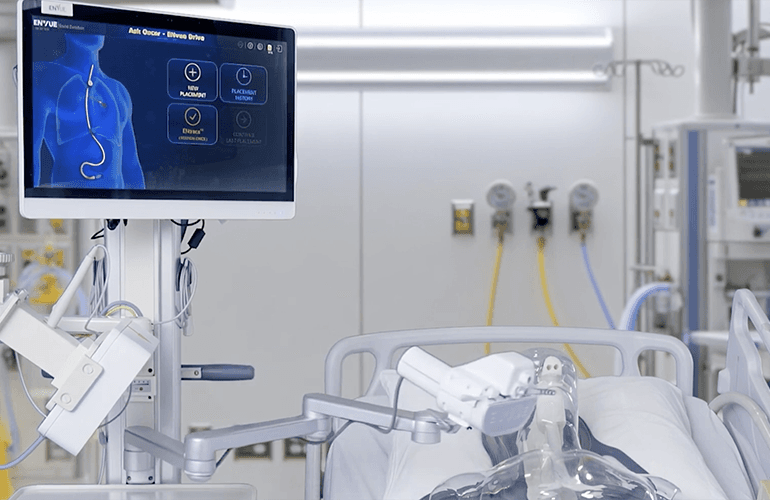
The ENvue Drive prototype combines electromagnetic navigation with AI guidance and robotic assistance for bedside enteral access procedures.
ENvue Medical introduces robotic feeding tube technology
ENvue Medical has unveiled a working prototype of ENvue Drive, a robotic-assisted system designed to guide feeding tube placement at the bedside. The Tyler, Texas-based company, formerly known as NanoVibronix, demonstrated technology that merges electromagnetic navigation, artificial intelligence, and robotic tube advancement into a single clinical platform.
The prototype demonstration showed the system's ability to map anatomical pathways, identify when the tube deviates from its intended trajectory, offer corrective guidance, and assist in advancing the tube to its target location in the small intestine. Throughout the procedure, a clinician maintains full supervisory control.
Building on FDA-cleared navigation technology
ENvue Drive extends the company's existing ENvue Navigation Platform, which already has FDA clearance and is deployed in hospitals across the United States. That foundation system provides real-time electromagnetic guidance during enteral feeding tube insertion.
The new robotic tool incorporates ENvue's proprietary Ask Oscar AI software, which currently serves education and training functions. The company has now adapted Ask Oscar's architecture to support procedural guidance and robotic-assisted execution during actual clinical procedures.
Why it matters
Feeding tube placement is a common bedside procedure that traditionally depends entirely on clinician skill and experience. Misplacement can lead to serious complications, including aspiration pneumonia or delayed nutrition delivery in critically ill patients. A system that combines real-time navigation with AI-guided robotic assistance could reduce placement errors and procedure time while maintaining clinician oversight. This represents a broader shift toward intelligent automation in routine hospital procedures, where technology augments rather than replaces human judgment.
Clinician supervision remains central
Dr. Doron Besser, Chief Executive Officer of ENvue Medical, emphasized that the technology is designed to assist clinicians rather than operate autonomously. "For decades, bedside medicine has relied on training, experience, and manual execution," Besser said. "We believe the next major advance will come from combining navigation, intelligence, and automation into a unified platform that assists clinicians throughout the procedure."
The company positions ENvue Drive as the first next-generation robotic tool within its electromagnetic navigation platform ecosystem, integrating multiple technologies into what it describes as a unified clinical workflow.
These details were first reported by MassDevice.
This is an original analysis by the Omega editorial team. Source reporting: Automation Watch.
Want systems like this working for your business?
Book a Call