Engineers Build AI Verification Tools to Enable Future Slowdown Treaties
A small UK consultancy is prototyping data center monitoring systems that could verify compliance with international AI development agreements—if governments ever agree to them.
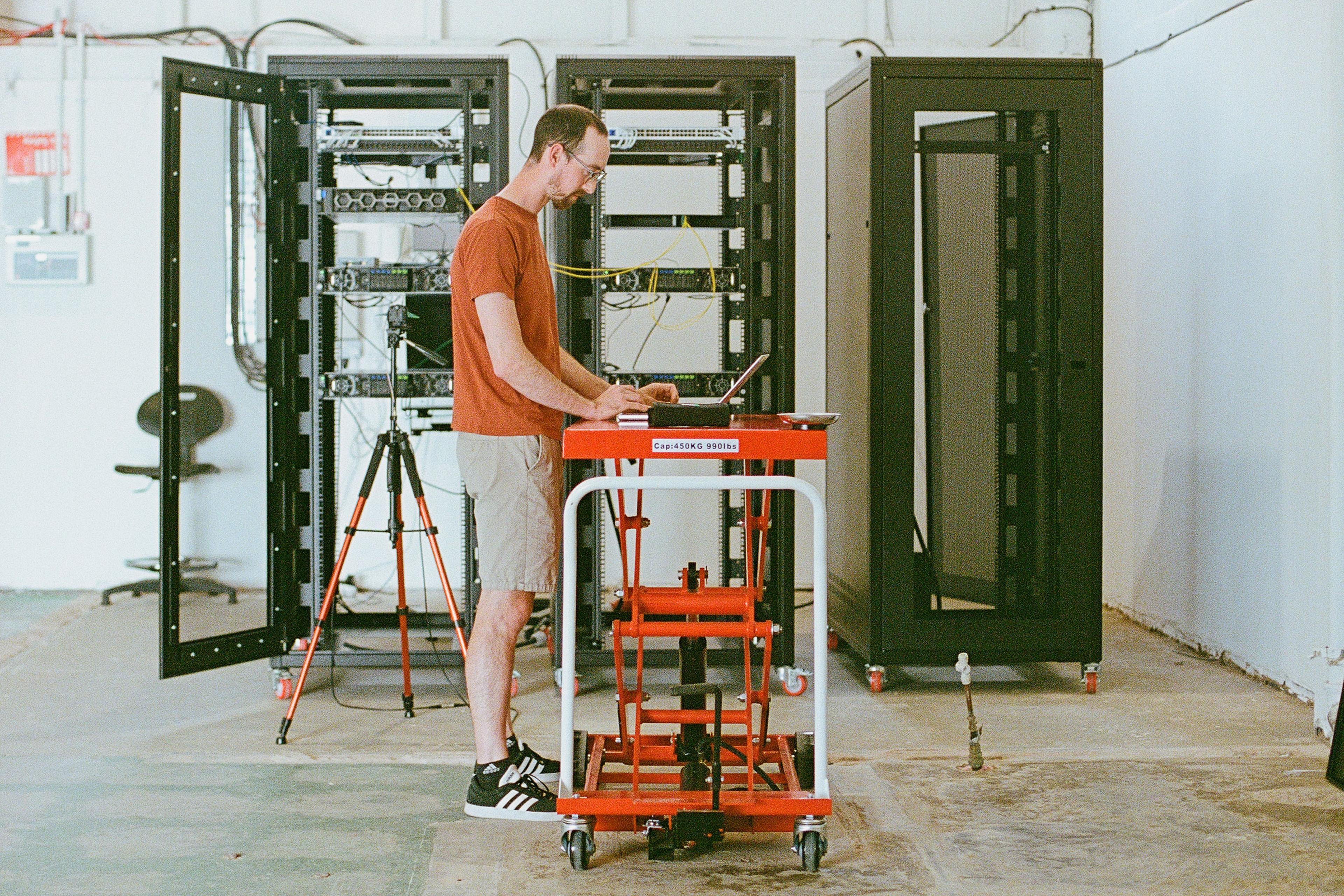
In a Sheffield office, engineers at consultancy Amodo Design are testing a compact server cluster that could one day help verify whether the world's most powerful AI companies are honoring international agreements to slow development.
The prototype represents an emerging field called AI verification—technology designed to monitor data centers and confirm they're only running approved AI models, not secretly training more powerful ones. It's a response to warnings from more than 1,300 AI researchers who signed an open letter in late July calling the AI race an arms-race dynamic where no single company or country can afford to slow down without losing ground to competitors.
Why it matters
Without verification mechanisms, any international agreement to slow AI development would be unenforceable. The Cold War arms race only became manageable once satellites and seismometers allowed mutual verification of compliance. AI researchers believe a similar technological foundation is needed before governments will consider slowdown treaties—but fewer than 50 engineers worldwide are working full-time on building these tools, according to Amodo CEO Tom Milton.
How the technology works
Amodo's current prototype aims to provide two key assurances about a data center: that it's only running existing AI models (inference) rather than training new ones, and that it's running a specific, approved model that has passed safety tests.
The system works by creating a "verifier" that samples data from a data center and reruns calculations on its own copy of the model, confirming the original matches what operators claim. In demonstrations, the system successfully identified the correct model with high certainty.
But significant obstacles remain. The prototype currently requires unencrypted data, making it unsuitable for sensitive workloads. It also demands substantial computing power—between one-fifth and one-third of the capacity of the model being monitored—which would reduce data center profitability. And implementation would require "network tapping" inside some of the world's most secure facilities housing trillion-dollar intellectual property.
Milton acknowledges these limitations but expects improvements over time, drawing parallels to nuclear and chemical weapons inspections that verify compliance without revealing operational secrets. Amodo plans to open-source its work so all parties can examine it for security vulnerabilities. The company's work is funded by the Survival and Flourishing Fund and Longview Philanthropy.
Political headwinds
The technology faces an even larger barrier: political will. White House science policy director Michael Kratsios said in February that the U.S. "totally reject[s] global governance of AI," calling for innovation free from "overly burdensome regulation." China continues pursuing open-weight model releases to catch up with U.S. capabilities. Neither superpower appears eager for AI treaties.
Still, interest is growing. The Institute for Progress recommended in August that the U.S. government collaborate on developing verification tools, noting that "the ability to verify that agreements are being upheld is often necessary for parties to enter into them in the first place." Anthropic announced plans to help build systems enabling credible slowdowns.
Milton expects more powerful AI models with concerning capabilities will eventually scare both governments "sufficiently" to negotiate. His team of nine engineers, working on a single-digit-million-dollar budget, aims to have the technology ready when that moment arrives.
These details were first reported by TIME.
This is an original analysis by the Omega editorial team. Source reporting: AI Watch.
Want systems like this working for your business?
Book a Call
