Enflame Technology's $910M IPO Tests Specialized AI Chip Strategy
Shanghai chipmaker bets on domain-specific architecture while rivals pursue general-purpose GPUs, as China's AI semiconductor wave continues.
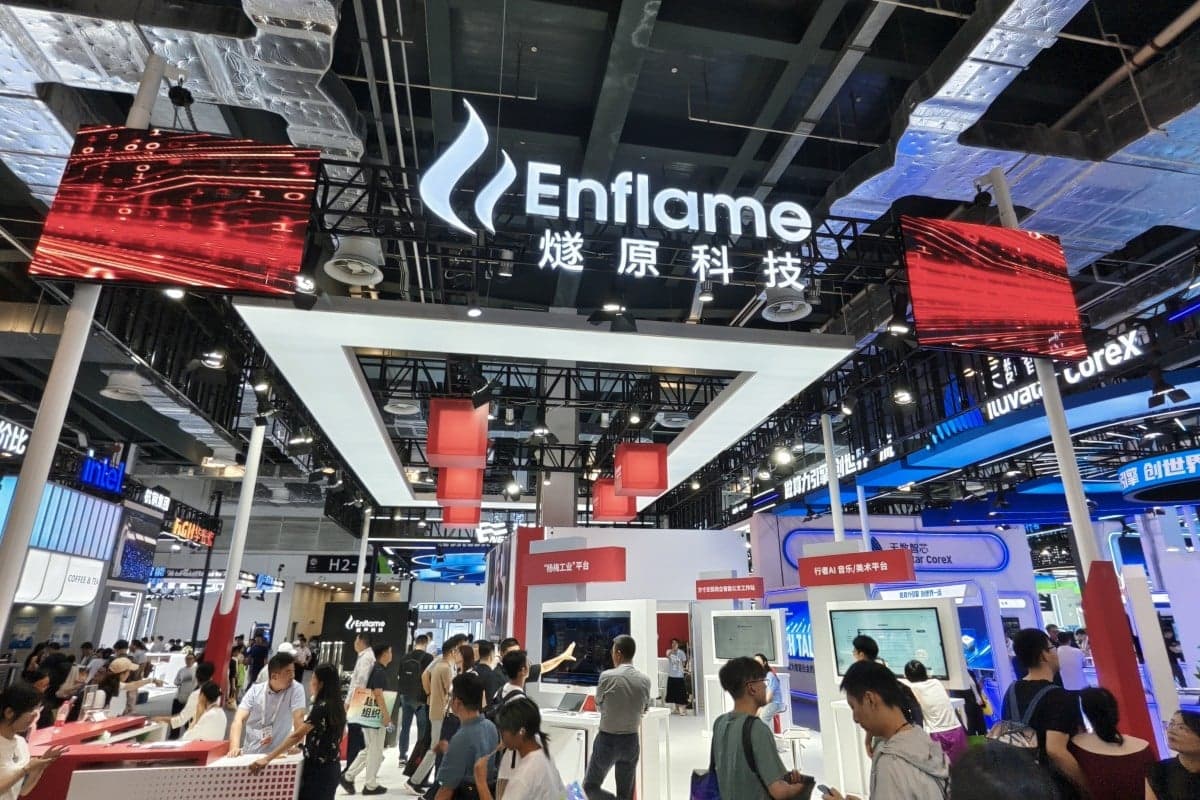
Enflame's Strategic Gamble
Enflame Technology is preparing to raise 6.12 billion yuan ($910.3 million) through an initial public offering on Shanghai's Star Market, testing whether investors will back a specialized chip architecture in a market increasingly dominated by general-purpose processors. The Shanghai-based artificial intelligence chipmaker opens subscriptions Wednesday after pricing 43.04 million shares at 142.18 yuan each, according to details first reported by the South China Morning Post.
The offering completes a remarkable fundraising cycle among China's "four little dragons" of AI chips—Enflame, Moore Threads, Biren Technology, and MetaX Integrated Circuits. Moore Threads launched an 8 billion yuan Star Market debut in December, while MetaX and Biren raised 4.2 billion yuan and HK$7 billion ($897 million) in their respective offerings.
Why it matters
Enflame's IPO reveals a fundamental strategic split in China's push for semiconductor self-sufficiency. While U.S. export restrictions on advanced Nvidia hardware have accelerated domestic chip development, Chinese manufacturers are pursuing divergent technical approaches. Enflame's bet on domain-specific architecture represents higher risk but potentially greater efficiency for targeted AI workloads—a critical consideration as Chinese companies race to build competitive large language models and AI infrastructure under technology constraints.
The Architecture Divide
Enflame faces distinct challenges that separate it from both international leader Nvidia and its three domestic competitors. The company has committed to domain-specific architecture (DSA), an advanced evolution of application-specific integrated circuits designed to maximize computing efficiency for targeted tasks like AI inference. This contrasts sharply with the general-purpose graphics processing units favored by Nvidia, Huawei Technologies, and Enflame's fellow "little dragons," which can handle diverse computational workflows.
The strategic choice carries significant implications. General-purpose GPUs offer flexibility and broader market appeal, while DSA chips promise superior performance within their specialized domains but limited versatility beyond those applications.
Dependency Concerns
Beyond its architectural approach, Enflame must address investor concerns about revenue concentration. The company faces heavy dependence on major backer Tencent Holdings, creating vulnerability if that relationship shifts or if Tencent's own AI infrastructure needs evolve. This concentration risk adds another layer of uncertainty to an already competitive landscape where Huawei and other established players command substantial resources and market presence.
The broader context favors Chinese AI chipmakers: Beijing's drive for technological self-sufficiency and nationwide AI infrastructure expansion provide tailwinds for the entire sector. However, Enflame's success will ultimately depend on whether its specialized approach can deliver sufficient performance advantages to justify narrower applicability and overcome the gravitational pull toward general-purpose solutions.
Details of Enflame's IPO plans were first reported by the South China Morning Post.
This is an original analysis by the Omega editorial team. Source reporting: AI Watch.
Want systems like this working for your business?
Book a Call