Dynatrace Acquires Arize AI to Unify Application and AI Observability
The deal addresses a fundamental shift as enterprises monitor nondeterministic AI systems and build autonomous agents that consume telemetry data.
Dynatrace has acquired Arize AI in a move that signals observability platforms must evolve beyond monitoring deterministic software to handle the unpredictable behavior of AI applications and autonomous agents.
The acquisition brings Arize's AI observability, evaluation, and agent monitoring capabilities into Dynatrace's enterprise application observability platform. Arize's open-source Phoenix platform is used by more than 4,000 enterprises, while its managed Arize AX environment serves teams operating AI systems at production scale, according to Aparna Dhinakaran, co-founder and chief product officer of Arize AI.
Why it matters
As enterprises move AI projects from experimentation to production, they face a troubleshooting challenge that traditional observability tools weren't designed to solve. AI systems produce variable outputs even with similar inputs, and teams must evaluate response quality rather than simply checking availability. Without unified visibility across AI behavior and underlying infrastructure, organizations risk creating another isolated operational layer that adds to existing tool sprawl—75% of organizations already use between six and 15 observability tools.
The nondeterministic challenge
Traditional software produces predictable outcomes, making it relatively straightforward to identify when something breaks. AI-powered applications incorporating large language models and autonomous agents behave differently.
"Evaluating no longer just becomes about is it right or wrong," Dhinakaran explained in an interview with theCUBE Research. "It becomes about actually measuring the quality of the responses, which is just a very fundamentally different problem."
That shift requires observability platforms to move beyond infrastructure metrics and availability checks. Teams need to understand whether an AI system produced the intended response and whether that response met quality expectations.
Connecting AI telemetry to application context
AI applications don't operate in isolation. Agents call APIs, interact with databases, depend on cloud infrastructure, and connect to broader enterprise systems. When something goes wrong, the AI behavior under investigation is often just one component of a much larger software stack.
Steve Tack, chief product officer of Dynatrace, said customers were asking for deeper AI observability capabilities. Meanwhile, Arize customers wanted stronger connections between AI telemetry and traditional application telemetry. The acquisition addresses both needs by giving developers, site reliability engineers, platform teams, AI engineers, and data scientists a shared view across the application stack.
"The agent systems and the software systems are joined at the hip," Dhinakaran said. "Having this ability to not only debug agents with AI observability, but also have all the context of the software that they use to call tools or the underlying infra behind the agents … just makes us build better products."
From dashboards to autonomous action
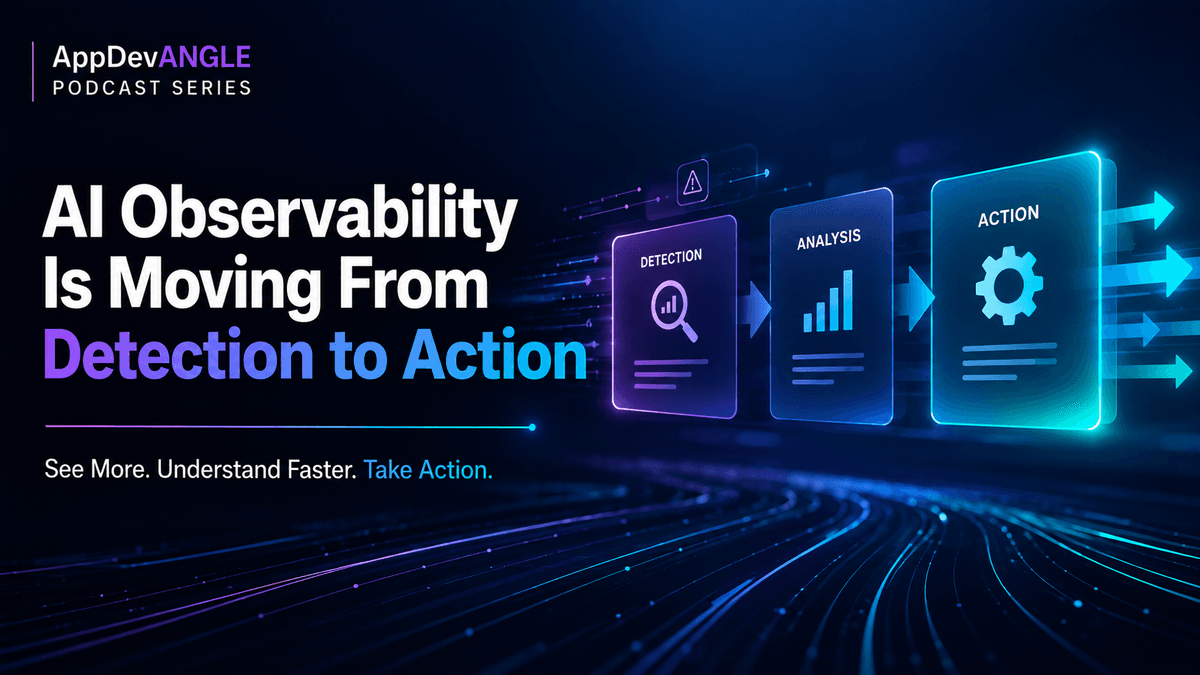
The more fundamental shift may be in who—or what—consumes observability data. For years, observability has centered on engineers examining dashboards and manually troubleshooting incidents. AI agents create the possibility of a different operational model where telemetry becomes context that software agents themselves consume to identify problems, recommend changes, or initiate remediation.
"Observability is no longer about humans looking at dashboards and metrics and logs," Dhinakaran said. "It's about action."
That changes the stakes around accuracy and context. Autonomous operations only work if organizations trust the information feeding those decisions. Tack emphasized that providing precise analytics and trustworthy answers will be essential as enterprises give agents greater operational responsibility.
Dynatrace has been moving toward this model through its Dynatrace Intelligence and BlueBox AI offering for agentic development and SRE workflows. Arize adds deeper evaluation and observability around the AI systems participating in those workflows.
Tack also described a future where architects may spend less time directly working inside development environments and more time coordinating groups of specialized agents, making observability part of the feedback loop between autonomous development and production operations.
The details were first reported by SiliconANGLE in an interview with Tack and Dhinakaran on theCUBE Research's AppDevANGLE podcast.
This is an original analysis by the Omega editorial team. Source reporting: AI Watch.
Want systems like this working for your business?
Book a Call