DOJ Backs OpenAI and Microsoft in New York Times Copyright Case
Justice Department argues AI companies should be allowed to train models on copyrighted news content, potentially reshaping fair use doctrine.
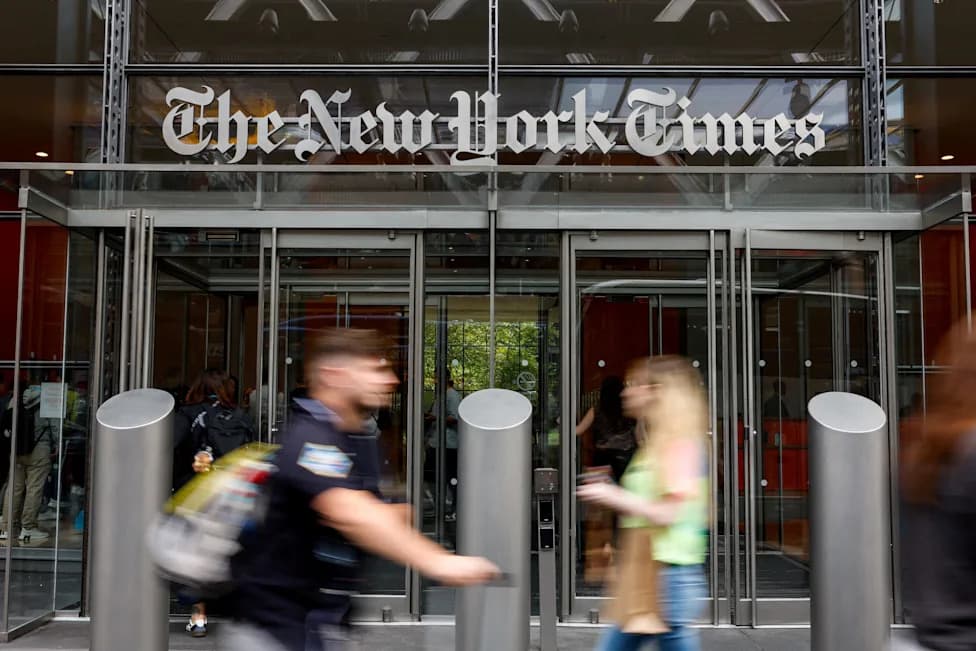
The U.S. Department of Justice has weighed in on a high-stakes copyright battle between The New York Times and major AI companies, filing a statement of interest that supports OpenAI and Microsoft's right to train artificial intelligence models on copyrighted material.
The Times filed its lawsuit in 2023 in Manhattan Federal District Court, alleging that OpenAI and Microsoft violated copyright protections by using the newspaper's content to train chatbots. In a September 2024 court filing, the Times stated the companies "stole from The New York Times to make commercial products that substitute for its journalism, threaten its business, and undermine its industry."
The newspaper seeks monetary damages, a court order blocking future training on its content, and destruction of any models already trained on Times material. OpenAI and Microsoft acknowledge their models trained on the outlet's content but maintain the practice is legally permissible under fair use doctrine.
Why it matters
The DOJ's position could establish crucial precedent for how copyright law applies to AI development. With over 100 active copyright lawsuits against AI companies and global competition in artificial intelligence intensifying, the outcome may determine whether U.S. companies can compete with international rivals operating under more permissive training regimes in countries like Japan and Singapore.
The government's argument
The Justice Department's filing argues that "constraining LLM development under a misunderstanding of fair use doctrine would thwart such creative and scientific progress while hindering American prosperity and economic mobility."
Associate Attorney General Stanley Woodward, Jr. emphasized the national security dimension, writing that "this Administration will never let our Nation be at a disadvantage relative to our foreign adversaries based on a plainly incorrect understanding of copyright law."
How AI training works
AI models use copyrighted content during two distinct phases. In pre-training, models consume large-scale data to learn language patterns and predict word sequences. Post-training, or reinforcement learning, fine-tunes these models into conversational chatbots.
The Times' lawsuit targets both stages, arguing that copyright law restricts training on protected material and requires outputs to differ substantially from inputs.
Legal perspectives diverge
Stanford Law School professor Mark Lemley told USA TODAY that "AI should be able to train on copyrighted works, though if the output copies those works (which happens sometimes, but not often) that is more likely to be infringing."
Harvard Law professor Lawrence Lessig warned that requiring companies to clear rights before training would advantage only large corporations with resources to pay licensing fees. "Training has got to be protected as fair use," Lessig said. "It would be disastrous policy — copyright policy and innovation policy — if it were not."
The New York Times maintains a narrower position. Spokesperson Graham James stated that "AI companies simply need to pay fairly for the content that makes their products possible, as copyright law requires."
The case comes amid questions about potential conflicts of interest, as OpenAI CEO Sam Altman proposed giving the government a 5% stake in the company during summer 2024.
These details were first reported by USA TODAY through reporter Greta Reich.
This is an original analysis by the Omega editorial team. Source reporting: AI Watch.
Want systems like this working for your business?
Book a Call