DOJ: AI Training on Copyrighted Works Is Fair Use
Justice Department filing challenges New York Times lawsuit, arguing copyright restrictions would hinder technological advancement.
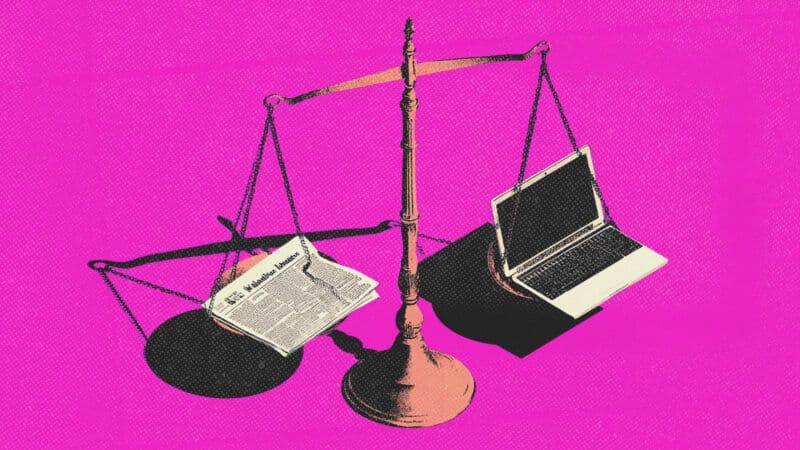
DOJ Sides With AI Companies in Copyright Dispute
The Justice Department has entered the legal battle over whether AI companies can train their models on copyrighted material without permission, filing a statement that directly challenges The New York Times' position in its lawsuit against OpenAI and Microsoft.
In a Tuesday filing with the U.S. District Court for the Southern District of New York, the administration argued that the Times' interpretation of copyright law is "inconsistent with basic copyright law principles" and could "severely hamper 'the Progress of Science and useful Arts.'" The department's core argument: training AI models on copyrighted material does not inherently violate copyright law.
The case stems from a 2023 lawsuit in which the Times accused OpenAI and Microsoft of "systematic and competitive infringement" for using its articles to develop AI models. That suit has since been consolidated with similar cases from other publishers.
The Fair Use Argument
The Justice Department's position centers on Section 107 of the Copyright Act of 1976, which permits fair use of copyrighted works for purposes including research, scholarship, and criticism. According to the filing, AI training should qualify as fair use because it serves a transformative purpose.
The Times rejects this characterization, arguing that OpenAI's models "compete with and closely mimic the inputs used to train them," effectively creating substitutes for the original content rather than transforming it. A Times spokesman said the government was "siding with a handful of 'trillion-dollar A.I. companies' at the expense of American creators," according to Reason.
Legal experts appear divided but lean toward the transformative use interpretation. Tori Noble, staff attorney at the Electronic Frontier Foundation, told Reason that training AI models on copyrighted works is "squarely what transformative use is." Satya Marar, research fellow at the Mercatus Center at George Mason University, said that while there's "no blanket fair use exception for training generative AI," the training itself is "highly likely to be deemed transformative."
Economic and Innovation Stakes
The financial implications extend beyond major tech companies. Noble noted that copyright holders frame licensing as a simple transaction cost, but for smaller developers, paying potentially billions to secure rights from individual copyright holders would be "prohibitively costly."
Nathan Goodman, senior fellow at the Mercatus Center, warned that a ruling favoring the Times could "substantially raise the direct financial costs and the transaction costs of forming a training data set," potentially impeding "iterative innovation that builds on prior existing knowledge."
The Justice Department cited the 2nd Circuit's 2015 ruling in Authors Guild v. Google, Inc., which held that using copied material for "new, transformative purposes" serves copyright's goal of "enriching public knowledge" and is less likely to substitute for the original work.
Why It Matters
This case will establish precedent for how AI companies can legally develop their models, with implications for both innovation velocity and the economics of content creation. A restrictive ruling could consolidate AI development among companies wealthy enough to negotiate licensing deals, while a permissive ruling could undermine content creators' ability to monetize their work. The irony is not lost that the Times itself uses generative AI in its newsroom and has stated the technology "helps us report stories we couldn't otherwise."
These details were first reported by Reason.
This is an original analysis by the Omega editorial team. Source reporting: AI Watch.
Want systems like this working for your business?
Book a Call