DOE awards $14M to Brookhaven Lab for AI grid planning model
GridFM project aims to simulate one billion electric grid scenarios in 24 hours to accelerate expansion planning.
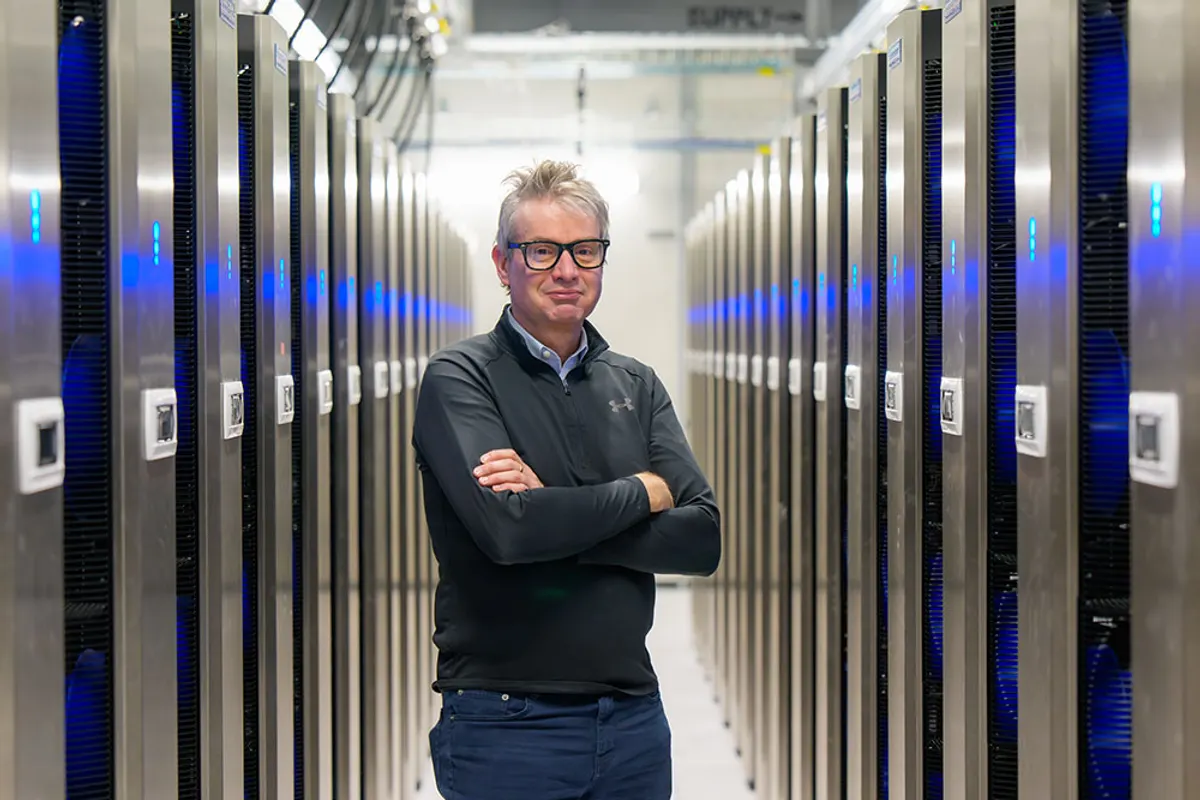
Brookhaven National Laboratory will lead a $14.2 million Department of Energy project to develop an AI system designed to dramatically accelerate electric grid expansion planning, according to details first reported by Stony Brook University.
The three-year effort, funded through DOE's Genesis Mission Phase II program, aims to build a grid foundation model (GridFM) capable of simulating one billion scenarios in 24 hours. The system would help utilities evaluate how to add new loads to the electric grid with greater speed and accuracy than current methods allow.
DOE's Office of Electricity announced the funding on September 1, with $3.9 million allocated directly to Brookhaven and the remainder distributed among collaborating institutions including Stony Brook University, the New York Power Authority, the Long Island Power Authority, National Grid, and the New York State Energy Research and Development Authority.
Why it matters
As electricity demand surges from data centers, electric vehicles, and industrial electrification, utilities face mounting pressure to expand grid capacity quickly. Traditional planning processes can take months or years to evaluate potential scenarios. An AI system that compresses this timeline to hours could remove a critical bottleneck in infrastructure development while improving reliability and cost-effectiveness.
Community-driven development approach
The GridFM initiative operates as a community project spanning more than 150 organizations across industry, academia, and government. Utilities contribute operational data and system experience, while researchers and technology providers supply AI expertise and computing resources.
Hendrik Hamann, Brookhaven's chief AI scientist for Innovation, Science, and Security and a professor at Stony Brook University, serves as principal investigator. "AI is often seen as a growing burden on the electric grid, but through the Genesis Mission we have an opportunity to turn that challenge into an advantage," Hamann said.
Yue Zhao, an associate professor of electrical and computer engineering at Stony Brook, is collaborating with Hamann on the project.
Genesis Mission context
The Genesis Mission represents DOE's effort to build what it describes as the world's most powerful integrated science discovery platform. The initiative combines AI, supercomputing, quantum systems, and advanced scientific instruments to accelerate breakthroughs in energy, scientific discovery, and national security.
This GridFM project marks the eighth Genesis Mission award associated with Stony Brook University. Six Stony Brook researchers received initial Genesis Mission Phase II awards announced in July, and another recent award went to assistant professor Yixin "Berry" Wen for developing AI methods to produce hyperlocal precipitation and flood-risk information for energy systems.
Catherine Jereza, DOE's Assistant Secretary for the Office of Electricity, said the project "represents a bold step forward to supercharge scientific discovery using artificial intelligence to modernize America's electric grid."
Brookhaven Lab Director John Hill noted the award reflects DOE's confidence in the laboratory's ability to address challenges of national importance through the integration of science, AI, and partnerships.
Details were first reported by Stony Brook University and Brookhaven National Laboratory.
This is an original analysis by the Omega editorial team. Source reporting: AI Watch.
Want systems like this working for your business?
Book a Call
