Data Centers Strain Communities With Power, Water, and Noise
As AI infrastructure expands rapidly, local residents face rising utility costs and environmental impacts with little public input.
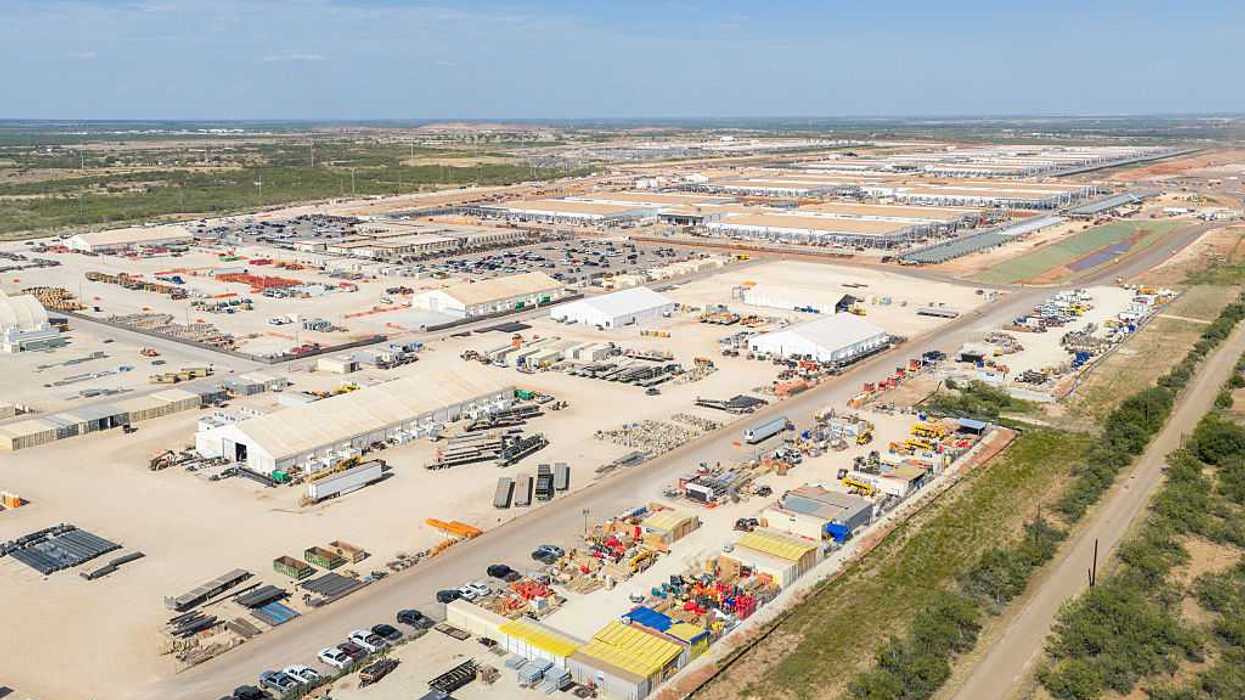
Communities across the United States are confronting an infrastructure challenge that arrives with little warning: data centers that consume enormous amounts of electricity and water, generate constant noise, and often receive approval with minimal public discussion.
The scale of the expansion is striking. Data centers consumed approximately 4.4 percent of all U.S. electricity in 2023, according to Lawrence Berkeley National Laboratory. That share could reach nearly 12 percent by 2030, and potentially exceed 15 percent under high-growth scenarios. Large facilities can consume millions of gallons of water daily, forcing communities to expand water treatment plants and power infrastructure.
The Economic Trade-Off
Proponents emphasize job creation and tax revenue. President Trump recently stated that communities rejecting data centers are "making a mistake," claiming these facilities generate "tremendous amounts of jobs and money" without burdening electrical grids because companies build their own power plants.
The reality proves more complex. While some data centers develop independent power sources, many continue drawing from existing grids. Construction employment can be substantial but temporary. A Brookings study found that counties gaining their first large data center typically added only 100 to 200 jobs over the following decade—far below the employment figures suggested by multibillion-dollar investment announcements.
Tax revenue can be considerable, though exemptions and incentives frequently reduce what communities actually collect. Meanwhile, the costs—higher electricity demand, water consumption, and noise pollution—concentrate precisely where facilities are built.
Bipartisan Resistance Emerges
Opposition has spread across political divides. Texas Governor Greg Abbott, a Republican, stated the industry "dug its own grave" by failing to secure public support. Pennsylvania Governor Josh Shapiro imposed new transparency and environmental requirements. New York Governor Kathy Hochul ordered a one-year moratorium on new hyperscale facilities.
Industry advocates characterize this resistance as NIMBYism—selfish opposition to necessary infrastructure. Yet residents are not necessarily rejecting AI technology itself. They are questioning why their communities should absorb utility cost increases, noise, and water demands without reliable information, enforceable protections, or meaningful input on whether projects proceed.
Even the Trump administration's Ratepayer Protection Pledge acknowledges risks that households could pay for new power plants and transmission lines. Major technology companies have promised to obtain needed power and cover infrastructure costs, but voluntary commitments lack legal enforcement mechanisms.
Why it matters
The data center expansion represents a fundamental test of how technology infrastructure gets built in America. Without transparency requirements, impact assessments, and genuine community input, the costs of AI development will fall disproportionately on local residents while benefits flow primarily to distant corporations and investors. The question is not whether data centers are necessary, but who decides where they are built and who pays the true costs.
The Path Forward
Congress should require companies to disclose electricity and water consumption, tax benefits received, and measures to limit noise and pollution before projects receive approval. Independent impact studies—funded by developers but conducted outside their control—should be available before public hearings. Communities should be able to negotiate enforceable agreements covering infrastructure impacts and compensation.
States and localities should retain authority over siting decisions, but participation must occur before projects become irreversible. The burden of proof should rest with companies seeking to transform communities, not with residents explaining why they value affordable electricity, clean water, and livable neighborhoods.
These details were first reported by Robert Cropf, professor emeritus of political science at Saint Louis University, writing in The Fulcrum.
This is an original analysis by the Omega editorial team. Source reporting: AI Watch.
Want systems like this working for your business?
Book a Call
