Data Centers Drive Local Heat Spikes Up to 4°F, Yale Study Shows
As AI computing demand surges, researchers quantify how waste heat from facilities warms nearby neighborhoods and strains urban infrastructure.
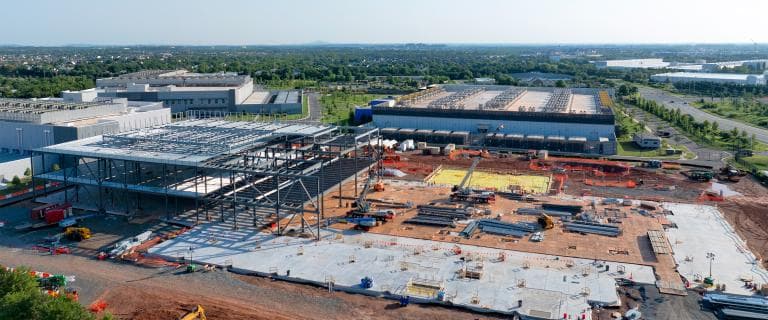
Data Centers Drive Local Heat Spikes Up to 4°F, Yale Study Shows
Data centers powering artificial intelligence workloads are creating measurable temperature increases in surrounding neighborhoods, with recent research documenting air temperature rises of up to 4°F within a half-kilometer radius of large facilities.
The findings come as communities across the United States mount growing resistance to data center construction. According to Data Center Watch, a research initiative from 10a Labs, more than 140 local groups have successfully blocked or delayed over $60 billion in data center investments in approximately one year. Cities including Denver, Minneapolis, and Seattle are now weighing municipal restrictions on new facilities.
Why it matters
The collision between AI's infrastructure needs and local environmental impacts represents a critical test case for how society will manage technology's physical footprint. With electricity demand growing for the first time in decades and communities facing tangible heat and resource burdens, the data center debate forces concrete decisions about who bears the costs of AI advancement and whether current deployment models are sustainable.
The heat island effect, amplified
Karen Seto, Frederick C. Hixon Professor of Geography and Urbanization Science at Yale, explained that nearly all electricity consumed by data centers converts to heat. Servers and computing equipment require continuous cooling, and those cooling systems discharge waste heat into surrounding areas.
Research conducted in Phoenix found that a large data center can emit waste heat equivalent to tens or hundreds of thousands of households. Land surface temperatures can increase by as much as 16°F, with effects detectable up to five city blocks away.
This matters particularly in urban areas already experiencing heat island effects, where cities run 1-7°F warmer than surrounding regions. The additional warming from data centers increases air conditioning demand and creates health risks in nearby communities, Seto noted.
Economic drivers outpacing environmental planning
Kenneth Gillingham, Grinstein Class of 1954 Professor of Environmental and Energy Economics at Yale, identified the race to train better AI models as the primary driver of data center expansion. Some large facilities under construction will consume 3 gigawatts or more of peak electricity—more than 75 times Yale University's peak demand.
The growth marks the first significant increase in electricity demand in roughly two decades. So far, natural gas generation has largely met this new demand, resulting in increased emissions. Electricity prices are rising and likely to continue climbing, Gillingham said.
Context-dependent solutions needed
Yuan Yao, Manufacturer's Association Professor of Industrial Ecology and Sustainable Systems at Yale, emphasized that environmental impacts vary significantly based on location and power sources. A data center on a coal- or gas-heavy grid carries a vastly different carbon footprint than one using low-carbon electricity.
Water consumption presents another major concern, particularly in water-stressed regions. Yao noted that impacts extend beyond operations to include embodied environmental costs from manufacturing servers, chips, cooling equipment, and infrastructure.
Efficiency improvements alone won't solve the problem if total demand grows rapidly, Yao said. Solutions require evaluating clean electricity procurement by location and time, transparent reporting across carbon and water metrics, and full life-cycle management of hardware.
Daniel Esty, Hillhouse Professor of Environmental Law and Policy at Yale, argued that society needs clearer strategies for sharing AI's benefits while managing its costs. Without policy-guided investments, confidence that AI will advance sustainability remains uncertain.
These details were first reported by Yale Environment 360 in interviews with Yale faculty researchers.
This is an original analysis by the Omega editorial team. Source reporting: AI Watch.
Want systems like this working for your business?
Book a Call
