Data Center Water Use Sparks Debate Over Cooling Trade-offs
Tech giants split on evaporative cooling as public opposition mounts and water scarcity threatens expansion plans.
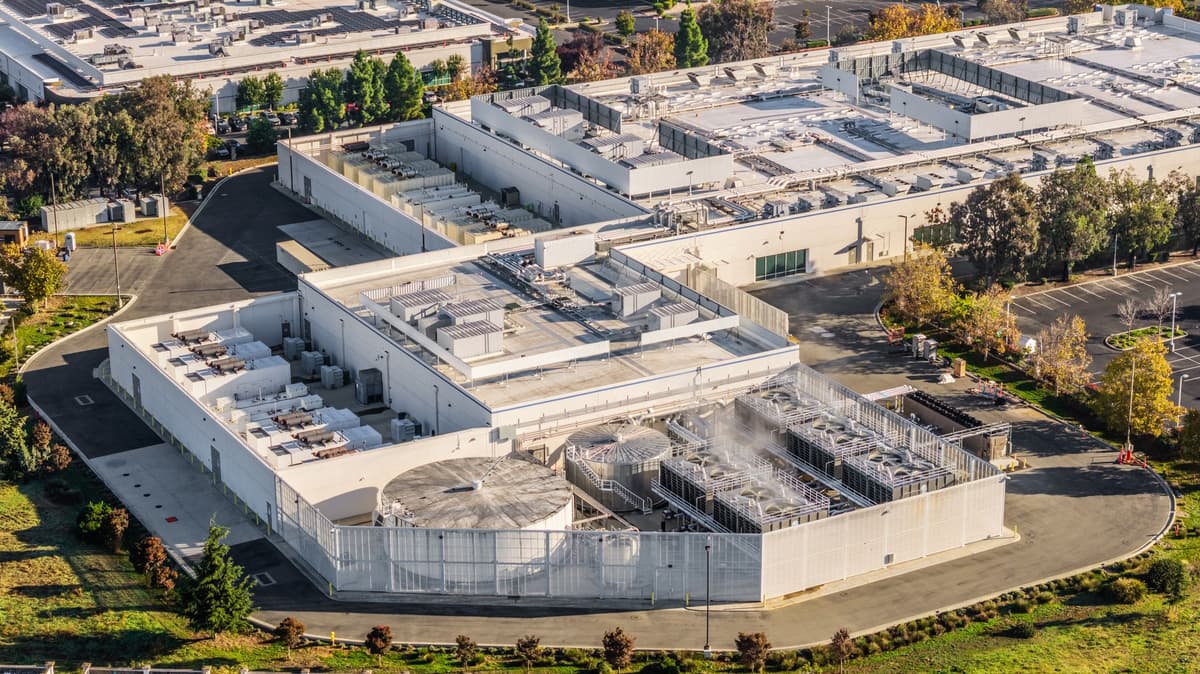
Water consumption has emerged as a critical constraint for data center expansion, with tech companies now forced to balance competing demands for water conservation, energy efficiency, and public acceptance.
SpaceX recently amended its IPO filing to acknowledge that water scarcity and drought conditions could limit data center development. The disclosure reflects growing industry concern about a resource that has become unexpectedly contentious. A recent Gallup poll found that seven in 10 Americans oppose data center development, with water scarcity ranking as their top concern.
The cooling dilemma
Data centers rely on water primarily for cooling server racks that generate enormous heat. Evaporative cooling, a widely used technique, pumps fresh water through systems to absorb heat before evaporating it in outdoor cooling towers. This approach reduces the energy needed for mechanical cooling but carries a substantial water footprint.
Google's Council Bluffs, Iowa facility consumed more than 1 billion gallons of water in 2024 using evaporative cooling. Lawrence Berkeley National Laboratory projects that hyperscale data centers could consume up to 33 billion gallons annually by 2030 if they continue relying heavily on this method.
Diverging strategies
Major tech companies are taking different approaches to the water challenge. Microsoft, OpenAI, and Oracle have announced plans to move away from evaporative cooling entirely. The OpenAI and Oracle Stargate expansion will avoid the technique even in water-stressed regions of Texas.
Google is charting a different course. The company announced new water commitments this week, including pledges to replenish more freshwater than it consumes through local water projects, scale up use of reclaimed water, and disclose annual water consumption by facility.
Ben Townsend, Google's global head of infrastructure and sustainability, argues that data center design requires site-specific analysis rather than blanket policies. The company has conducted detailed hydrologic assessments of its locations for four years to determine optimal cooling methods for each watershed.
Why it matters
The water debate exposes a fundamental tension in data center operations: using less water often means consuming more electricity for mechanical cooling, potentially increasing carbon emissions if that power comes from fossil fuels. Research from UC Riverside found that widespread adoption of evaporative cooling during peak demand could free up 10 to 30 gigawatts of power capacity—meaningful relief for stressed electrical grids in water-abundant regions.
Yet the business consequences of water conflicts are already materializing. Google halted plans for a Chilean data center in 2024 after courts partially revoked permits over water concerns. Microsoft's internal records indicate its water use is projected to surge despite commitments to reduce evaporative cooling, according to reporting in February.
The path forward
Priscilla Johnson, who served as Microsoft's director of water strategy from 2017 to 2020, believes public pressure and regulation are essential to drive innovation. "The industry has to be challenged to design smarter and simplify things," she said.
Shaolei Ren, a UC Riverside engineering professor, emphasizes the regional nature of the challenge. "Water is a highly local, highly regional issue," he noted. "It's a limited resource, and we have to manage it very carefully."
The competing demands become particularly acute in summer, when data center cooling needs peak alongside municipal water consumption. As AI development accelerates data center construction, the industry faces mounting pressure to demonstrate that expansion can coexist with water conservation.
These details were first reported by WIRED.
This is an original analysis by the Omega editorial team. Source reporting: WIRED.
Want systems like this working for your business?
Book a Call
