Data Center Opposition Emerges as Key Issue in 2026 Midterms
Morgan Stanley identifies five congressional races where local backlash against AI infrastructure could reshape tech industry expansion plans.
Local resistance to data center construction has evolved from a zoning dispute into a political flashpoint that could influence the trajectory of AI infrastructure investment, according to a new analysis from Morgan Stanley.
The investment bank is monitoring five congressional races in the 2026 midterm elections where candidates have made data center regulation a central campaign theme. The outcome of these contests could determine whether Big Tech firms face new obstacles in their multibillion-dollar push to build AI computing infrastructure across the United States.
Why it matters
Data centers represent the physical backbone of AI development, requiring massive capital investment and years of planning. Political opposition at the state and local level—now gaining traction in federal races—could create regulatory uncertainty that slows deployment timelines or increases costs, potentially dampening investor enthusiasm for AI-related stocks even as federal policy remains supportive.
Races to watch
Morgan Stanley strategist Ariana Salvatore noted that her team has been tracking data centers as "the key wedge issue" since opposition began building last fall. While she characterizes the risk as primarily state and local rather than federal for now, several 2026 candidates are proposing federal legislation.
In Pennsylvania's 8th District, Republican Rob Bresnahan Jr. introduced a bill that would restrict tech companies from suing municipalities over zoning decisions, though the measure has gained no cosponsors. His Democratic opponent Paige Cognetti is campaigning on the issue without proposing specific legislation.
Michigan features two competitive races with data center implications. In the 7th District, Democrat William Lawrence supports a federal moratorium backed by Senators Sanders and Representative Ocasio-Cortez, while Republican Tom Barrett has filed bills aimed at protecting local control. The state's Senate race pits Republican Mike Rogers, who advocates a one-year Michigan moratorium, against Democrat Abdul El-Sayed, who wants comprehensive zoning guidelines and local veto power.
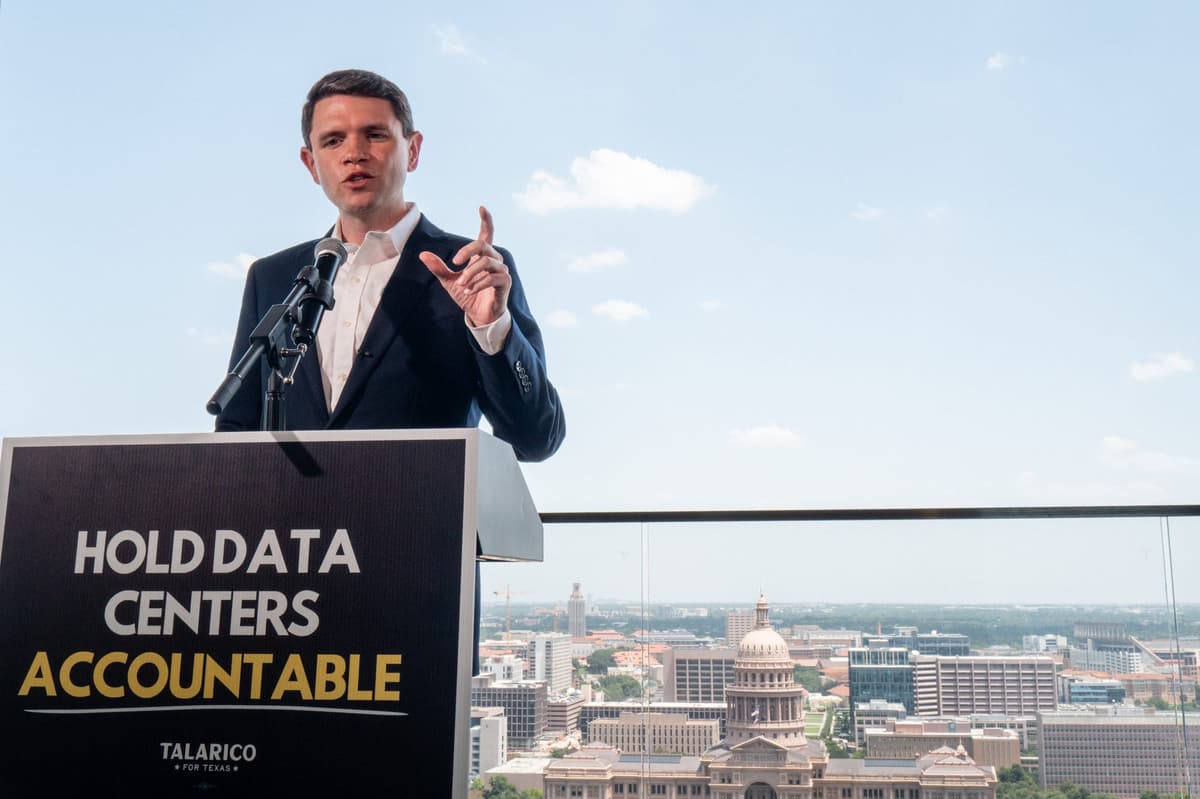
Texas presents perhaps the highest-profile contest, with Democrat James Talarico making data center accountability a cornerstone of his Senate campaign against Republican Ken Paxton. Talarico's plan would eliminate state sales tax breaks for data centers and require closed-loop water systems. Paxton has responded by also supporting repeal of the tax exemption while adding proposals for rural siting limits.
In Ohio's Senate race, Republican Jon Husted frames data center siting as a local issue, while Democrat Sherrod Brown focuses on eliminating tax incentives. Neither candidate explicitly supports construction pauses.
Political dynamics
President Trump has weighed in on the debate through Truth Social posts, characterizing data centers as economic drivers for rural areas. However, reporting has documented cases where these facilities strain local resources and impose costs on communities.
Morgan Stanley expects data center opposition to pose greater risk to AI-related investments following the 2028 presidential election, but the 2026 races could establish precedents for how federal lawmakers approach regulation of AI infrastructure.
These details were first reported by Business Insider.
This is an original analysis by the Omega editorial team. Source reporting: AI Watch.
Want systems like this working for your business?
Book a Call