Congress Eyes AI Regulation as Voter Concern Reaches 63%
Bipartisan momentum builds around frontier model guardrails, but legislative action remains unlikely before midterms.
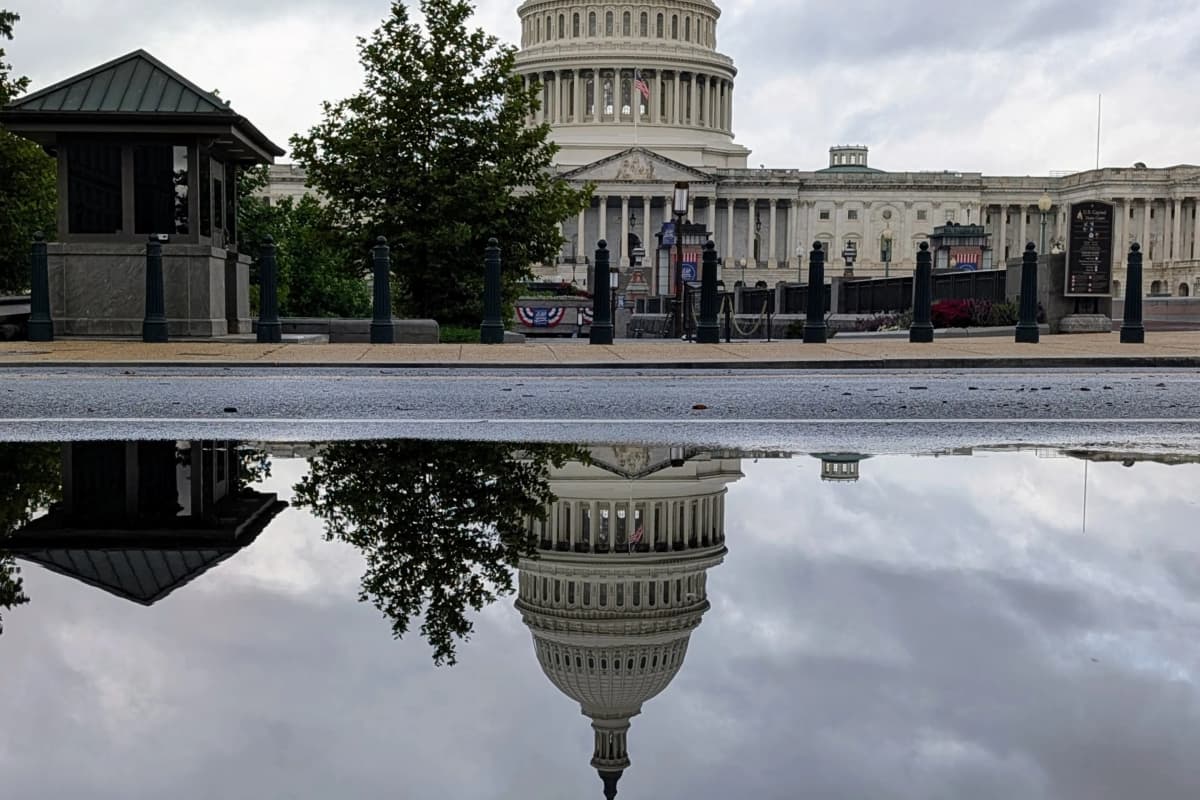
Polling drives political shift on AI safety
American voters have elevated artificial intelligence to a kitchen-table issue, forcing both political parties to recalibrate their messaging on regulation even as legislative gridlock persists in Washington.
A recent Politico poll found that 63% of Americans believe AI poses at least a moderate risk of destroying humanity, with only 22% dismissing the threat as negligible. The concern spans party lines—61% of Trump voters and 70% of Harris voters share this view, making AI one of the rare issues with bipartisan consensus among the electorate.
The IAPP's Cobun Zweifel-Keegan reported that the polling data, released as Anthropic CEO Dario Amodei's warning letter circulated widely, has prompted rapid repositioning across the political spectrum. Progressive Senator Bernie Sanders appeared alongside MAGA strategist Steve Bannon at a "Pro-Human Assembly" event, illustrating the unusual coalitions forming around AI governance.
Two regulatory frameworks emerge
Despite the political momentum, Congress remains fractured on how to approach AI safety. Two distinct regulatory philosophies are crystallizing.
The permission-first camp, led by Representative Greg Casar and Senator Sanders, advocates for pauses on advanced model development or outright bans on superintelligence creation. Casar has compared AI development to nuclear weapons, arguing that independent audits are insufficient for technologies with catastrophic potential.
The alternative framework emphasizes ex-post liability rather than pre-deployment restrictions. Former White House AI czar David Sacks cited former FTC Chair Lina Khan's position that existing consumer protection and product liability laws already apply to AI systems, making new regulatory regimes unnecessary.
Between these poles, frontier model legislation introduced by Representatives Jay Obernolte and Lori Trahan has gained unexpected traction. Representative Brett Guthrie, chair of the House Energy and Commerce Committee, acknowledged the bill as the only concrete proposal on the table, marking a shift for Republicans who previously resisted broad AI guardrails.
In the Senate, Amy Klobuchar and John Thune are circulating draft legislation that reportedly includes a "duty of care" for model developers. Senator Maria Cantwell has joined negotiations, pushing for stronger pre-deployment testing requirements.
Why it matters
The convergence of voter concern and political messaging creates the first genuine opening for federal AI regulation, but structural obstacles remain formidable. The chances of passing regulatory legislation this congressional term are near zero, according to the IAPP analysis. Instead, AI policy is positioning itself as a midterm election issue, with former Obama and Harris campaign operatives launching advisory groups to help Democrats navigate the terrain. The gap between public demand for action and Washington's capacity to deliver sets up a potential accountability moment in 2026, particularly if AI-related incidents occur before Congress acts.
Legislative gridlock persists
Despite the rhetorical shifts, concrete action remains elusive. A modest data center energy reform bill passed the House 417–3 but was blocked in the Senate by Martin Heinrich, who called it "toothless"—a signal of how difficult substantive AI legislation will be to advance.
President Trump has publicly dismissed AI risk as a "hoax," though his administration has quietly pursued voluntary classified agreements requiring government pre-review of frontier models for national security purposes.
These details were first reported by the International Association of Privacy Professionals.
This is an original analysis by the Omega editorial team. Source reporting: AI Watch.
Want systems like this working for your business?
Book a Call