CMU Develops AI Framework to Locate Critical Minerals Underground
GEM-AI project combines satellite imagery, genomic data, and machine learning to accelerate domestic mineral exploration for defense and manufacturing.
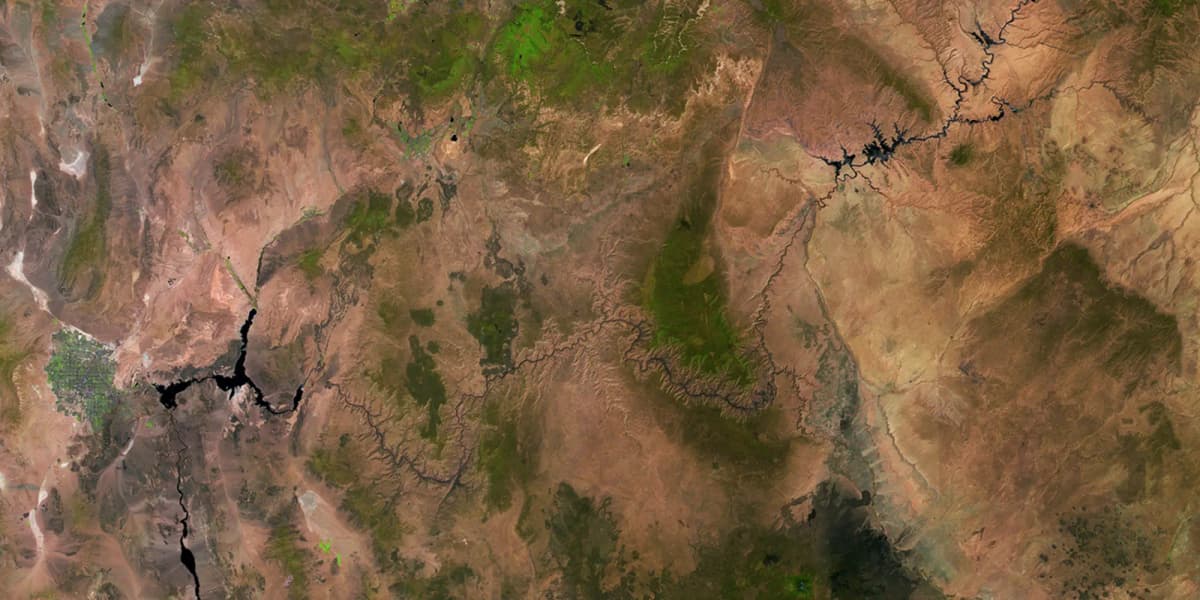
AI-powered mineral discovery for national security
A Carnegie Mellon University research team is building an artificial intelligence system designed to pinpoint critical mineral deposits beneath the Earth's surface, addressing supply chain vulnerabilities in advanced manufacturing, aerospace, energy, and defense sectors.
The GEM-AI project received Department of Energy funding as part of the Genesis Mission, a national initiative combining AI, supercomputing, quantum systems, and scientific instruments into an integrated discovery platform. Led by Artur Dubrawski, Alumni Research Professor of Computer Science in CMU's Robotics Institute, the effort brings together Carnegie Mellon, Sandia National Laboratories, Colorado School of Mines, and the Pittsburgh Supercomputing Center.
How the system works
The framework integrates multiple data streams that previous research has shown can indicate subsurface mineral deposits. The AI will analyze existing satellite and aerial photography, sensor imagery, geologic sampling data, and metagenomic information—looking for markers at or above the surface that correlate with valuable materials below.
One novel approach involves examining soil microbial communities. When sulfide-bearing minerals weather, they release metal and sulfur compounds that create environments favoring metal-tolerant and sulfur-metabolizing microorganisms. These biological signatures could serve as indicators of mineral deposits.
The system is designed as an agentic AI capable of reasoning about data quality and reliability as it synthesizes information from diverse scientific sources. Phase I will focus on the Pacific Northwest and Arizona copper belt as pilot regions, using data already collected by the DOE and other government agencies.
Why it matters
Critical mineral dependence represents a strategic vulnerability for the United States. These materials are essential for semiconductor manufacturing, battery production, defense systems, and renewable energy technologies—yet domestic supply chains remain limited. Traditional exploration methods are time-intensive and expensive, often requiring extensive ground surveys before drilling. An AI system that can narrow search areas using existing data could dramatically reduce exploration costs while increasing the probability of successful discoveries. The framework's ability to incorporate new data sources and models means it can evolve with scientific advancements and potentially be applied to other DOE research priorities.
Building on proven AI applications
The project extends work by CMU's Auton Lab, which Dubrawski leads. The lab has previously developed AI systems for human trafficking victim identification, predictive maintenance for military equipment, public health crisis monitoring, and radiological threat detection. GEM-AI builds on an existing partnership between the Auton Lab and Colorado School of Mines focused on using AI to analyze aerial and satellite data for mineral exploration.
Colorado School of Mines researchers Thomas Monecke and Ben Frieman will contribute geology and mineral exploration expertise. Sandia National Laboratories scientists Umakant Mishra and Guangping Xu will provide environmental genomics and critical mineral characterization capabilities. The Pittsburgh Supercomputing Center will supply the computing infrastructure for large-scale model development.
The Genesis Mission awarded GEM-AI funding through Phase I RFA awards, which aim to identify promising pathways toward transformative scientific capabilities. Project teams will design research workflows integrating AI with scientific investigation while evaluating whether these approaches can accelerate discovery and generate new insights.
Details of the project were first reported by Carnegie Mellon University.
This is an original analysis by the Omega editorial team. Source reporting: AI Watch.
Want systems like this working for your business?
Book a Call