Cloud-Based Drilling Automation Delivers Results at Scale
Field data from 310 wells and 3 million feet drilled reveal that integration, latency, and crew trust matter more than algorithms.
Field Results Shift Industry Focus from Proof to Deployment
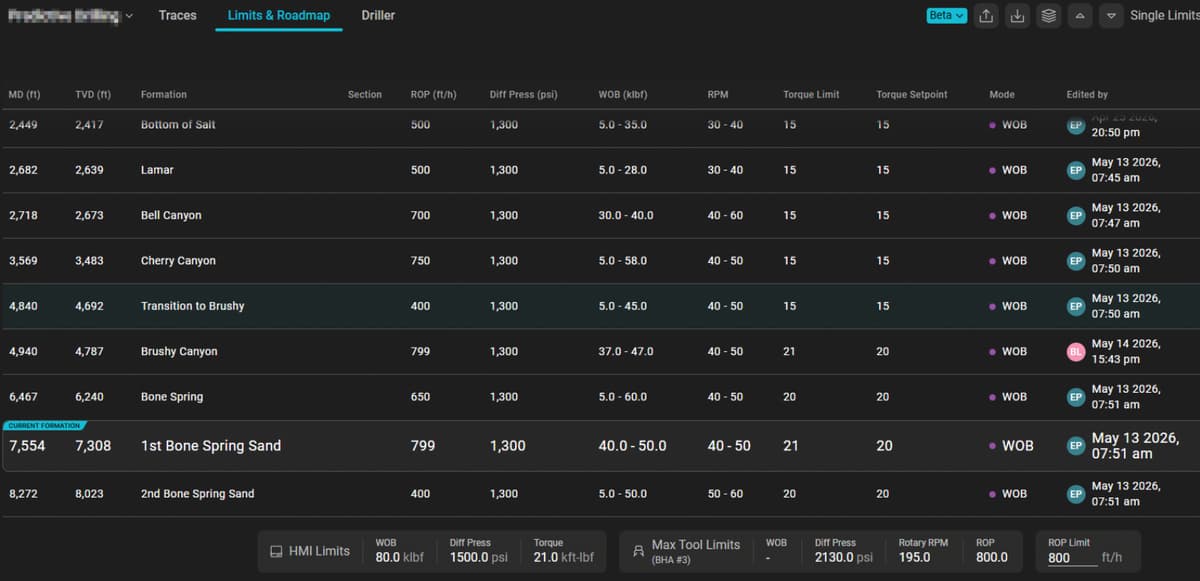
Cloud-based drilling automation has moved from experimental technology to operational standard across multiple basins and rig configurations. Corva's Predictive Drilling system has now executed closed-loop automation across more than 310 wells and 3 million feet of drilling, consistently delivering 10-15% higher rates of penetration, approximately 20% more lateral footage per day, and 35-50% fewer bottom-hole assembly runs compared with manual autodriller management.
These results have shifted industry conversations from whether remote automation works to how operators can deploy it at scale. The technology stack—real-time data transmission, cloud computing, machine learning models, and reliable communications—has matured significantly. The limiting factors now are operational: data quality, workflow ownership, control hierarchies, and crew acceptance.
Why it matters
Drilling automation is no longer constrained by computing power or algorithmic sophistication. The barrier to adoption has shifted to integration challenges and human factors. Organizations that treat automation as an operational discipline rather than a technology project are seeing measurable performance gains, while those focused primarily on algorithms struggle with deployment.
Seven Operational Lessons from Field Deployments
Field experience has revealed that successful automation depends less on optimization models than on practical implementation decisions. Teams should identify specific performance opportunities before deploying automation by replaying historical wells through the platform to reveal unused operating envelopes. This establishes realistic performance targets upfront.
Integration architecture matters more than machine learning sophistication. Every deployment must answer basic questions: How does data leave the rig? How do setpoints return to the autodriller? Who has control authority? A control-state indicator showing whether automation is currently active eliminates confusion and accelerates troubleshooting.
Latency directly determines what can be automated. Round-trip communication times of 5-7 seconds deliver strong results, performing at roughly the speed of an attentive driller. At 15 seconds, rapid-response procedures like tool-joint hangup mitigation become difficult. At 30 seconds, drilling through interbedded formations becomes challenging. At 60 seconds, most closed-loop automation becomes impractical.
Safety boundaries must be established first. Drillers should always define operating envelopes, with remotely generated setpoints automatically rejected if they exceed limits entered into rig control systems. Communication failures should immediately return control to the driller. Cloud-based automation works best as a supervisory layer above existing rig automation, not as a replacement.
Transparency Builds Trust
Crew adoption depends on explainability. When automation reduces weight-on-bit due to elevated shock levels but provides no explanation, drillers assume the system is underperforming. The most successful deployments display reason codes for every automated action directly within the interface, making decisions immediately visible.
Automation also forces standardization. Most operators have procedures for managing stick-slip, shock, vibration, and differential pressure, but these procedures often vary among rigs and supervisors. Defining detection criteria and responses precisely creates consistency across entire fleets. In many deployments, standardization efforts have generated as much value as the automation itself.
Rig crews typically decide whether they trust an automation system within the first few stands. Deployments that demonstrate clear value immediately see accelerated adoption. Those that appear inconsistent get disabled and crews revert to manual control.
These findings come from Drilling Contractor, which first reported the operational lessons from Corva's Predictive Drilling deployments. The publication notes that organizations recognizing automation as an operational discipline enabled by technology—rather than a technology project supported by operations—are best positioned to convert investments into measurable drilling performance gains.
This is an original analysis by the Omega editorial team. Source reporting: Automation Watch.
Want systems like this working for your business?
Book a Call
