Chinese AI Models Threaten U.S. Tech Investment Through Distillation
DeepSeek and rivals are leveraging American breakthroughs to build competitive models at a fraction of the cost, raising questions about intellectual property.
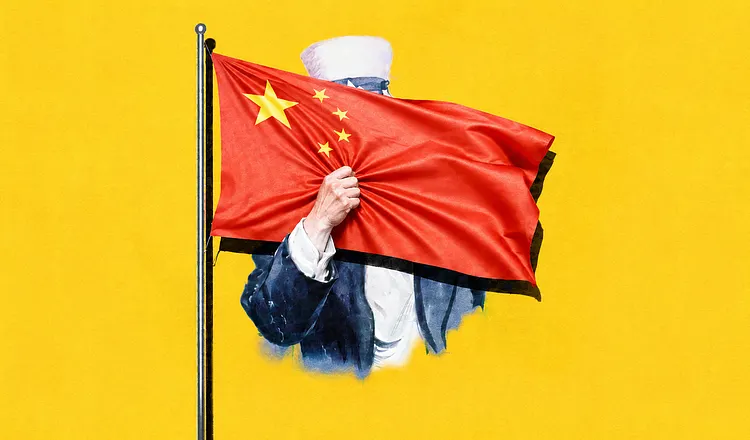
U.S. Companies Adopt Chinese AI Despite Massive Domestic Investment
American enterprises are projected to invest approximately $700 billion in artificial intelligence infrastructure this year—data centers, semiconductor chips, and computational resources. Yet Chinese AI models that cost far less to develop are rapidly gaining adoption inside major U.S. corporations including Airbnb, Coinbase, and DoorDash.
The Chinese models in question—DeepSeek, Moonshot's Kimi K3, and Alibaba Cloud's Qwen—are open-weight systems, meaning their underlying code can be freely downloaded and modified. This stands in contrast to proprietary American alternatives from companies like OpenAI and Anthropic. Until recently, these Chinese offerings barely registered on the radar of American technology executives.
How Distillation Replicates Expensive AI Research
China's competitive position stems partly from genuine technical innovation, but also from a practice called distillation. The technique works by querying an advanced AI model millions of times, recording its responses, then training a new model on that dataset. The result inherits much of the original system's capability without requiring comparable research expenditure or computational resources.
When conducted with authorization, distillation serves legitimate purposes. Apple, for instance, has paid Google to distill its Gemini model for improving Siri. Academic researchers employ the method to study how AI systems function internally.
The concern centers on unauthorized distillation—using American models as training data without permission or compensation, effectively transferring billions of dollars worth of research and development investment into competing products.
Why it matters
The $700 billion American companies are spending on AI infrastructure represents a wager that their innovations will generate sufficient returns to fund subsequent breakthroughs. If competitors can replicate those advances through distillation at minimal cost, the economic model underpinning U.S. AI leadership faces fundamental challenges. The issue extends beyond typical market competition into questions of intellectual property protection and whether open research practices can coexist with the massive capital requirements of frontier AI development.
The Capital Investment at Stake
The scale of American AI investment reflects expectations that proprietary advantages will yield commercial returns. Data centers require years to construct and billions to operate. Chip development involves similar timelines and costs. When foreign competitors can approximate those capabilities through distillation rather than original research, it disrupts the return-on-investment calculus driving U.S. technology spending.
These details were first reported by The Free Press.
This is an original analysis by the Omega editorial team. Source reporting: AI Watch.
Want systems like this working for your business?
Book a Call