China's Vocational Schools Pivot to AI Training Amid Job Anxiety
Nearly half of technical colleges now offer introductory artificial intelligence courses as workers seek career pivots into the booming sector.
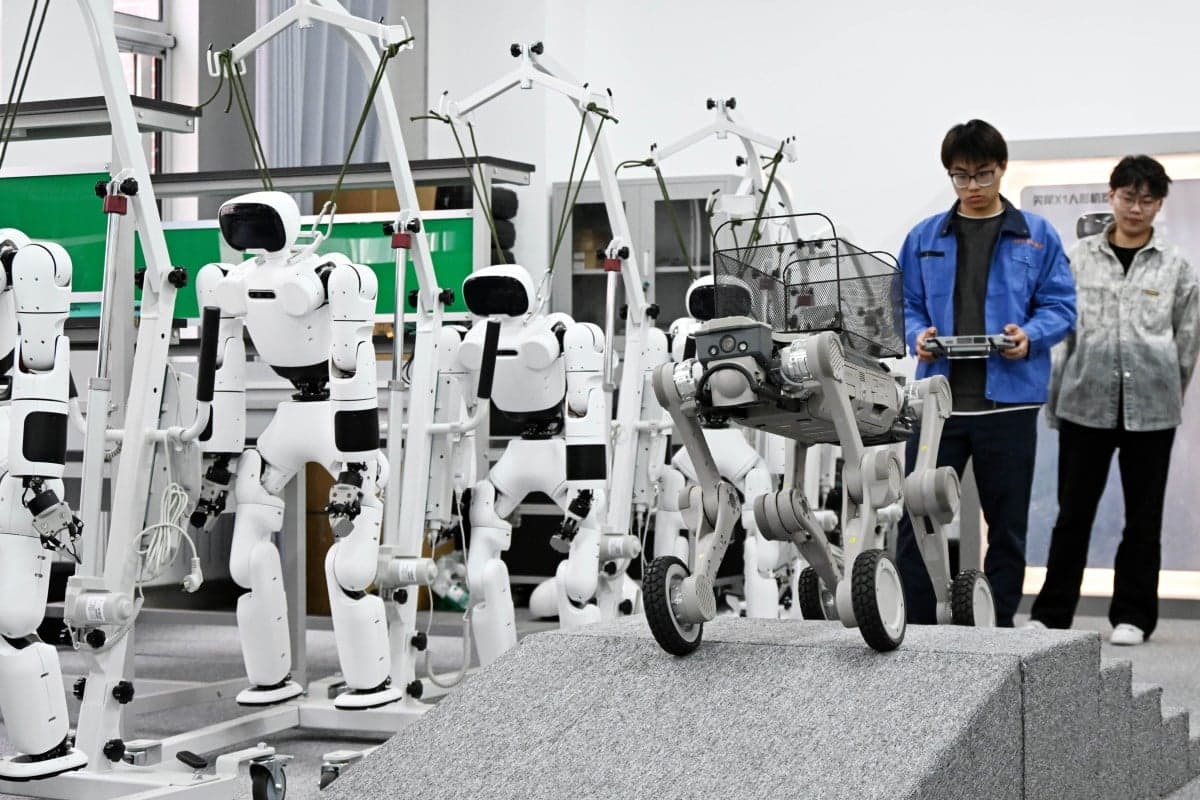
Workers Turn to Technical Colleges for AI Career Shifts
China's vocational education system is rapidly integrating artificial intelligence coursework as workers across the country seek to transition into tech roles amid widespread automation concerns. A Tsinghua University study found that nearly half of China's vocational schools have introduced introductory AI courses, reflecting surging demand from students looking to future-proof their careers.
The trend is particularly visible in tech hubs like Shenzhen, where workers in traditional roles are enrolling in short-term AI programs at local technical colleges. Chen Hao, a 26-year-old electronics salesman, recently left his position after five years without a raise to pursue AI training. His motivation reflects a broader pattern: the desire for stable office work in a field perceived as recession-resistant.
Why it matters
This shift reveals how China's workforce is responding to AI-driven economic transformation at the grassroots level. Vocational schools are becoming critical retraining infrastructure, not just for recent graduates but for mid-career workers seeking mobility. The phenomenon also highlights a practical reality: for many students, the value proposition isn't just skills acquisition—it's access to industry networks and job placement pipelines that these programs provide through instructor connections.
Beyond Skills: The Network Effect
Chen's experience illustrates an important dynamic in China's AI education boom. After visiting four different technical colleges, he noted that curriculum content wasn't his primary consideration. "Learning AI skills itself is not the point, because you can learn them online as well," he explained. Instead, the draw is institutional connections to employers and practitioners who often teach these courses.
This network-first approach suggests that vocational AI programs are functioning as much as career transition platforms as educational institutions. For workers without traditional four-year degrees, these schools offer a pathway into tech sectors that might otherwise be inaccessible. Chen acknowledged that his vocational credentials would likely prevent him from landing roles at major tech companies, but he's targeting "a desk job" in "a field with a more promising future."
Responding to Economic Pressure
The rapid rollout of AI courses across China's vocational system reflects both opportunity and anxiety. As artificial intelligence capabilities expand across Chinese industries, workers in roles vulnerable to automation are proactively seeking new skills. The fact that nearly half of vocational institutions have moved to offer AI training—a relatively recent technology—demonstrates how quickly China's educational infrastructure can respond to labor market signals.
For workers like Chen, who spent years in client-facing sales roles with stagnant compensation, the AI sector represents more than just technical innovation. It symbolizes economic security and career advancement in an evolving job market where traditional roles face increasing uncertainty.
These details were first reported by the South China Morning Post, based on the Tsinghua University research and interviews with vocational students in Shenzhen.
This is an original analysis by the Omega editorial team. Source reporting: AI Watch.
Want systems like this working for your business?
Book a Call
