China's Open-Weight AI Models Gain Global Adoption
Free, adaptable alternatives to U.S. proprietary systems are reshaping the geopolitical landscape of artificial intelligence.
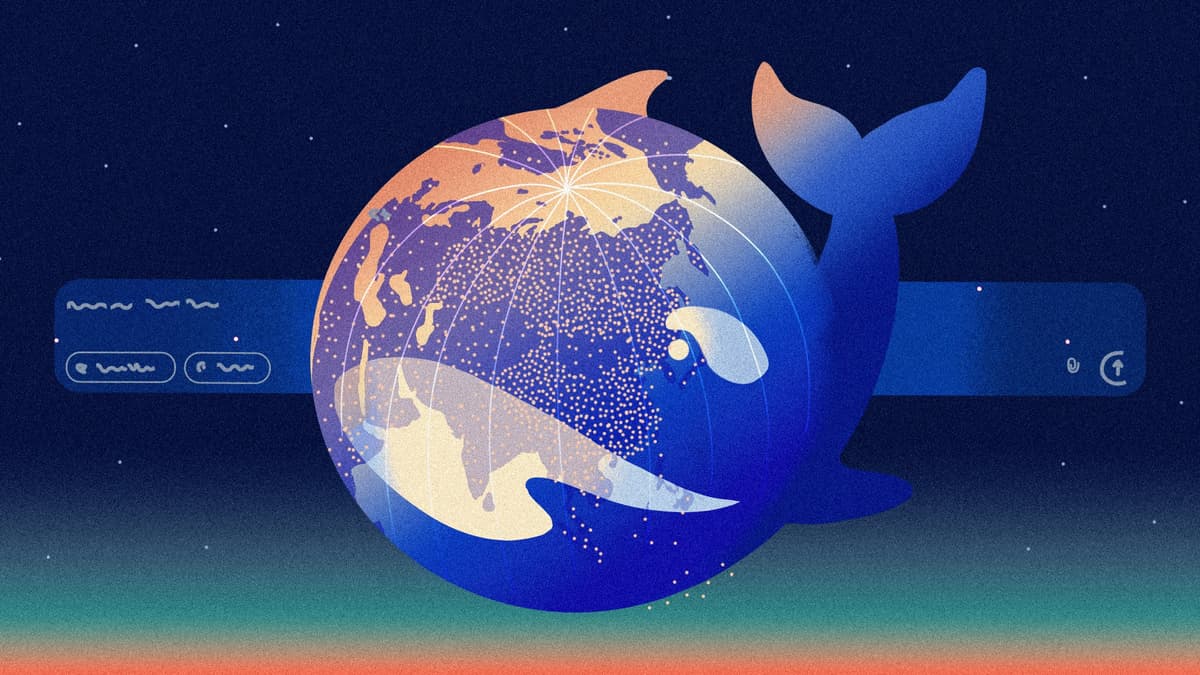
China is rapidly expanding its global AI influence through a counterintuitive strategy: releasing powerful open-weight models that anyone can download and use for free, while American companies maintain expensive, closed proprietary systems.
Andrew Ng, who co-founded Google Brain and served as chief scientist at Baidu, outlined this dynamic at a recent gathering of filmmakers in Los Angeles hosted by the Berggruen Institute and Mozilla Foundation. His perspective carries particular weight given his rare position bridging both U.S. and Chinese tech ecosystems—both Sam Altman and Dario Amodei once worked under him.
The open-weight advantage
Open-weight models publish all their trained parameters—the numerical "weights" learned from data—freely on the internet. This allows developers anywhere to download and run AI systems on their own hardware, adapting them to local needs without ongoing costs or dependencies.
In contrast, closed models from OpenAI, Anthropic, and Google Gemini keep these weights proprietary. Users can only interact through APIs, sending prompts and receiving responses without access to the underlying system.
According to Ng, this approach has become "a brilliant move" for Chinese companies. While U.S. closed models currently lead in raw capabilities, China dominates the open-weight landscape. Across Africa and other regions, Chinese models like DeepSeek have achieved far wider adoption than American alternatives.
Soft power through AI
The implications extend beyond technical metrics. When users query an AI system about politically sensitive topics—Ng cited the 1989 Tiananmen Square events as an example—the model's training and values shape its response. Widespread adoption of Chinese models means Chinese perspectives increasingly frame how AI systems worldwide answer questions and tell stories.
Kai-Fu Lee, a leading Taiwanese computer scientist, told Noema that all large language models carry cultural-political imprints. Western systems encode sensitivities around race and gender; Islamic contexts prioritize religious considerations. This diversity actually drives adoption of open-source models, as developers can adapt them to local values and requirements.
Recent U.S. export controls have accelerated this trend. When the White House temporarily restricted foreign access to Anthropic's Claude 3.5, it demonstrated that American companies can revoke access at any time. This pushed many nations toward open-weight alternatives that, once downloaded, cannot be taken away.
David Sacks, co-chair of President Trump's Council of Advisors on Science and Technology, recently highlighted Chinese startup Z.ai's GLM 5.2 model as matching current OpenAI and Anthropic capabilities—a significant milestone for open-weight systems.
The safety question
Former Google CEO Eric Schmidt acknowledged the proliferation risk. Open-source models without proper safeguards could enable malicious actors, from repressive governments to terrorist networks. He advocates for "reinforcement learning from human feedback" that builds in guardrails difficult for bad actors to remove.
Schmidt proposed a "no-surprise rule" where both nations notify each other before training frontier models—a transparency measure analogous to Cold War nuclear protocols. Such agreements become more feasible when both sides recognize convergent interests in establishing common safety standards.
Why it matters
The global AI landscape is shifting from a technology race to a battle for influence and dependency. As more nations and companies build on Chinese AI infrastructure, they embed Chinese technical standards and potentially values into their digital ecosystems. For the U.S., this represents both a soft power challenge and a strategic vulnerability in critical technology supply chains. The current moment of rough capability parity may offer the best opportunity for establishing mutual guardrails before the competition intensifies further.
These details were first reported by Nathan Gardels, editor-in-chief of Noema Magazine.
This is an original analysis by the Omega editorial team. Source reporting: AI Watch.
Want systems like this working for your business?
Book a Call
