China's AI Face Licensing Market Raises Governance Questions
People earn $15 to $700 licensing their likenesses for AI content, but laws haven't caught up with indefinite reuse.
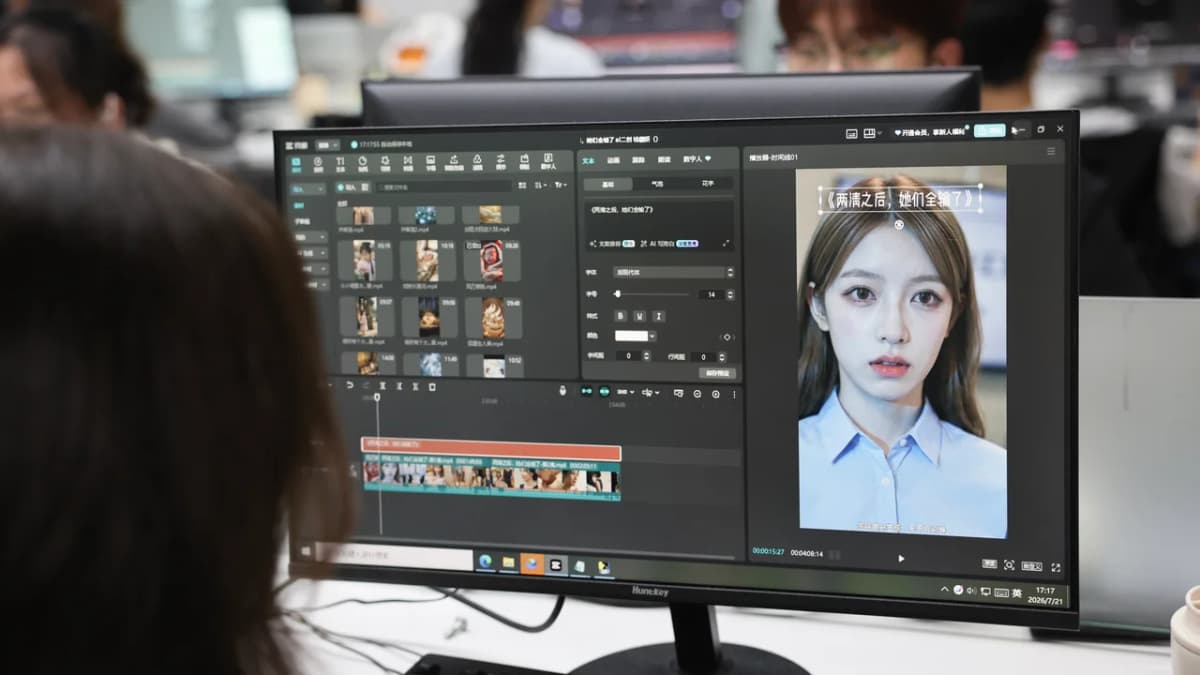
A new market for faces
Chinese AI companies are paying individuals between $15 and $700 to license their facial likenesses for use in AI-generated microdramas and advertisements. The practice reflects the explosive growth of China's mobile entertainment industry, where more than 95% of microdramas released in the first three months of 2026 reportedly incorporated AI in production, according to Rest of World.
While licensing offers a legal alternative to unauthorized scraping of photographs or reproducing likenesses without permission, it introduces complex governance challenges that existing regulations don't fully address. A face licensed for a single advertisement can potentially be reused indefinitely across hundreds of ads, different genres, or contexts the original person never anticipated or approved.
Why it matters
This development transforms faces from personal identifiers into indefinitely reproducible digital assets, raising fundamental questions about who captures ongoing commercial value and who bears reputational risk when a likeness becomes raw material for synthetic content. The gap between one-time consent and unlimited reuse creates a governance challenge that extends beyond privacy law into questions of economic fairness and control.
Three dimensions of the digital face
Generative AI has fundamentally changed what a face represents. It now operates simultaneously as a social identity through which people maintain reputation and recognition, a biometric identifier used for authentication and surveillance, and a reproducible digital asset that can be deployed across platforms and contexts.
The concept of "losing face" in Chinese culture traditionally meant suffering a loss of social standing. In the AI era, that risk extends to having one's licensed likeness appear in content that damages reputation—with limited recourse once consent is granted.
Existing laws fall short
China has substantial facial governance frameworks already in place. The Civil Code protects portrait rights as part of personality rights, while biometric information receives protection as sensitive personal information. The 2025 Measures on the Security Management of Facial Recognition Technology Applications, effective June 1, 2025, establish requirements for processing facial data.
The Interim Measures for the Management of Generative Artificial Intelligence Services, in force since August 2023, cover AI-generated content including images and video. Yet these frameworks don't fully address the economic and control questions raised when a face becomes an indefinitely reusable asset.
Beyond consent to value distribution
The core governance challenge isn't simply whether someone consented to license their face, but whether that consent should enable unlimited commercial exploitation. A modest one-time payment may authorize repeated use across advertisements, dramas, and platforms, with AI firms and distributors capturing the ongoing value.
A meaningful licensing framework would need to specify permitted uses, duration, and scope. It should prohibit certain sensitive applications, enable traceability of how likenesses are used, and potentially require renewed consent or additional payment for continued commercial exploitation.
Regulators and platforms in China are already cracking down on harmful content, unauthorized digital likenesses, and homogeneous AI-generated characters. The next frontier involves determining how real human faces can be governed when they become raw material for synthetic worlds—from initial consent through ongoing control over their deployment and the value they generate.
These details were first reported by Rest of World and analyzed by the Lowy Institute.
This is an original analysis by the Omega editorial team. Source reporting: AI Watch.
Want systems like this working for your business?
Book a Call
