China's 12.7M Graduates Face AI-Driven Job Shortage in 2026
White-collar roles shrink as automation compounds a structural mismatch between college expansion and employment opportunities.
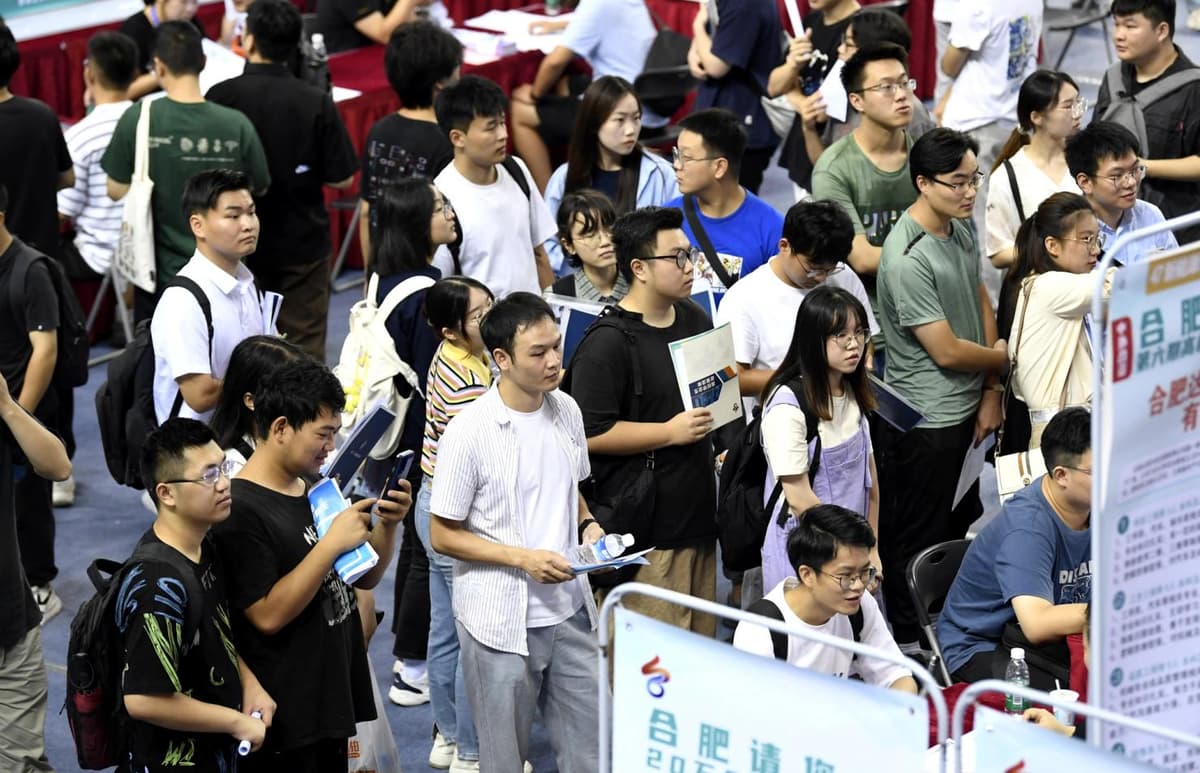
Record graduate cohort meets automation headwinds
China will see 12.7 million university graduates enter the workforce in 2026, the largest graduating class in the nation's history. Yet these degree-holders are entering a labor market where traditional white-collar positions are disappearing at an accelerating rate, squeezed by both structural oversupply and the rapid adoption of AI automation tools.
The fundamental challenge predates generative AI: college enrollment in China has expanded far faster than the creation of graduate-level jobs. That imbalance has now intensified as artificial intelligence moves beyond manufacturing and logistics into knowledge work. Some graduates report submitting hundreds of applications without receiving offers, according to reporting from The New York Times.
Why it matters
China's graduate employment crisis illustrates how AI displacement affects economies differently based on their structural conditions. While Western debates focus on retraining and safety nets, China faces compounding pressures from demographic-scale cohorts, rapid automation adoption, and limited job creation in sectors that traditionally absorbed educated workers. The outcome will shape both social stability and the country's transition to a knowledge economy.
Automation reaches white-collar China
AI's labor market impact in China initially concentrated in blue-collar sectors—factory floors and delivery networks where algorithmic optimization replaced human decision-making. That disruption has now reached office work. Job listings for conventional graduate roles have declined noticeably, creating a bottleneck for young professionals who invested years in education expecting stable career paths.
The mismatch between educational output and employment capacity represents a policy challenge with few quick solutions. Universities expanded enrollment to meet modernization goals, but the economy has not generated commensurate demand for credentialed workers, particularly as companies deploy AI to handle tasks previously requiring junior staff.
Global patterns of AI displacement
The phenomenon extends beyond China's borders, though it takes different forms. In Kenya, a thriving essay-writing industry that employed educated workers to produce academic papers for Western students has collapsed as clients turn to ChatGPT instead. The question confronting Kenyan freelancers—"Why pay a human when AI can do the job?"—mirrors the calculation Chinese employers are making about entry-level positions.
These parallel disruptions reveal how generative AI affects labor markets across development levels and job categories. Whether in Nairobi or Shanghai, workers whose value proposition centered on producing text or performing routine cognitive tasks face direct substitution pressure from large language models.
The details were first reported by The New York Times.
This is an original analysis by the Omega editorial team. Source reporting: AI Watch.
Want systems like this working for your business?
Book a Call
