China Targets AI Job Creation in New Employment Strategy
Five-year plan addresses labor market pressures on graduates and migrant workers through emerging industries and technology adoption.
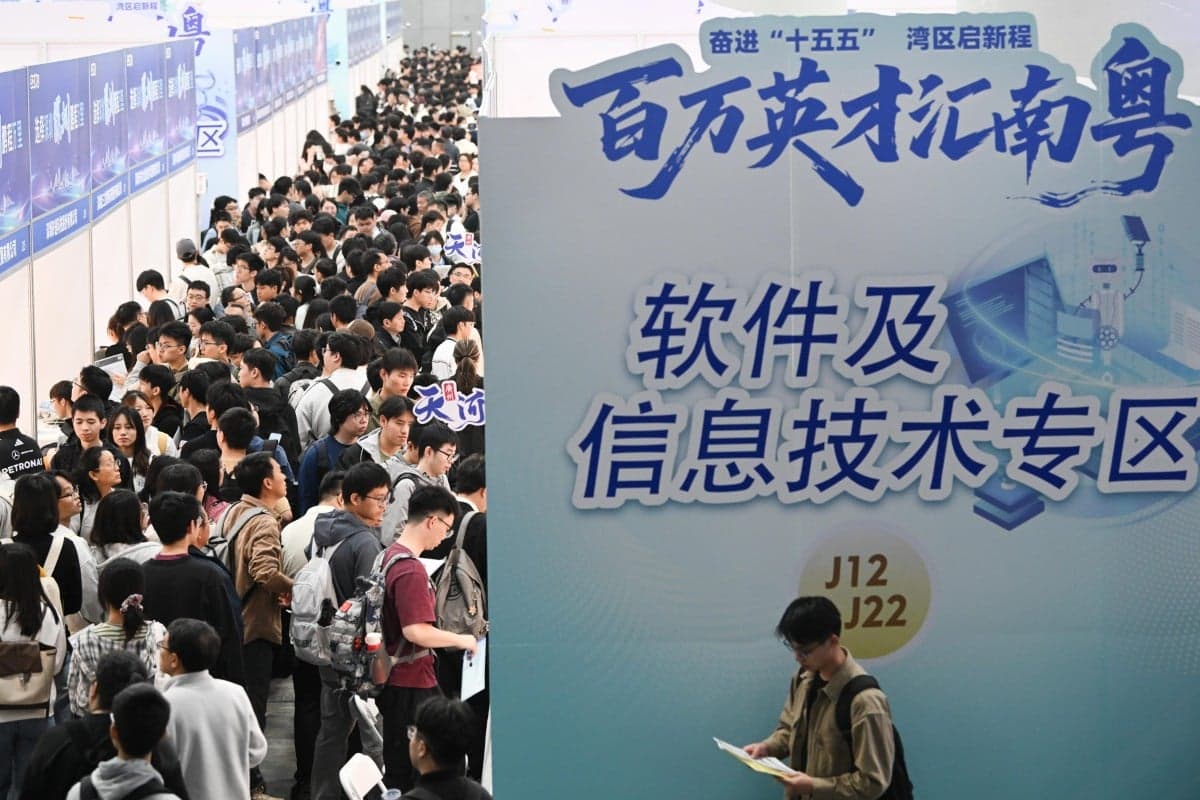
China Launches Comprehensive Employment Initiative
China has released a five-year employment strategy that positions artificial intelligence as a key driver of job creation while targeting support for traditional labor-intensive sectors. The State Council's plan, covering 2026 through 2030, represents the government's latest effort to address mounting pressure on the country's labor market.
The initiative comes amid deteriorating employment prospects for university graduates and migrant workers, two groups that form the backbone of China's workforce. Recent declines in investment and retail sales have intensified concerns about job availability, making employment a politically sensitive issue given its direct connection to social stability.
Nine Priority Areas for Job Growth
The State Council outlined nine focus areas in its employment-first strategy. These include coordinating macroeconomic policy with employment objectives, maintaining stability in labor-intensive industries, and expanding the service sector's ability to absorb workers. The plan also emphasizes creating opportunities in emerging industries, with specific attention to the marine sector.
Regarding artificial intelligence, the strategy takes a dual approach: developing new job categories directly related to AI technologies while simultaneously promoting AI adoption in traditional industries to broaden employment opportunities. The plan includes provisions for training programs and career transition support to help workers adapt to AI-driven changes in the labor market.
Why it matters
China faces a structural employment challenge that technology alone cannot solve. With 70 percent of unemployed young people holding university degrees and older workers with limited education facing extended joblessness, the government must balance automation's efficiency gains against the need to maintain employment levels. How China manages this tension will influence both domestic stability and the global economy, as the country remains a major manufacturing hub and consumer market.
Addressing Core Labor Challenges
According to Nie Riming, deputy director of the Shanghai Institute of Finance and Law, the measures represent a comprehensive approach but ultimately depend on broader economic growth. "Employment is ultimately a growth issue," Nie noted, highlighting the fundamental challenge facing policymakers.
The plan specifically targets two distinct demographic groups experiencing the most severe employment difficulties. Highly educated young people, particularly university graduates, struggle to find positions matching their qualifications. Meanwhile, workers in their 50s with limited formal education often experience prolonged unemployment after losing their jobs.
This employment strategy follows closely behind other recent interventions, including a broader action plan on stabilizing and expanding employment released in May and a marine sector employment notice issued just one day before the five-year plan's announcement.
These details were first reported by the South China Morning Post.
This is an original analysis by the Omega editorial team. Source reporting: AI Watch.
Want systems like this working for your business?
Book a Call