China Blocks U.S. AI Chips Despite Export Approvals
Beijing's refusal to purchase Nvidia's H200 processors signals a permanent shift away from dependence on American semiconductor suppliers.
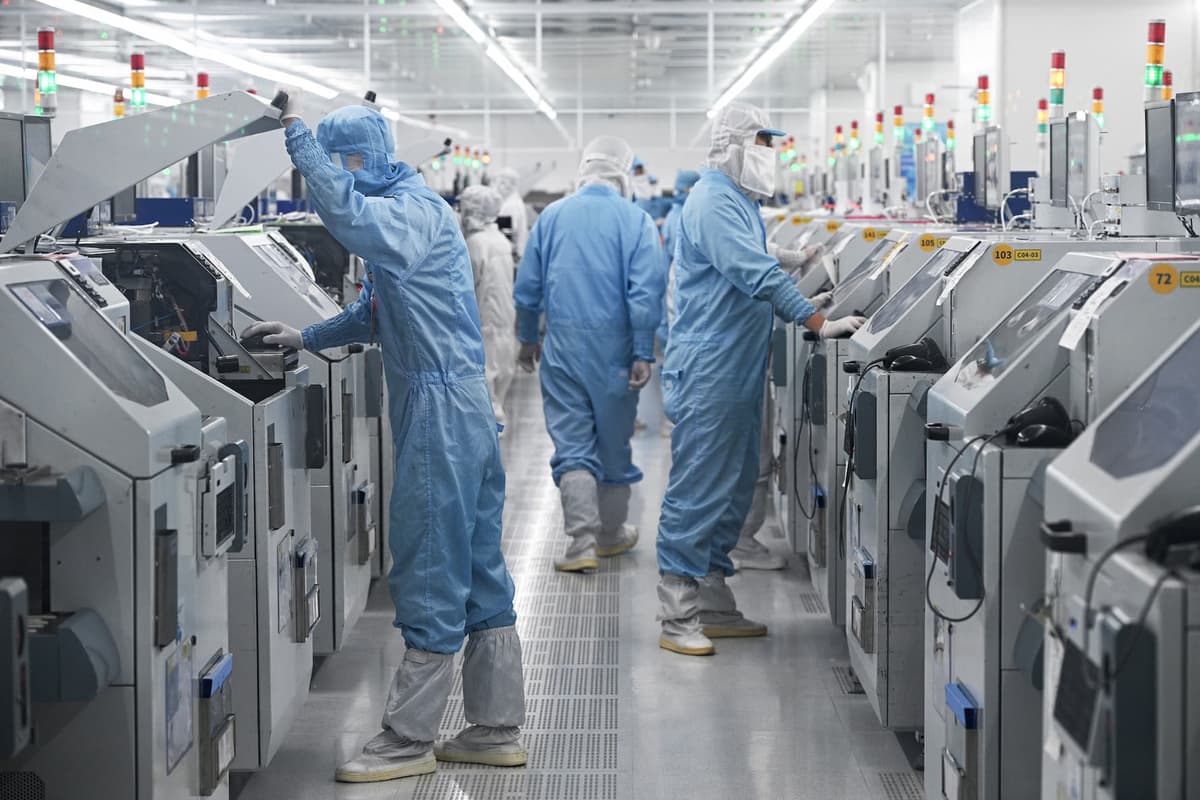
China rejects American chips despite regulatory green light
Despite the Trump administration's approval to sell Nvidia's H200 processors to Chinese companies, Beijing has blocked all domestic purchases of the advanced chips. As of mid-May, not a single H200 had been sold to Chinese firms, according to reporting first published by the Brookings Institution.
The standoff represents more than a temporary trade dispute. Chinese regulatory authorities no longer view U.S. chip companies as reliable business partners, effectively ending the era when American semiconductor firms dominated the Chinese market. Even Chinese AI companies eager for more computing power to train their models cannot access U.S. chips—their own government won't allow it.
The pattern: moving goalposts and strategic distrust
China's position stems from recent experience with export control volatility. In January 2025, Chinese startup DeepSeek released highly capable AI models optimized for Nvidia's H20 chip, which had been designed specifically to comply with U.S. export restrictions. Hundreds of thousands of H20 chips had already been sold to Chinese customers, generating $12-15 billion for Nvidia in 2024.
But in April 2025, the U.S. Commerce Department abruptly declared the once-permitted H20 chips noncompliant with export controls. Nvidia took a $5.5 billion write-off. Though the department reversed course in July and approved H20 exports again, Chinese authorities instructed domestic AI companies not to purchase them, citing security concerns.
According to U.S. Trade Representative Jamieson Greer, chip export controls were not a major discussion topic during President Trump's recent meeting with Chinese President Xi Jinping. Trump attributed China's lack of H200 purchases to Beijing's choice to develop indigenous alternatives.
China's long game: infrastructure over short-term gains
Chinese officials are prioritizing development of domestic chip capabilities over providing the best immediate service to AI companies. This mirrors Beijing's earlier approach to payment networks, when authorities refused licenses to Visa and MasterCard for years to allow China UnionPay to mature into a world-class competitor.
Chinese AI model developers—including DeepSeek, Moonshot AI, and established giants like Alibaba and Tencent—would prefer access to more powerful U.S. chips. Export control constraints have put Chinese AI models months behind the American frontier. But Chinese authorities appear willing to accept temporarily inferior models as the price for achieving world-class domestic chip production.
Chinese companies are already demonstrating they can work around the embargo through innovation. DeepSeek's new V4 model runs on Huawei's domestic Ascend chip and approaches frontier capabilities. Huawei is developing "LogicFolding" architecture that stacks chips vertically to boost performance without requiring the extreme ultraviolet lithography equipment subject to export controls.
Why it matters
The bifurcation of U.S. and Chinese AI ecosystems has profound implications for global technology markets. While American chip companies still dominate sales to most international buyers, they have permanently lost access to what was once their largest growth market. China's strategy of accepting near-term capability gaps to achieve long-term technological independence could reshape competitive dynamics across the semiconductor industry—and demonstrates how export controls can accelerate rather than prevent the development of rival technology ecosystems.
The global AI and chip marketplaces remain contested, but the Chinese domestic market appears closed to U.S. suppliers for the foreseeable future. These details were first reported by the Brookings Institution.
This is an original analysis by the Omega editorial team. Source reporting: AI Watch.
Want systems like this working for your business?
Book a Call