CFOs Face Mounting Pressure to Show AI ROI Beyond Pilot Stage
Finance leaders at Gartner's EMEA symposium report boards now demanding measurable outcomes as AI moves into planning, close, and reporting workflows.
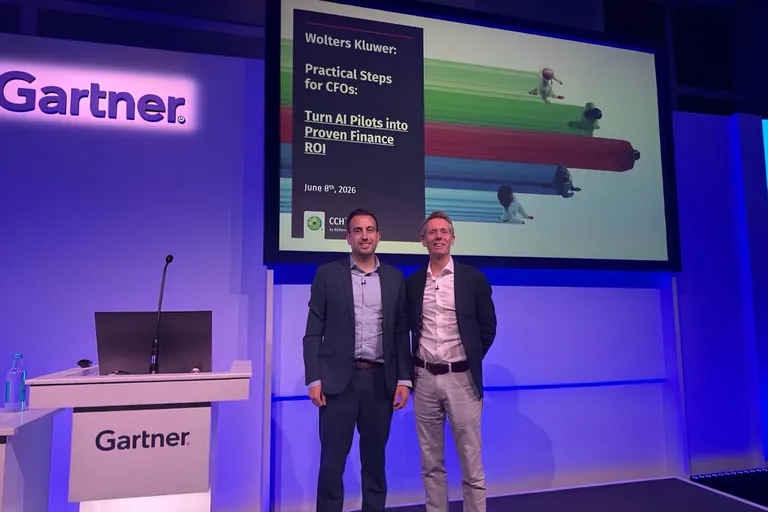
Finance leaders are confronting a new reality: artificial intelligence projects that once lived in experimental sandboxes must now deliver concrete returns. At the Gartner CFO & Finance Executive Conference in London on June 8–9, chief financial officers described mounting pressure from boards and executives to demonstrate measurable AI outcomes in core finance operations.
The shift reflects a broader maturation in how organizations approach AI. What began as exploratory pilots is now expected to produce consistent financial results in processes like planning, close, and reporting. Yet this transition is happening while many finance functions still lack foundational digital capabilities.
Why it matters
The gap between AI ambition and organizational readiness is becoming a critical constraint for finance teams. While 85% of finance leaders expect AI to reshape their role in the near term, only 18% consider their organizations digitally advanced, according to Wolters Kluwer's Future Ready CFO Report. This disconnect means CFOs must simultaneously build digital infrastructure and prove AI value—a dual challenge that's redefining finance transformation timelines and investment priorities.
Where AI is delivering results
Finance teams are concentrating AI deployment in three core areas. In planning and forecasting, teams use models to analyze cost drivers, test scenarios, and accelerate forecast updates, enabling more frequent planning cycles. For financial close and consolidation, AI identifies anomalies, automates reconciliations, and surfaces potential issues earlier, reducing manual work. In reporting and disclosure, AI supports variance analysis and narrative reporting, providing faster access to insights across the organization.
Severn Trent, a UK water utility, illustrates this production-scale deployment. The company moved predictive planning models into live operations for energy cost forecasting—one of its largest P&L drivers. By incorporating external factors like rainfall data, the AI-powered system significantly improved forecast accuracy. Darren Fellows, Finance Systems Manager at Severn Trent, noted the models help teams understand cost drivers and enable more informed planning across the business. The organization is now targeting over 90% forecast accuracy and scaling the approach across all sites.
From experimentation to embedded operations
Organizations are integrating AI into existing processes, often within unified platforms that combine planning, close, and reporting in a single environment. This integration requires aligning use cases with financial metrics, assigning clear ownership, and ensuring models remain explainable and auditable.
The operational impact extends beyond efficiency gains. With continuous monitoring and scenario analysis, finance teams spend less time on manual reporting and more time supporting business decisions. The standard for AI investments now mirrors that of any other capital allocation: measurable, repeatable impact.
These details were first reported by Wolters Kluwer based on discussions at the EMEA Gartner Finance Symposium.
This is an original analysis by the Omega editorial team. Source reporting: AI Watch.
Want systems like this working for your business?
Book a Call