Broadcom pushes AI factory model to simplify private cloud deployments
VMware Cloud Foundation automation targets infrastructure complexity as enterprises move production AI workloads back to the data center.
Enterprises scaling artificial intelligence beyond pilot projects are hitting a wall—not with models, but with the infrastructure required to run them. Cost pressures, data privacy concerns, and the manual complexity of configuring GPUs, servers, networking, and software stacks are driving production AI workloads back into private data centers.
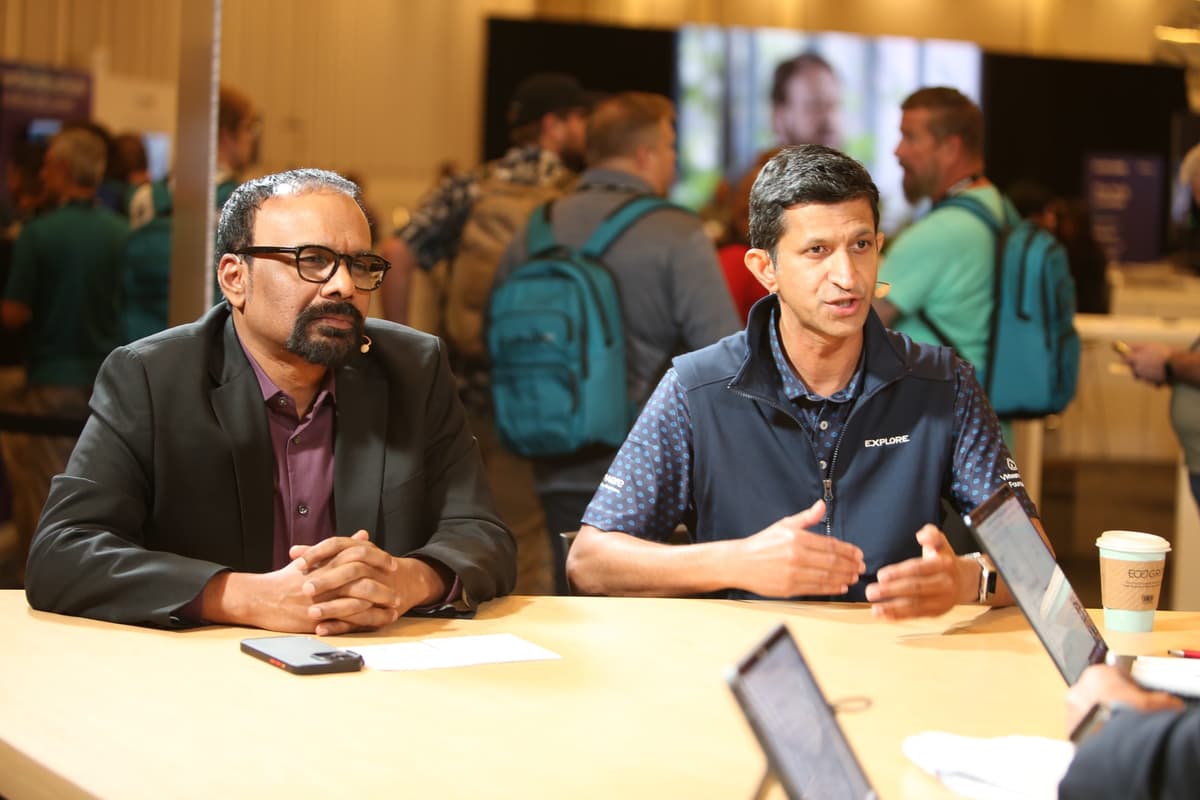
Broadcom is positioning turnkey automation as the answer. Speaking at VMware Explore, Prashanth Shenoy, chief marketing officer of Broadcom's VMware Cloud Foundation division, described the challenge customers face moving from "metal to model."
"Setting up GPUs, servers, networking, Kubernetes, containers, AI software stack, testing, validating which models to use. It's an extremely manual and complex process," Shenoy said in an interview with theCUBE Research.
The AI factory pitch: automation plus hardware choice
Broadcom's strategy centers on two pillars. First, operational automation through VMware Cloud Foundation (VCF), which the company says can simplify deployment of AI infrastructure alongside existing enterprise workloads. Second, hardware flexibility—particularly important as organizations resist building parallel infrastructure stacks solely for AI.
"They already have the AI factory built in with VCF," Shenoy explained. "We have automated this to do a lot simpler way of deploying."
The approach relies on validated configurations that bundle compute, storage, and networking into pre-tested reference architectures. Broadcom is partnering with AMD to offer accelerator options across different model scales.
Raghu Nambiar, corporate vice president of software and solutions at AMD, outlined a tiered hardware strategy tied to parameter count. For models under 10 billion parameters, CPU infrastructure suffices. The MI350P PCIe accelerator targets the 100 billion parameter range, while the MI355X addresses trillion-parameter workloads.
AMD has deployed more than 1,600 vSAN ReadyNodes across major server vendors, Nambiar noted, with sizing guidance now aligned to model complexity rather than generic performance metrics.
Why it matters
The shift from public cloud experimentation to private infrastructure for production AI represents a significant architectural pivot. Organizations are discovering that tokenomics—the per-use cost of running inference at scale—can quickly exceed initial projections when relying on external platforms. Keeping models close to enterprise data also addresses latency and compliance requirements that become critical in regulated industries. Broadcom's bet is that enterprises will pay for automation that collapses weeks of integration work into validated stacks, particularly if those stacks can coexist with existing virtualized workloads rather than requiring greenfield deployments.
The details were first reported by SiliconANGLE during coverage of VMware Explore.
This is an original analysis by the Omega editorial team. Source reporting: Automation Watch.
Want systems like this working for your business?
Book a Call