Broadcom Credit Risk Jumps as AI Chip Financing Guarantees Mount
Bond traders are pricing in higher default risk as the chipmaker backstops tens of billions in debt for AI infrastructure deals.
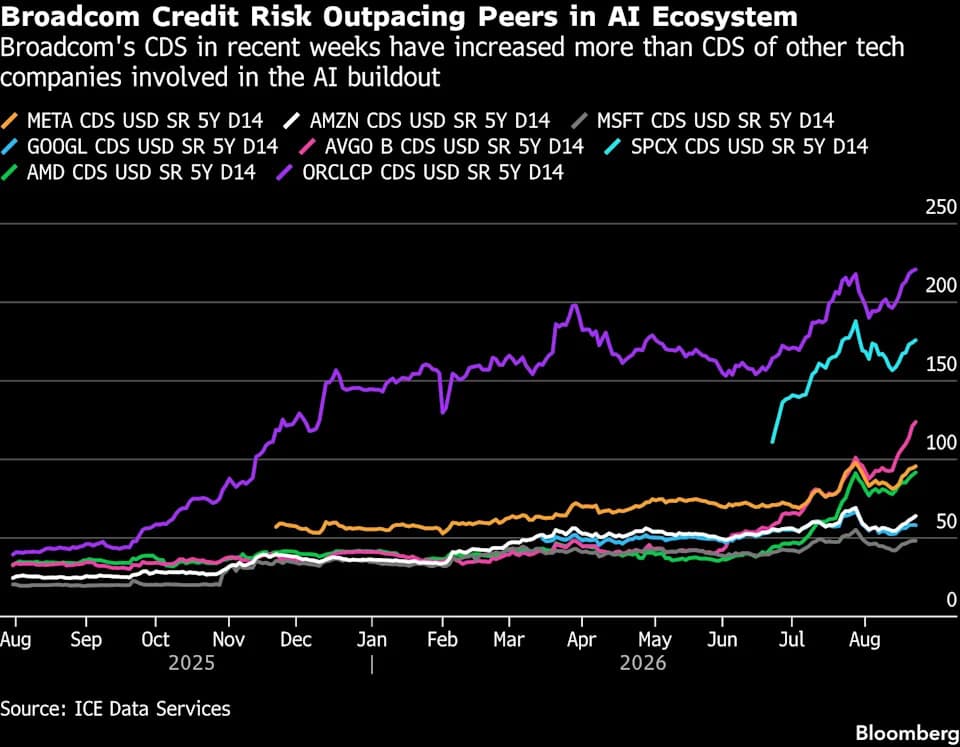
Bond markets are signaling growing concern about Broadcom's financial exposure as the semiconductor giant takes on unprecedented guarantees to fuel artificial intelligence infrastructure buildouts.
The company's five-year credit default swaps — essentially insurance against default — climbed 28 basis points in August, outpacing increases at Oracle and SpaceX, according to Bloomberg. Yields on Broadcom's 5.15% bonds maturing in 2031 rose approximately 14 basis points over the same period.
Why it matters
Chipmakers are increasingly using their balance sheets as collateral to enable AI infrastructure purchases, creating a layer of off-balance-sheet risk that could become problematic in a downturn. If AI investment slows or clients default, companies like Broadcom may be forced to honor billions in guarantees precisely when their own revenues are under pressure. This dynamic represents a structural shift in how AI infrastructure is financed — and how risk is distributed across the technology sector.
The Financing Model Behind the Risk
Broadcom is currently negotiating to raise more than $60 billion in debt for an AI chip financing arrangement expected to benefit Anthropic and other companies. The chipmaker may guarantee a portion of the senior-secured debt as part of the deal.
This follows a similar transaction earlier in 2024, when Broadcom agreed to backstop most of a $35 billion debt package. That arrangement allowed investors including Apollo Global Management and Blackstone to finance custom AI chip purchases that would be leased to Anthropic.
The financing model has become increasingly common as technology companies pour capital into expanding cloud-computing capacity. Chipmakers like Broadcom and Nvidia effectively lend their creditworthiness to customers, enabling purchases that might otherwise exceed buyers' financial capacity.
Phantom Leverage Concerns
"The rise in Broadcom's CDS seems to me is more specific to their balance sheet than overall angst over AI investment," said Tony Trzcinka, investment grade portfolio manager at Impax Asset Management. He attributed the movement to expectations of additional financial guarantees tied to chip-financing deals.
JPMorgan strategist Tarek Hamid warned that these arrangements contribute to a growing layer of "phantom leverage" beneath the AI ecosystem. The accumulation of leases, purchase commitments, residual value guarantees, and other backstops could eventually stretch into the trillions of dollars, he noted in a Monday research note.
Unlike traditional debt, these contingent liabilities don't appear prominently on balance sheets, making it difficult for investors to assess the true financial risk chipmakers are assuming. In a scenario where AI demand contracts or customers face financial distress, these guarantees could suddenly become very real obligations.
The credit market's reaction suggests investors are beginning to price in these hidden risks as Broadcom's exposure grows. Whether other chipmakers providing similar financing support will face comparable scrutiny remains to be seen.
These details were first reported by Bloomberg.
This is an original analysis by the Omega editorial team. Source reporting: AI Watch.
Want systems like this working for your business?
Book a Call