Border Surveillance Tech Designed to Kill by Geography, Not Force
A new open-access book documents how automated systems push asylum seekers into lethal terrain, dispersing responsibility for deaths across databases and sensors.
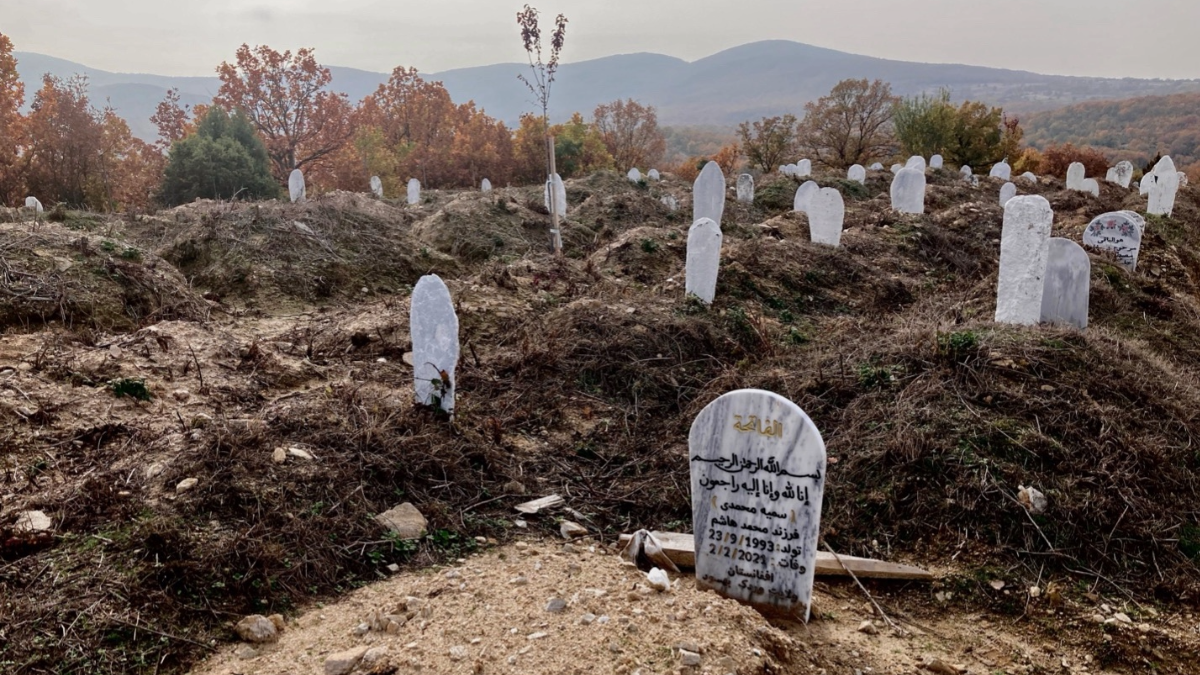
Sumaya Mohammadi, 28, lies in an unmarked grave near the Greek-Turkish border in Evros. She wasn't shot. She didn't drown in a shipwreck. She died the way many asylum seekers now die at Western borders: pushed by infrared cameras, drones, and sensor networks into terrain where the environment itself becomes the weapon.
Petra Molnar, a fellow at Tech Policy Press, has spent eight years documenting these systems across the Sonoran desert, Greek asylum hotspots, and Occupied Palestinian Territories. Her new open-access book, Border Necrotechnics: Automation, Surveillance, and the Racial Politics of Migration Control, argues that automated border infrastructure doesn't malfunction when people die—it works exactly as designed.
Why it matters
Policy debates about AI regulation focus on bias audits and proportionality assessments while sidestepping a blunt reality: border surveillance systems are built to distribute death. When tech policy treats these outcomes as implementation problems rather than design features, it misses how digital tools launder political decisions into technical ones, making accountability nearly impossible to assign.
How automated systems distribute death
Border necrotechnics describes the assemblage of databases, biometric systems, and predictive analytics that decide which lives become "killable, deportable, or indefinitely surveilled," according to Molnar. The concept builds on Achille Mbembe's necropolitics—sovereign power to expose populations to death—but shows how that power now operates through dispersed technical infrastructure rather than visible force.
Researchers have documented that deaths in the Arizona desert rose sharply after smart surveillance towers were installed, as crossings shifted into more remote and lethal zones. The same funnel effect operates in the Aegean and Sahara. In late July, at least 88 people died swimming around breakwaters in Ceuta, Spain—one of the most heavily surveilled borders on earth—watched by cameras, patrol boats, and sensors. Twenty-two EU member states responded by calling for stronger external borders, meaning more of the infrastructure that produced the deaths.
Why reform frameworks keep failing
The EU's AI Act classifies border systems as high-risk but carves out law enforcement, national security, and migration control applications—precisely where stakes are highest—leaving oversight to self-assessment. Civil society coalitions like Protect Not Surveil argue these carve-outs reflect Europe's trajectory toward offshoring, deportation, and carceral containment rather than rights protections.
Molnar notes that harms from opaque risk scores and denied entry without explanation get reframed as implementation challenges awaiting better regulation, while the bordering systems themselves remain unquestioned.
Migration as reparation
Molnar draws on scholar E. Tendayi Achiume's work to reframe migration not as crisis but as decolonization. The Global North remains bound to formerly colonized regions through trade, debt, resource extraction, and military intervention. People displaced by conflicts funded by wealthy states, or by climate change caused by emissions from countries that industrialized through colonial extraction, are not strangers petitioning for charity—they are co-sovereigns asserting membership in a system built from their dispossession.
Viewing migration as reparation means border necrotechnics becomes the enforcement arm of a system refusing to acknowledge centuries of debt. Molnar suggests starting with ending trade secret protections that hide error rates, demanding procurement transparency for vendors like Elbit Systems that market technologies "battle-tested in Palestine" for Arizona deployment, and imposing a moratorium on systems that violate human rights principles.
These details were first reported by Petra Molnar in an essay for Tech Policy Press. Her book Border Necrotechnics is available as open access.
This is an original analysis by the Omega editorial team. Source reporting: Automation Watch.
Want systems like this working for your business?
Book a Call
