Biren Technology forecasts 2,107% revenue jump in H1 2026
The Shanghai GPU maker joins Chinese peers riding surging demand for domestically produced AI chips.
Chinese GPU maker sees explosive growth
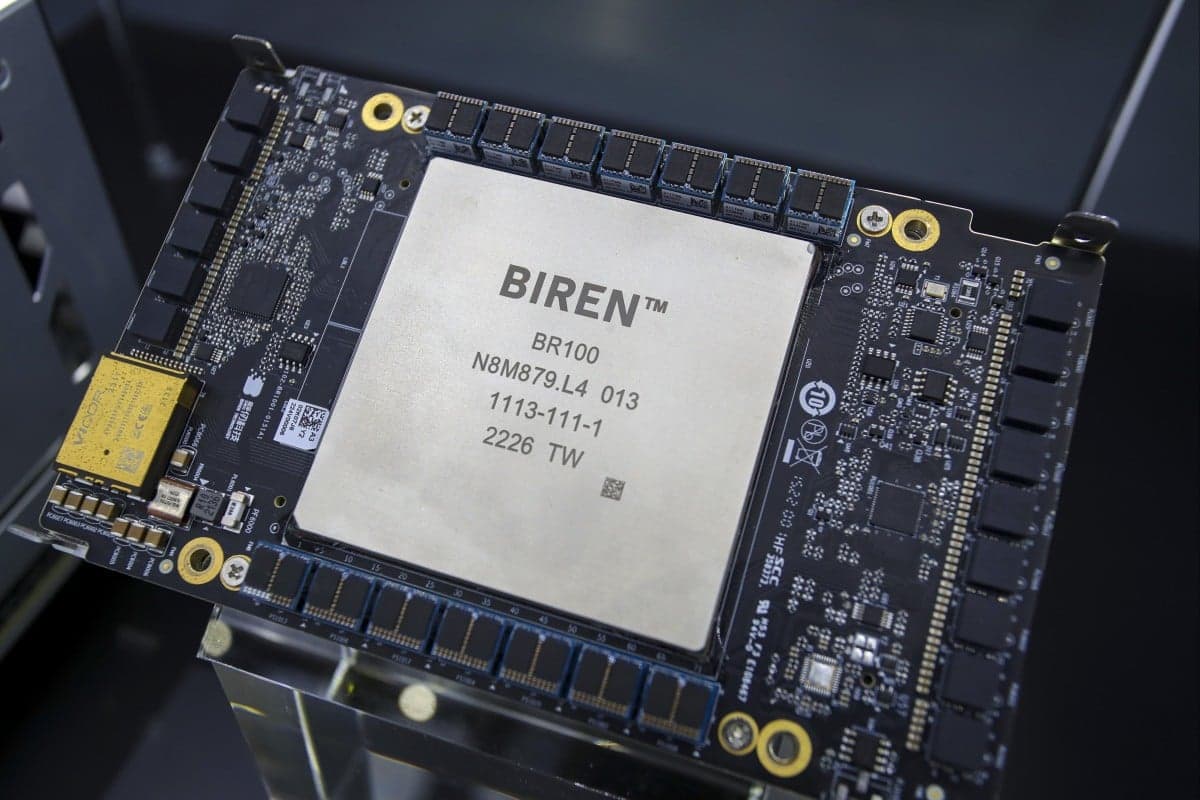
Biren Technology, a Shanghai-based artificial intelligence chipmaker, expects its first-half 2026 revenue to reach between 1.15 billion yuan and 1.3 billion yuan ($170.5 million), representing year-over-year growth of 1,852% to 2,107%. The Hong Kong-listed company also projects its net loss will narrow substantially to between 320 million yuan and 400 million yuan, down from 1.6 billion yuan in the same period of 2025.
The graphics processing unit manufacturer disclosed these projections in a stock exchange filing Monday, attributing the dramatic revenue increase to accelerating commercialization of its general-purpose GPUs and strong market demand for processors used in AI applications handling complex tasks like coding and agent software.
Why it matters
Biren's forecast signals momentum across China's domestic semiconductor industry as companies pursue technological self-sufficiency. The explosive growth demonstrates that Chinese AI chip designers are successfully capturing market share during a period of rapid infrastructure buildout, with implications for global semiconductor supply chains and competitive dynamics in AI hardware.
Context behind the numbers
The company acknowledged that the massive percentage increase reflects a relatively low financial baseline in the first half of 2025. Biren noted that high-end product deliveries were concentrated in the second half of last year, making the year-over-year comparison particularly dramatic.
Biren debuted on the Hong Kong stock exchange in January, positioning itself among a cohort of Chinese chip companies benefiting from surging domestic demand. The company joins industry peers including Hygon Information Technology and Cambricon Technologies in reporting accelerating orders for home-grown chips.
Broader industry momentum
The upbeat projections underscore a broader pattern across China's AI hardware sector. As Chinese technology firms push for greater independence from foreign semiconductor suppliers, domestic chip designers are capitalizing on infrastructure investments and enterprise adoption of AI systems.
General-purpose GPUs have become critical components in AI development, powering everything from large language model training to inference workloads in production environments. Biren's ability to commercialize these processors at scale reflects both technical progress and market acceptance of Chinese-designed alternatives.
The narrowing losses also suggest the company is achieving better unit economics as it scales production and delivery of higher-margin products. Moving from a 1.6 billion yuan loss to a projected 320-400 million yuan loss represents significant operational improvement alongside revenue growth.
These details were first reported by the South China Morning Post.
This is an original analysis by the Omega editorial team. Source reporting: AI Watch.
Want systems like this working for your business?
Book a Call