Babylon Bee Sues New Mexico Over AI Disclosure Law
Satirical site argues state mandate requiring labels on AI-generated political content would undermine First Amendment protections for parody.
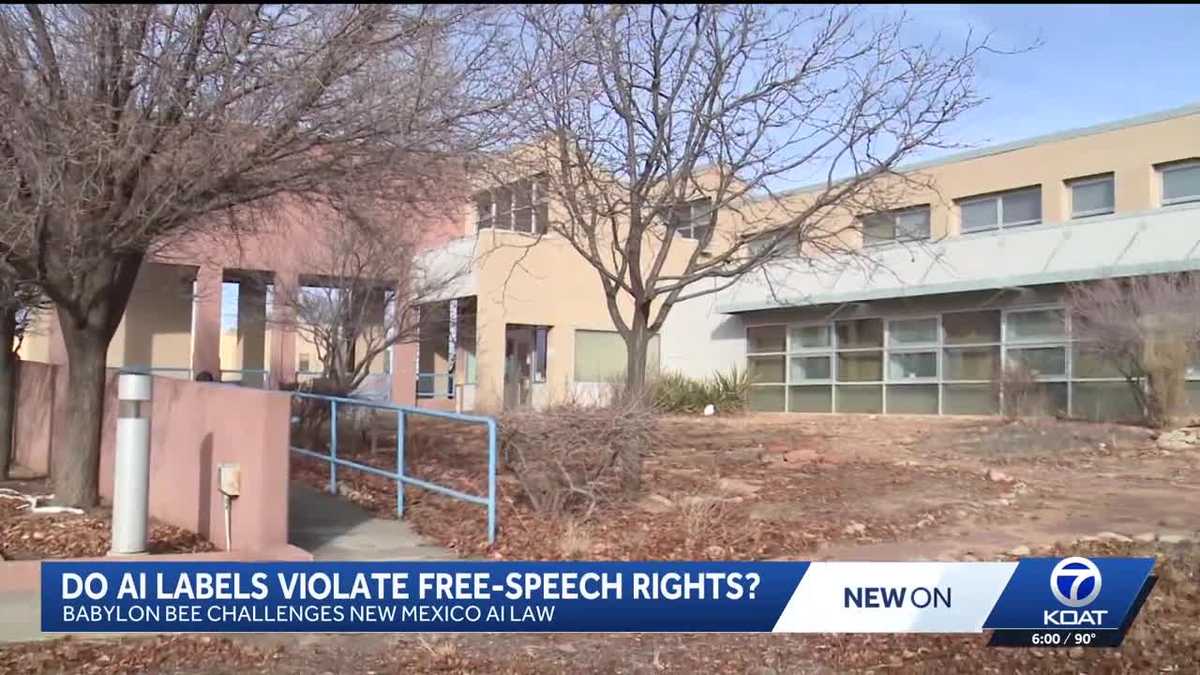
The Babylon Bee has filed a lawsuit against New Mexico's State Ethics Commission, challenging a new law that requires disclosures on artificial intelligence-generated political content. The satirical website argues the mandate threatens constitutional protections for parody and political humor.
The case centers on House Bill 182, which requires disclosures on political advertisements containing what the law defines as "materially deceptive media." The Babylon Bee's lawsuit specifically involves an AI-generated video parodying New Mexico that features a digitally created version of a state Supreme Court Justice who is scheduled to appear on the November 2026 ballot for retention. In the video, the AI-generated justice appears to make statements he never actually made.
The First Amendment question
Logan Spena, an attorney with Alliance Defending Freedom representing The Babylon Bee, argues that requiring upfront disclaimers on satirical content fundamentally undermines the nature of parody. "Satire and parody are long protected by the First Amendment, and yet satire and parody often depict their subjects as saying and doing things they didn't literally do," Spena said. "But if a speaker of satire and parody has to include an upfront disclaimer that what follows isn't strictly true, that kills the joke."
A key dispute involves the law's definition of "advertisement." Alliance Defending Freedom contends the language is broad enough to cover unpaid communications that reference candidates or ballot questions, not just paid political advertising. The state argues the law applies only to campaign or committee expenditures.
Standing and enforcement
The case faces a procedural hurdle: the Ethics Commission has not threatened enforcement action against The Babylon Bee. New Mexico maintains the law does not apply to the video as the satirical site alleges, raising questions about whether The Bee has standing to bring the lawsuit.
Legal expert John Day, speaking to KOAT, noted that the state's position is that the law merely informs viewers when content is not authentic rather than banning it outright. "The goal behind it is to label things that are not real as not real," Day said. "The problem becomes when you are putting that label on things that are intentionally not real, that are parody, that are humor, that are satire."
The court is currently weighing both the state's motion to dismiss and The Babylon Bee's request for a temporary injunction blocking enforcement during litigation.
Why it matters
This case could establish important precedent for how states regulate AI-generated political content as the 2026 election cycle approaches. Lawmakers nationwide are grappling with how to address deceptive deepfakes without infringing on protected political speech and satire. The outcome may determine whether disclosure requirements can survive First Amendment scrutiny when applied to content that is obviously intended as parody rather than deception.
These details were first reported by KOAT. The New Mexico State Ethics Commission did not respond to requests for comment.
This is an original analysis by the Omega editorial team. Source reporting: AI Watch.
Want systems like this working for your business?
Book a Call