Automation Capacity Replaces Wage Arbitrage in Factory Siting
Aging economies with skilled workforces now attract manufacturing investment over low-wage markets as robotics reshape location strategy.
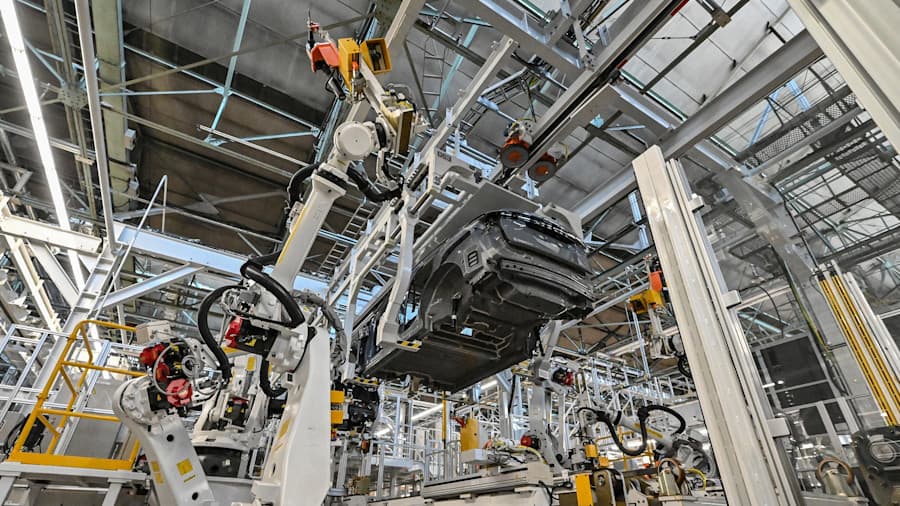
The end of the low-wage playbook
For decades, manufacturers followed a straightforward formula: locate the cheapest hourly wages, secure government incentives, and build export factories. This logic drove investment to China from 1995 through 2015, then redirected capital toward Mexico, Brazil, and frontier markets across Eastern Europe, Southeast Asia, and Africa as Chinese wages rose.
That era is ending. Labor cost is no longer the primary factor determining where manufacturing capital flows. Instead, the decisive advantage has become the capacity to deploy and operate automated systems—and the economies best positioned to offer this are the aging societies that were forced to build automation expertise first, according to analysis from fDi Intelligence.
Demographic decline drives automation leadership
The world's most automated economies mirror the map of demographic aging. South Korea leads globally with approximately 1,200 industrial robots per 10,000 workers, followed by Singapore, Germany, and Japan, according to International Federation of Robotics data. Across Japan, South Korea, Taiwan, and Hong Kong, more than 20 percent of the population is over 65, based on UN and government figures. Thailand, Singapore, and China have crossed the 14 percent threshold and are tracking toward similar aging profiles.
These nations automated because their workforces were shrinking. Japan's taxi industry illustrates the dynamic: the average driver is around 60 years old, prompting Nissan to launch a driverless ride service in 2027 rather than wait for younger drivers who may never materialize.
While automated machinery can be shipped anywhere, the human capital required to operate advanced manufacturing systems does not travel as easily. Automation has not eliminated the importance of location, but it has sharply reduced the relevance of labor arbitrage.
Low-wage markets face a narrowing window
Countries with young, low-wage populations have not been immune to automation's advance. Bangladesh and India still rely heavily on manual garment production, and automation adoption in Asian apparel manufacturing has remained slow where wages make human labor cheaper than machines, the International Labour Organization reports.
Yet these economies are preparing for displacement. India is using its garment workers to train AI systems and future robots. China installed more than half of all new industrial robots globally in 2024 as its workforce began contracting—a strategic pivot after riding labor arbitrage through previous decades.
Why it matters
This shift fundamentally alters how multinationals should approach site selection. A tax holiday cannot produce mechatronics graduates, and low wages cannot operate smart factories. Workforce analysis must become the starting point of location strategy, not an afterthought. Advanced economies with computing infrastructure, skilled labor pools, and innovation ecosystems are positioned to capture AI-driven manufacturing gains that developing nations with young populations currently lack.
Some governments already recognize this reality. Thailand is investing 5 billion baht ($148.7 million) to train 100,000 workers—its first use of direct funding rather than tax incentives for skills development. Japan is revising immigration rules to address talent gaps.
The Asian Development Bank recently created an "Advanced Asia" classification for the region's most developed economies, with initial members including South Korea, Singapore, Hong Kong, and Taiwan. As more developing nations adopt automation to maintain manufacturing competitiveness, this classification will likely expand.
These details were first reported by fDi Intelligence.
This is an original analysis by the Omega editorial team. Source reporting: Automation Watch.
Want systems like this working for your business?
Book a Call