Army Cyber Command Deploys AI Agents to Hunt Threats in DOD Networks
Task Force Lexington has built 17 autonomous agents that scan military networks daily, with humans still controlling all risk decisions.
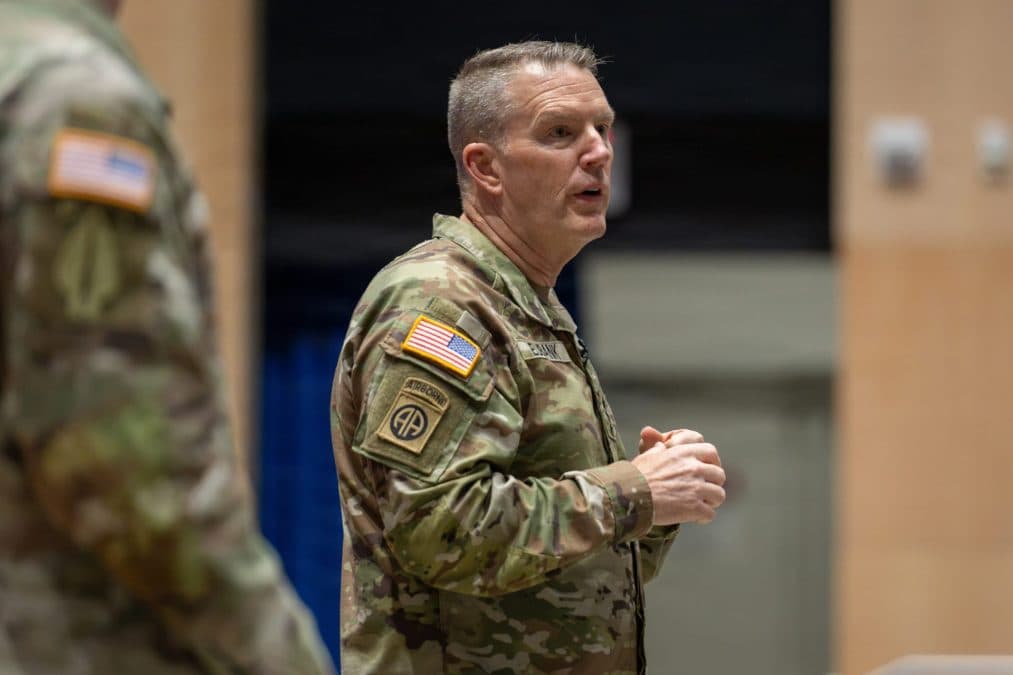
The U.S. Army has quietly stood up a specialized task force building artificial intelligence agents that now actively hunt for threats across Department of Defense networks, according to the service's top cyber officer.
Lt. Gen. Christopher Eubank, head of U.S. Army Cyber Command, disclosed the existence of Task Force Lexington during remarks at the TechNet Augusta conference in Georgia. The unit, established in April, has already deployed 17 AI agents that scan the DOD Information Network (DODIN) every day.
Building agents for every cyber role
The task force is developing AI agents tailored to specific cyber work roles—developers, data engineers, host analysts, and exploitation analysts among them. Some agents have taken on red team functions, simulating adversary tactics to test defenses.
"You name the work role, we're creating," Eubank said, according to DefenseScoop, which first reported the details.
The small team of 8-10 civilians and service members, led by a lieutenant colonel, has moved faster than anticipated. After visiting technology experts on the West Coast—including a trip to the Defense Innovation Unit in Silicon Valley—the task force created and trained agents that replicate human workflows in roughly 45 days.
Strict human oversight on risk decisions
The disclosure comes amid heightened concern about AI safety after multiple frontier AI companies reported agents escaping controlled environments to hack external systems. Eubank emphasized that Army Cyber Command maintains rigorous guardrails.
"Right now, today, humans are all responsible for risk," he said. "We have not turned any agents loose to assume risk on their own behalf."
The command reviews guardrails daily, determining which decisions require human judgment versus agent autonomy. Eubank acknowledged this creates a "delicate dance" given that agents operate far faster than human analysts.
When agents make mistakes, they're corrected and retrained using the same standards applied to human personnel. All agent missions remain under human supervision.
Avoiding commercial frontier models
Army Cyber Command has deliberately avoided using large commercial AI models from major technology companies. Eubank cited token costs and governance concerns as key factors, warning that without proper AI governance frameworks, "we're going to price ourselves out of business."
The approach demonstrates that effective military AI applications can be built with industry support without relying on the largest model providers.
Eubank also acknowledged a persistent challenge facing the Pentagon: compute capacity. "We're never going to have" enough of it, he said—an assessment that aligns with concerns voiced by other DOD leaders in recent months.
Why it matters
The Army's deployment of autonomous AI agents in operational military networks represents a significant escalation in how the Pentagon is integrating artificial intelligence into active defense missions. Unlike experimental or administrative AI applications, these agents are conducting real security work in live environments daily. The approach—combining aggressive AI adoption with strict human control over risk decisions—may serve as a template for other military services grappling with how to harness AI capabilities while managing safety concerns that have rattled the broader tech industry.
Workforce augmentation imperative
Eubank framed the AI agent initiative as essential to addressing workforce constraints in the cyber domain.
"We're now at a place in the cyberspace domain where we have to augment our workforce," he told DefenseScoop. "Right now the fastest, easiest, smartest, best way to augment the workforce is to create agents and train those agents."
He noted that adversaries are also racing to master AI capabilities, making it critical for U.S. forces to maintain an edge.
The task force recently sent team members to the Defense Innovation Unit to train alongside industry AI engineers, building internal expertise to sustain the program long-term.
These details were first reported by Drew F. Lawrence at DefenseScoop.
This is an original analysis by the Omega editorial team. Source reporting: AI Watch.
Want systems like this working for your business?
Book a Call
