Apple iPhone 18 Pro to Verify Photo Authenticity With Reference Images
The feature creates signed sensor data and unalterable reference files to combat AI-generated imagery in professional photography.
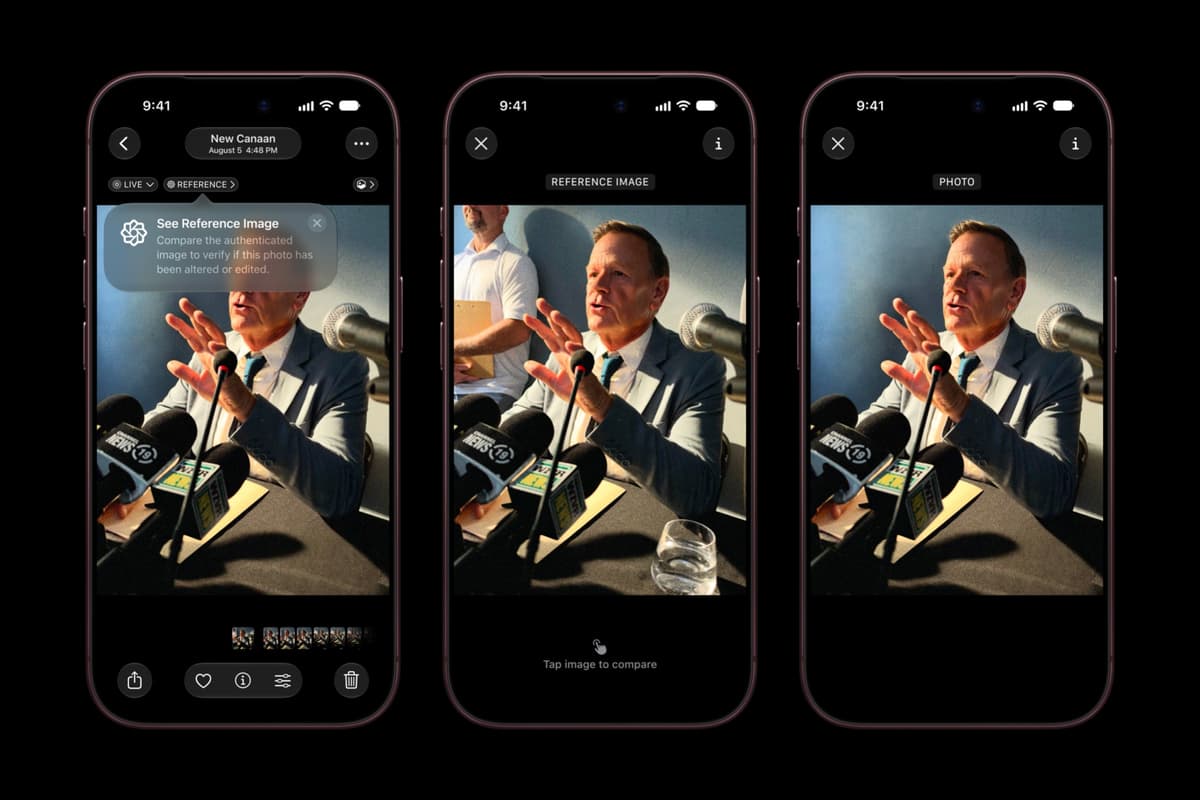
Apple unveiled a new authentication system designed to verify that iPhone photographs have not been manipulated by artificial intelligence or other editing tools, addressing growing concerns about image integrity in an era of synthetic media.
The company introduced Apple Reference Image during its Surprise and Shine event Wednesday, positioning the feature as essential infrastructure for photojournalists and professional photographers who need to establish the provenance of their work.
How the verification system works
When users capture a photo with the iPhone 18 Pro, the device's main camera sensor simultaneously records signed sensor data alongside the visible image. Apple's Private Cloud Compute service then processes this data to generate what the company describes as an "unalterable image" — essentially a cryptographically secured reference file.
This reference image functions similarly to a digital negative in traditional photography. Users can compare the reference file against any version of the photo to detect whether modifications have been applied, whether through AI tools, manual editing, or other means.
The reference images will initially be accessible only within Apple's native Photos app. However, the company plans to release application programming interfaces that will allow third-party developers to integrate the verification feature into their own photography and editing applications.
Why it matters
The proliferation of AI-generated and AI-altered imagery has created a credibility crisis in visual media. News organizations, legal proceedings, and scientific research all depend on verifiable photographic evidence. Apple's Reference Image system provides a technical foundation for establishing trust in digital photographs at the point of capture — before images enter the distribution chain where authenticity becomes harder to verify. For photojournalists working in conflict zones or covering sensitive events, the ability to cryptographically prove an image hasn't been manipulated could become a professional necessity.
Broader AI transparency efforts
Beyond its proprietary verification system, Apple announced support for SynthID, an emerging standard for identifying AI-generated or AI-modified content. This interoperability suggests Apple recognizes that image authentication will require industry-wide coordination rather than isolated solutions.
The dual approach — securing authentic captures while labeling synthetic content — reflects the technical reality that both human-created and AI-generated images will coexist in media ecosystems. The challenge lies in giving users reliable tools to distinguish between them.
The Reference Image feature will be exclusive to the iPhone 18 Pro line when those devices launch. Apple has not indicated whether the technology will expand to other iPhone models or its iPad lineup.
These details were first reported by TechCrunch.
This is an original analysis by the Omega editorial team. Source reporting: AI Watch.
Want systems like this working for your business?
Book a Call