Apple Built New Siri Using Google's Gemini AI as Training Data
The tech giant trained its proprietary models by refining outputs from Google's frontier AI, not by licensing Gemini directly.
Apple has revealed how it reconstructed Siri into a contextually aware AI assistant capable of understanding requests across apps and services—and the answer involves Google's technology, though not in the way many assumed.
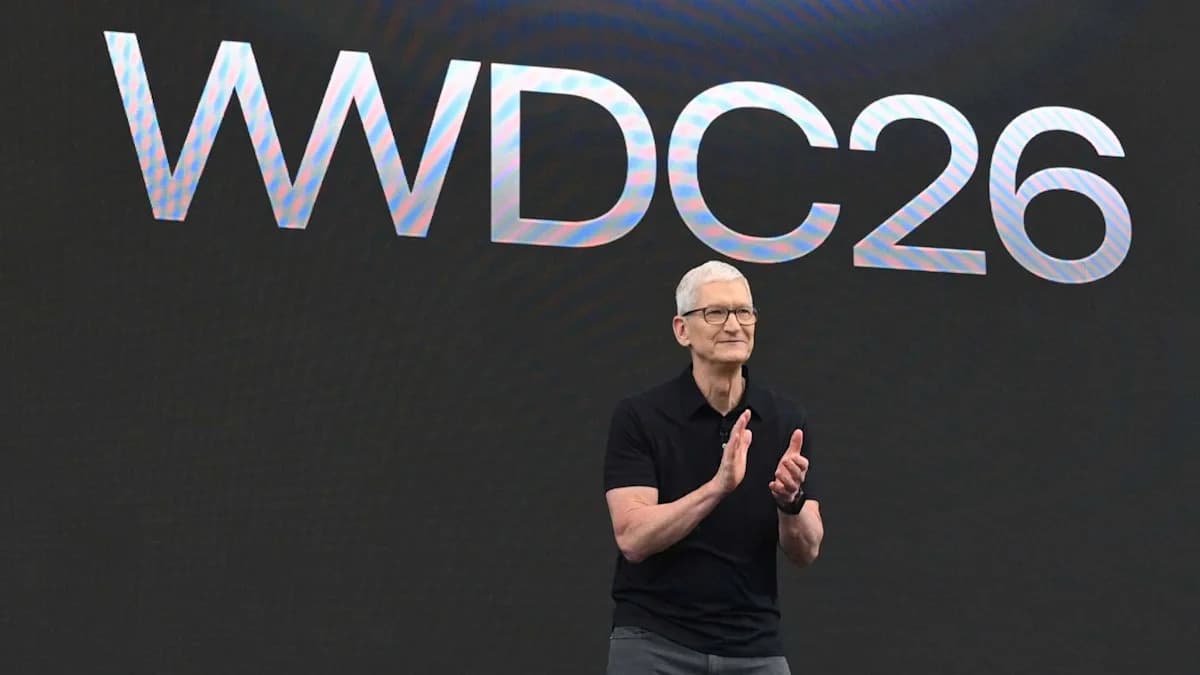
The company unveiled Siri AI at its Worldwide Developers Conference on Monday, positioning the update as a fundamental reimagining of its voice assistant after two years of development delays. The beta version will launch later this year.
How Apple used Google's AI
Apple and Google reached an agreement in January that allowed Apple to leverage Google's Gemini models in developing its enhanced Siri. The partnership came after Apple's internal AI models proved insufficient for the assistant's ambitions, according to details first reported by Bloomberg.
But Apple's software chief Craig Federighi made clear during a post-keynote Q&A that Siri AI is not simply rebranded Gemini technology. The distinction matters: Google's Gemini Assistant runs on multiple Gemini models including Flash-Lite, Flash, Pro, and Image variants, all grounded in Google Search for world knowledge.
Apple uses none of those components directly. "We use none of the models that Google deploys to their customers, nor do we use the infrastructure and means by which they employ models to their customers," Federighi explained. "When it comes to the knowledge base, we, of course, don't use Google Search or anything like that as the foundation of our system."
Instead, Apple built its own Apple Frontier Models (AFM) using proprietary training data and reinforcement learning techniques. The company then refined these models using outputs from Google's Gemini Frontier models as a training signal, according to Amar Subramanya, Apple's vice president of AI.
What Siri AI can do
The redesigned assistant aims to surface information contextually across Apple's ecosystem. Users will be able to ask Siri for a podcast their sister recommended via text message and receive the answer without manually opening Messages or a podcast app. The system is designed to recognize intent and pull relevant content from both on-device data and web sources.
Early demonstrations suggest Siri AI delivers on the vision Apple presented at WWDC 2024, when it first previewed its Apple Intelligence platform and the assistant's enhanced capabilities.
Why it matters
Apple's approach reveals a middle path in the AI arms race: rather than building frontier models from scratch or licensing them wholesale, the company used a competitor's cutting-edge AI as refinement data for its own proprietary systems. This strategy lets Apple maintain control over its technology stack and user privacy while still benefiting from advances in large language models. For enterprises evaluating AI partnerships, it demonstrates that training data arrangements can be as strategically valuable as direct model licensing.
Details of Apple's Siri AI development and its use of Google's technology were first reported by Bloomberg's Mark Gurman and discussed at Apple's WWDC event.
This is an original analysis by the Omega editorial team. Source reporting: AI Watch.
Want systems like this working for your business?
Book a Call