Apple Accelerates M7 Ultra Development for AI Server Hardware
The company is skipping M6 Pro, Max, and Ultra variants to focus on next-generation Neural Engine capabilities arriving in 2027.
Apple is bypassing planned variants of its upcoming M6 chip to accelerate development of the M7 generation, with the M7 Ultra positioned as the foundation for new server hardware capable of supporting up to 1.5TB of RAM, according to reporting by The Verge.
The company plans to skip Pro, Max, and Ultra versions of the M6 entirely, instead focusing resources on the M7 line expected to arrive in the first half of 2027. The M7 chips will feature significant upgrades to Apple's Neural Engine, the dedicated hardware that powers on-device AI processing across the company's product lineup.
Origins in the canceled car program
The Neural Engine's development traces back to Apple's abandoned self-driving car initiative. Early in that program's development, Apple engineers recognized the need for powerful on-device AI processing to handle autonomous driving workloads. Though the car processor was never completed, the research laid the groundwork for what became the Neural Engine.
That specialized AI hardware first appeared in the iPhone X's A11 Bionic chip, initially powering computer vision features like Face ID, Animoji, and augmented reality capabilities. Apple later brought the Neural Engine to desktop systems with the M-series chips, establishing an early hardware advantage in on-device AI processing even as the company's AI software efforts lagged competitors.
Why it matters
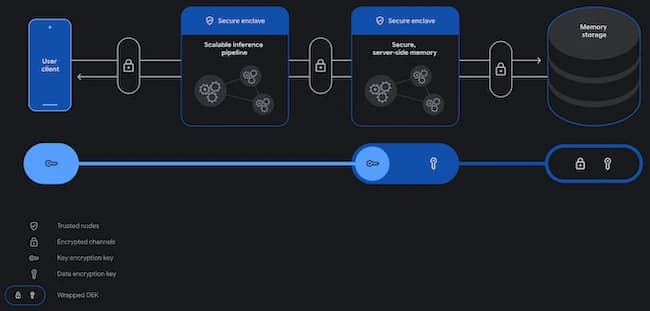
Apple's decision to accelerate M7 development and skip M6 variants signals a strategic pivot toward AI infrastructure. The M7 Ultra's 1.5TB RAM capacity positions Apple to compete in the AI server market, where massive memory bandwidth is essential for running large language models and other compute-intensive AI workloads. This move could reduce Apple's dependence on third-party cloud providers while supporting the company's privacy-focused approach to AI, which emphasizes on-device processing over cloud-based computation.
The Neural Engine architecture has become central to Apple's competitive positioning, enabling the company to market privacy advantages by processing more data locally rather than sending it to cloud servers. With AI workloads growing across consumer and enterprise applications, Apple's investment in specialized AI hardware represents a bet that custom silicon will provide differentiation in an increasingly crowded market.
The M7 Ultra's server-oriented specifications suggest Apple is preparing infrastructure to support both internal AI development and potentially customer-facing AI services that require substantial computational resources while maintaining the company's privacy commitments.
These details were first reported by Mark Gurman in his Power On newsletter and covered by The Verge.
This is an original analysis by the Omega editorial team. Source reporting: The Verge.
Want systems like this working for your business?
Book a Call