Anthropic Expands AI Data Center Push Into Australia and Japan
The AI lab is hiring for eight Asia-Pacific infrastructure roles as revenue surges and compute demand strains existing capacity.
Anthropic is accelerating its infrastructure buildout in the Asia-Pacific region, with eight of its 13 current compute department openings focused on Australia and Japan. The expansion comes as the AI lab works to support explosive growth that has strained its existing data center capacity.
The company is recruiting data center engineers, operators, and deal sourcers across both countries. In Japan, Anthropic is hiring for roles focused on sourcing data center deals and electrical engineering. Australia accounts for six openings, all centered on engineering and operations. One Australian listing specifically references "multi-hundred megawatt procurement efforts" tied to the company's "rapidly expanding AI compute footprint across the region."
Why it matters
Anthropic's geographic diversification reflects a broader industry shift as AI companies seek stable energy sources, favorable regulations, and geopolitical security for critical infrastructure. The company's $965 billion valuation and $47 billion revenue run-rate—up from approximately $9 billion at the end of 2025—underscore the commercial stakes driving this global data center race. Where AI labs place their compute capacity will shape which regions gain economic advantage and influence over the technology's development.
Strategic advantages of the region
Australia offers several attractions for AI infrastructure investment, according to David Wroe, head of the AI and Security Program at the Australian Strategic Policy Institute. The country provides excess land, abundant renewable energy potential, and political stability. Its membership in the Five Eyes intelligence partnership with the United States positions it as a trusted location for sensitive AI systems that increasingly function as national security assets.
Geographic distance from military threats also distinguishes Australia from other regions. Conflict in the Middle East has exposed vulnerabilities in Gulf state data centers, with two Amazon facilities targeted early in recent hostilities.
However, copyright laws present a significant obstacle. Current Australian regulations could expose AI companies to lawsuits from rights holders, and some politicians oppose copyright exemptions for commercial AI training.
Japan's infrastructure appeal
Japan attracts investment through its political stability, reliable power grid, developed internet infrastructure, and skilled technical workforce, according to Aalok Mehta, director of the Wadhwani AI Center at the Center for Strategic and International Studies. Microsoft announced a $10 billion Japan investment in April, while GMI Cloud unveiled a $12 billion sovereign AI project in March.
Yet energy access remains a critical challenge. Xiaonan Feng, principal analyst of APAC power and renewables at Wood Mackenzie, noted that "securing power is becoming more challenging than securing land, financing or permits" for data center developers across Asia-Pacific. "Grid availability is emerging as the defining constraint on data centre growth."
Compensation and talent competition
Anthropic's April listing for a London-based data center deal sourcing role offered £225,000 to £270,000 ($296,854-$355,253), reflecting intense competition for specialized infrastructure talent. Engineering and technical data center roles command rising salaries due to labor shortages.
In a May blog post, Anthropic said it would partner with "democratic countries whose legal and regulatory frameworks support investments of this scale, and where the supply chain on which our compute depends—hardware, networking, and facilities—will be secure."
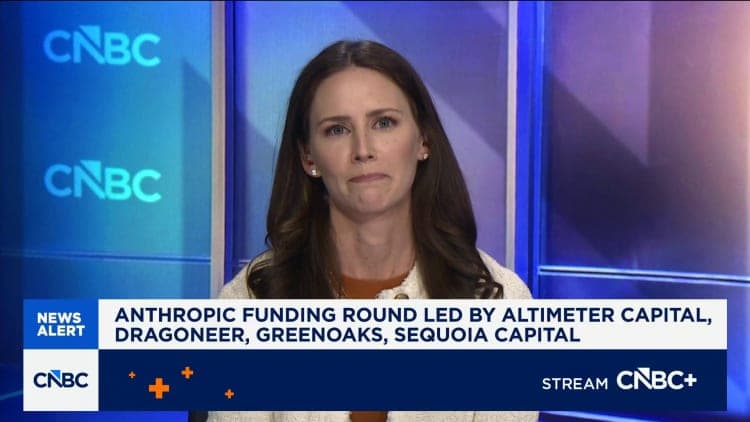
The company raised $65 billion in May at its current valuation. In April, it acknowledged that "growth at this pace places an inevitable strain on our infrastructure; our unprecedented consumer growth, in particular, has impacted reliability and performance."
These details were first reported by CNBC.
This is an original analysis by the Omega editorial team. Source reporting: AI Watch.
Want systems like this working for your business?
Book a Call