Anthropic Adds Watermarks to Claude Output Under EU AI Act
The company's compliance strategy marks AI-processed text and files globally, even when Claude only edits human-written content.
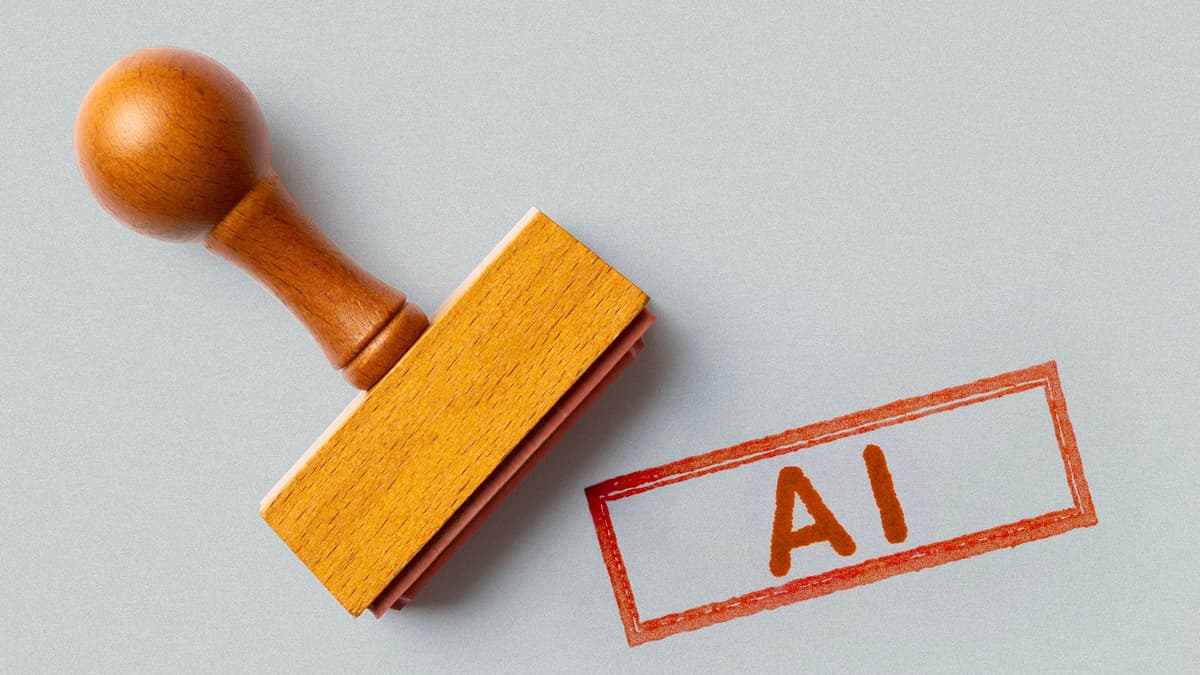
Anthropic will embed machine-readable watermarks into content produced by Claude models launched after August 2 in the European Union, a compliance measure that will apply to the AI assistant's output worldwide.
The San Francisco-based AI company is implementing two distinct watermarking approaches: invisible patterns woven into generated text, and digital signatures embedded in the metadata of media files. Both methods aim to help users and platforms identify when content has been touched by Claude, according to details first reported by Axios.
Why it matters
Communications professionals face an unexpected consequence: using Claude to polish, translate, or reformat human-written materials could flag those documents as AI-generated. The watermarking system cannot distinguish between content created from scratch by the model and text that Claude merely edited or formatted, potentially complicating workflows where AI serves as a production assistant rather than a primary author.
How the watermarking works
Anthropic describes its text watermarks as imperceptible patterns embedded during content generation. The company has not disclosed the technical mechanism, but the approach allows Anthropic's detection tools to identify Claude's involvement after the fact.
For files—including images, audio, and other media assets—Claude will insert digital signatures into metadata fields. These signatures provide cryptographic proof that the file passed through Claude's processing pipeline.
Both watermarking methods will be deployed wherever Claude operates, not just in EU markets where the regulations originate.
Known limitations
Anthropic acknowledged significant constraints in its detection capabilities. The watermarks may fail to survive heavy editing, become undetectable when Claude-generated text is mixed with other sources, or prove unreliable in short passages. Conversely, the system may flag content as AI-generated even when Claude's role was limited to proofreading or formatting work originally written by humans.
These edge cases create gray zones for organizations trying to maintain transparency about their use of AI tools while preserving credit for human authorship.
Regulatory context
The watermarking initiative responds to Article 50 of the EU AI Act, which requires providers of general-purpose AI models to disclose when content has been artificially generated or manipulated. Companies have until December 2 to bring existing models into compliance with the regulation.
OpenAI has outlined a similar compliance strategy, though its current watermarking efforts concentrate on images and audio rather than text. The divergent approaches suggest the industry has not yet settled on standard practices for text-based content identification.
Meanwhile, digital platforms are independently accelerating AI detection measures. LinkedIn is testing a feature that allows users to flag suspected AI-generated content, Substack has integrated Pangram's detection suite, and Snap has stopped promoting AI-generated video in its primary feed.
These parallel efforts by both AI providers and distribution platforms signal a regulatory-driven shift in how the technology industry approaches content authenticity and disclosure.
These details were first reported by Axios.
This is an original analysis by the Omega editorial team. Source reporting: AI Watch.
Want systems like this working for your business?
Book a Call
