Anthropic accuses Alibaba of massive AI model theft campaign
The AI company reported 28.8 million unauthorized queries through fraudulent accounts to a U.S. Senate committee.
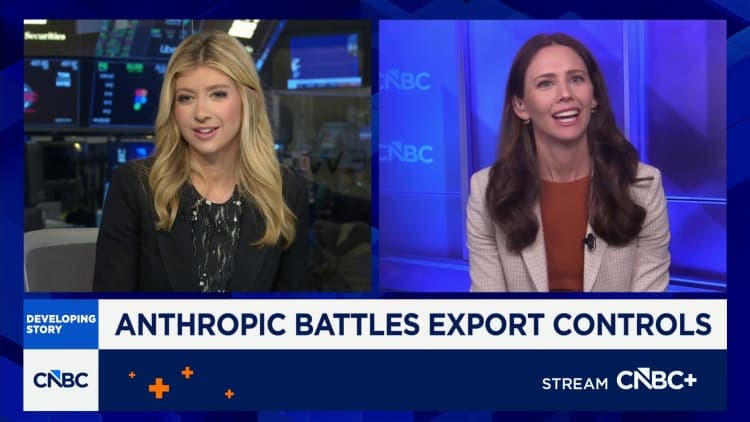
Anthropic reports industrial-scale AI extraction to Congress
Anthropic has formally accused Chinese technology giant Alibaba of conducting what it describes as the largest known attempt to extract its artificial intelligence capabilities through a technique called distillation, according to a letter the company sent to the U.S. Senate Committee on Banking, Housing, and Urban Affairs.
The June 10 letter, addressed to Senator Tim Scott and Senator Elizabeth Warren, detailed how operators connected to Alibaba and its AI research division executed 28.8 million exchanges with Anthropic's models between April 22 and June 5. The campaign relied on roughly 25,000 fraudulent accounts, according to details first reported by Bloomberg and confirmed by CNBC.
Distillation refers to an AI training method where developers build smaller, less capable models by feeding them outputs from more powerful existing systems. The technique allows organizations to replicate advanced AI capabilities without investing in the underlying research and computational resources.
Why it matters
The accusation represents a significant escalation in tensions over AI intellectual property and comes as the U.S. government attempts to maintain technological leadership against Chinese competition. The scale of the alleged operation—nearly 29 million queries through thousands of fake accounts—suggests a coordinated effort to systematically extract commercial AI capabilities. For enterprise leaders evaluating AI partnerships, the incident underscores the importance of understanding how model providers detect and prevent unauthorized access to their systems.
Pattern of distillation campaigns
This is not the first time Anthropic has identified large-scale distillation efforts. In February, the company disclosed three separate industrial-scale campaigns from Chinese AI labs: DeepSeek, Moonshot, and MiniMax. At that time, Anthropic noted the campaigns were growing in both intensity and sophistication, and called for coordinated action across the AI industry, cloud infrastructure providers, and government policymakers.
The latest incident occurred despite warnings from the White House Office of Science and Technology Policy, which issued a memorandum in April pledging to help AI companies detect and coordinate against industrial-scale distillation. Anthropic stated in its letter that Alibaba "ignored the Trump Administration's warnings" by proceeding with the attacks.
Complicated government relationship
Anthropic's engagement with policymakers has become more complex in recent weeks. Earlier this month, the company received an export control directive from the Trump administration ordering it to suspend access to its latest Claude models—Fable 5 and Mythos 5—for any foreign national, including foreign employees working at Anthropic itself.
The government invoked national security authorities but did not specify the underlying concern. Anthropic sent senior staff to Washington for meetings with administration officials, and the company indicated both parties are working to resolve the matter, though no timeline has been provided for when the models might return to full availability.
Alibaba did not immediately respond to requests for comment on the distillation allegations. An Anthropic spokesperson said the company believes "combating the threat of illicit distillation requires coordinated action between government and industry" and will continue working with Congress and the administration to maintain American AI leadership.
Details of the Alibaba allegations and Anthropic's export control challenges were confirmed by CNBC.
This is an original analysis by the Omega editorial team. Source reporting: AI Watch.
Want systems like this working for your business?
Book a Call