AmpliTech's 64T64R Radio Passes O-RAN PlugFest, NVIDIA AI-RAN Demo
The U.S.-based RF hardware maker completed multi-vendor testing as the only American supplier at that specification, but faces customer concentration risk.
AmpliTech demonstrates Open RAN radio at spring PlugFest
AmpliTech Group participated in the O-RAN ALLIANCE Global PlugFest Spring 2026, where its CAT B 64T64R Massive MIMO radio completed successful multi-vendor interoperability testing. The company was the only U.S.-based supplier to field a radio at that specification during the event, according to details first reported by AI Watch.
The radio also supported what organizers described as the world's first open-source Massive MIMO AI-RAN demonstration, conducted in collaboration with NVIDIA and Northeastern University. These technical validations position AmpliTech as a domestic alternative in the Open RAN ecosystem, which aims to disaggregate traditional cellular infrastructure through standardized interfaces.
Revenue guidance and customer concentration
AmpliTech has reaffirmed fiscal 2026 revenue guidance of at least $50 million. The company's narrative projects revenue reaching $103.3 million and earnings of $33.4 million by 2029, implying 56.5 percent annual revenue growth and a $40.1 million improvement from current losses of $6.7 million.
The investment case hinges on converting early technical wins into sustained commercial deployments. Revenue remains concentrated among a small number of Tier 1 customers, which introduces volatility if orders shift or delay. Expanding the customer base beyond a handful of large contracts represents a key test for the company's Open RAN and AI-RAN momentum.
Why it matters
Open RAN adoption by mobile operators and cloud providers creates demand for interoperable radio hardware that can work across multi-vendor networks. A U.S.-based supplier with validated 64T64R capability and AI-RAN integration addresses both technical requirements and supply-chain preferences for domestic sourcing. However, the path from PlugFest validation to production deployments at scale remains uncertain, and customer concentration amplifies execution risk for investors evaluating the stock's current valuation.
Valuation and analyst views
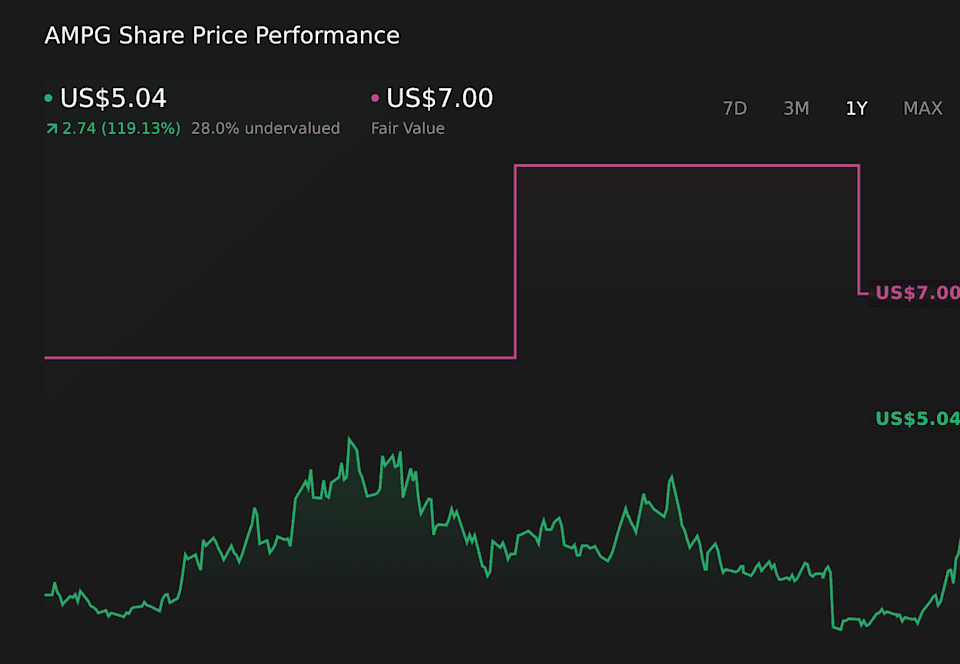
Fair value estimates from the Simply Wall St Community range from $6.01 to $7.76 per share. One analysis cited a $7.00 fair value, representing an 8 percent downside to the current price. The tight range reflects agreement on near-term fundamentals but varied assumptions about how quickly AmpliTech can diversify its revenue sources and achieve profitability.
The PlugFest results and NVIDIA collaboration strengthen the technology narrative for AmpliTech's RF hardware in AI-RAN and space-focused infrastructure. Converting those capabilities into repeat orders from a broader set of telecom and cloud customers will determine whether the company can support its growth projections and reduce dependence on a concentrated customer base.
These details were first reported by AI Watch.
This is an original analysis by the Omega editorial team. Source reporting: AI Watch.
Want systems like this working for your business?
Book a Call