Amazon Tests AI System to Redeploy Workers in Real Time
Internal documents show Full Facility Load Balancing could eliminate 7 million labor hours annually by automating staffing decisions.
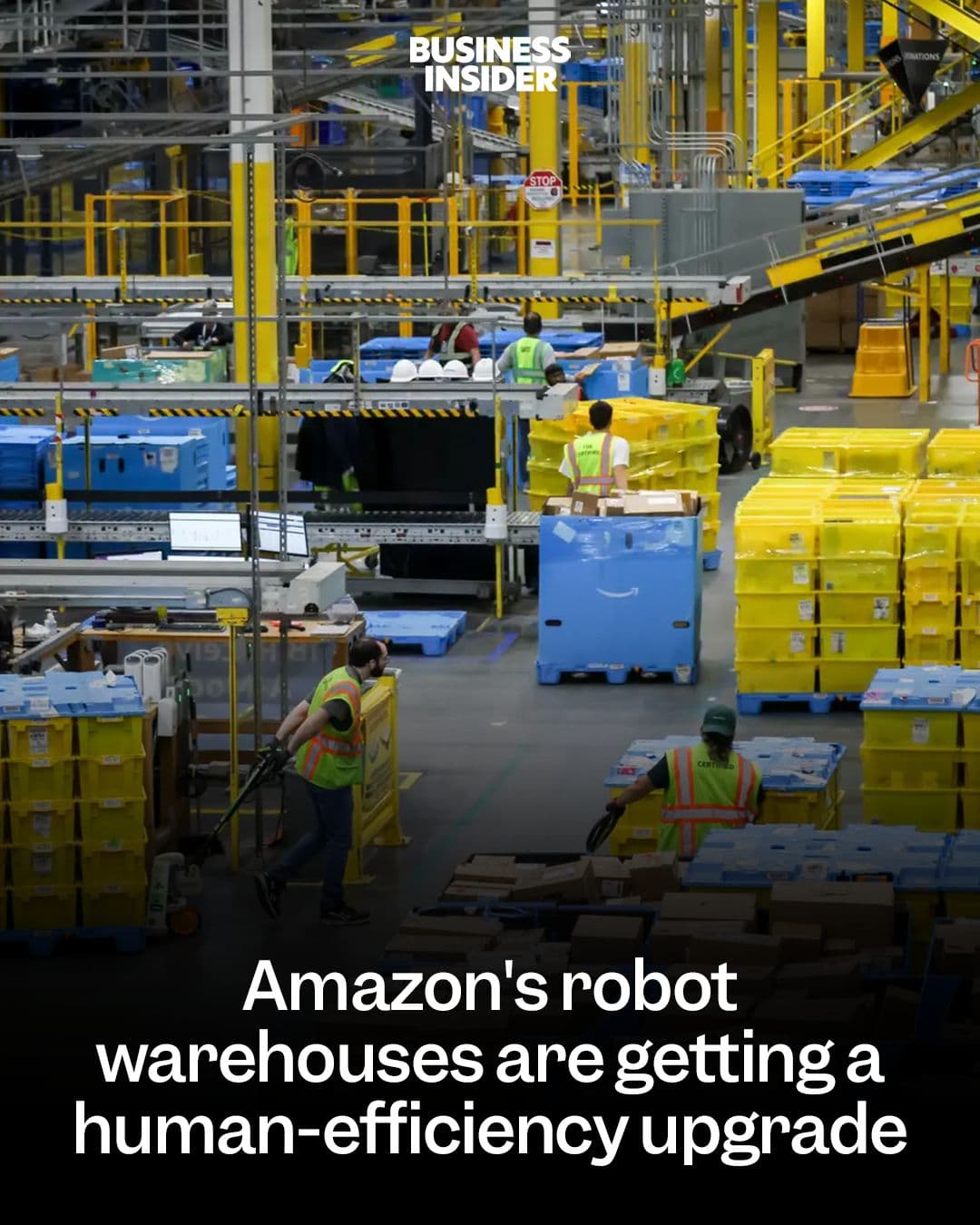
Amazon automates worker deployment in robot-heavy warehouses
Amazon is testing technology that automatically moves human workers between tasks as package volumes fluctuate throughout the day, marking a new phase in the company's efficiency push beyond robotic automation alone.
The system, called Full Facility Load Balancing (FFLB), operates in Amazon's newer robot-equipped warehouses and aims to eliminate manual staffing decisions by supervisors. According to internal planning documents reviewed by Business Insider, the technology reassigns employees dynamically as workloads shift across different areas of a fulfillment center.
Internal projections estimate FFLB could recover approximately $193 million in annual labor costs while cutting nearly 7 million labor hours each year if successfully deployed at scale across Amazon's e-commerce operations.
Why it matters
This represents a significant evolution in warehouse optimization strategy. While Amazon has invested heavily in robotics to move packages faster, FFLB targets the human side of operations—how workers themselves move through facilities. The technology could reshape warehouse management by removing human judgment from real-time staffing allocation, raising questions about worker autonomy and the future role of supervisory staff. For competitors in logistics and retail, it signals that labor optimization software may deliver returns comparable to physical automation investments.
Shifting from package movement to people movement
Amazon's warehouse automation efforts have historically concentrated on robotic systems that transport inventory and packages. The company's facilities now feature extensive networks of autonomous mobile robots, conveyor systems, and sortation technology.
FFLB marks a different approach by treating worker deployment as an optimization problem. Rather than having managers manually shift employees between packing, sorting, and other stations based on observed bottlenecks, the system makes those decisions algorithmically based on real-time data about package flow and task completion rates.
The technology is currently in pilot phase at select facilities. The internal documents indicate Amazon is evaluating performance before determining whether to expand FFLB across its broader warehouse network.
Labor efficiency at scale
The projected 7 million hour reduction represents a substantial efficiency gain even for a company of Amazon's size. Those hours translate to the equivalent of thousands of full-time positions, though the documents viewed by Business Insider don't specify whether the savings would come from reduced hiring, redeployed labor, or other mechanisms.
The $193 million annual cost recovery figure suggests Amazon sees FFLB as complementary to its robotic investments rather than a replacement for them. The system appears designed to maximize productivity from the human workforce that remains necessary even in highly automated facilities.
Details about the technology were first reported by Business Insider based on internal Amazon planning documents.
This is an original analysis by the Omega editorial team. Source reporting: Automation Watch.
Want systems like this working for your business?
Book a Call