Amazon Tests AI System to Automate Worker Assignments in Warehouses
Internal documents reveal Full Facility Load Balancing could eliminate nearly 7 million labor hours annually by dynamically reassigning employees every three minutes.
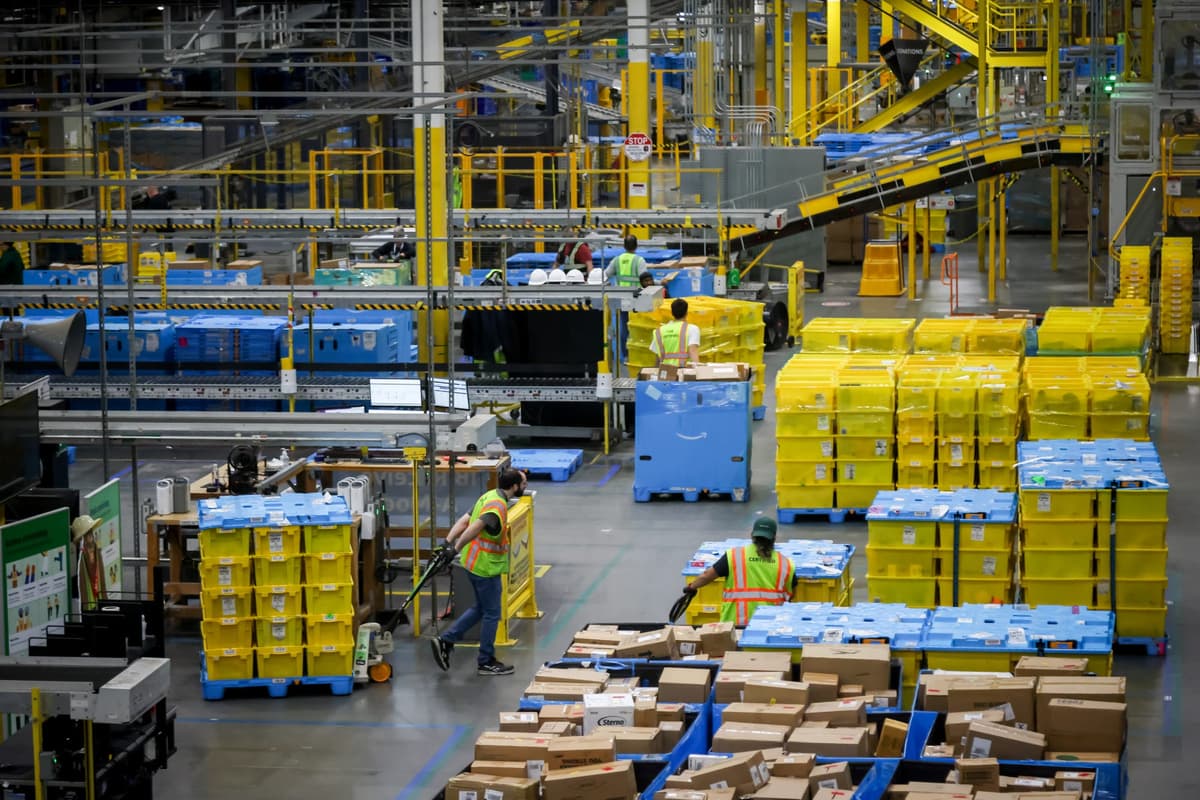
Amazon is testing automation technology that shifts how warehouse managers deploy human workers throughout their shifts, applying the same algorithmic approach the company has long used to route packages.
The system, called Full Facility Load Balancing (FFLB), automatically reassigns employees as package volumes fluctuate during the day. Internal planning documents estimate the technology could eliminate nearly 7 million labor hours and recover approximately $193 million in labor costs each year.
How the system works
FFLB continuously monitors package volumes, forecasts, and operational signals to calculate staffing requirements across different warehouse zones. The system recalculates these needs roughly every three minutes and recommends moving workers when it detects overstaffing in one area and shortages in another.
According to the internal documents, the technology "dynamically calculates the recommended headcount for different process segments and automatically assigns and balances associates between roles."
An Amazon spokesperson characterized FFLB as a tool to help managers respond faster to changing conditions, not replace human decision-making. The company described it as a natural extension of existing staffing software rather than an entirely new invention.
Why it matters
This initiative marks a strategic evolution in warehouse automation. While Amazon has spent years optimizing how robots move packages, the company is now applying similar algorithmic management to human labor deployment—a shift that could reshape how fulfillment center work is organized. The technology also raises questions about manager autonomy and worker experience as software increasingly dictates job assignments in real time.
Targeting Container Build operations
Amazon identified Container Build—where workers place packages into outbound carts and containers—as its "single largest labor automation opportunity." This function accounts for a substantial portion of labor hours at robotics-enabled fulfillment centers.
Internal analysis of 97 fulfillment centers found 48 facilities operating below productivity targets, generating roughly 309,000 excess labor hours monthly. Another 266,000 monthly hours were attributed to workers assigned to stations with minimal or no available work.
The company estimates that 25% of Container Build labor time involves overstaffing and projects FFLB could reduce unproductive labor in this function by approximately 40%.
Amazon is also tracking a metric called "No WIP" (no work in progress), which measures workers at stations without active tasks. This figure increased from 4.2% to 5.6% for Container Build functions, and the documents identify FFLB as the primary solution.
Deployment and challenges
Amazon has begun deploying FFLB at dozens of warehouses and plans to expand it to all North American robotics-enabled fulfillment centers this year. The company also intends to extend the system beyond Container Build to additional warehouse functions.
Internal documents indicate some managers have struggled with the transition, frequently requesting configuration changes or feature disablement. Amazon characterized these concerns as reflecting a learning curve with new technology.
The Amazon spokesperson disputed the projected savings figures, calling them "inaccurate" because they were based on hypothetical modeling rather than measurements of actual productivity. The spokesperson also said the analysis captured fluctuations in package flow and worker assignments, not individual employee productivity or workers standing idle.
These details were first reported by Business Insider, which reviewed internal Amazon planning documents.
This is an original analysis by the Omega editorial team. Source reporting: Automation Watch.
Want systems like this working for your business?
Book a Call