Amazon One Medical's AI Prescription Service Sparks Debate
A viral video highlights how AI triages patient symptoms before physicians approve prescriptions, raising questions about automation in healthcare.
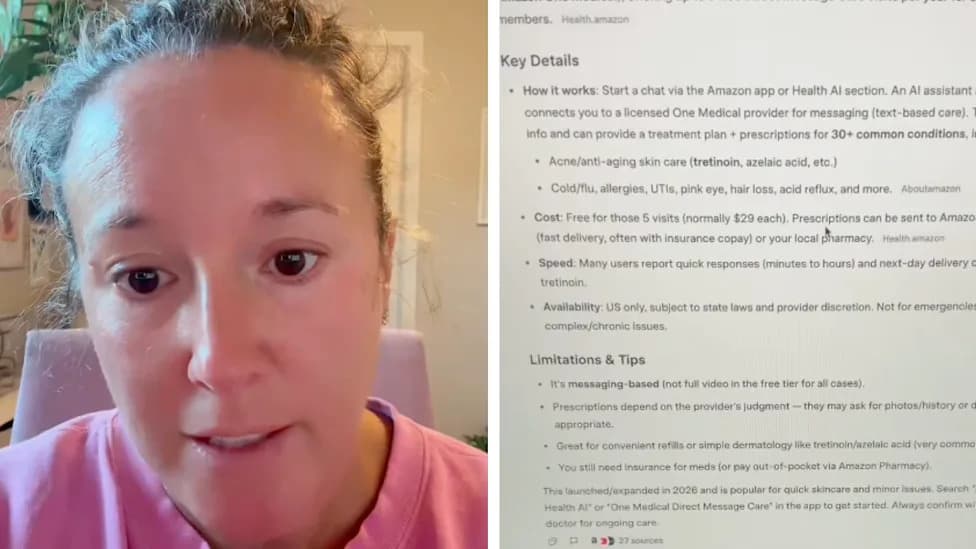
Amazon's AI-assisted prescription service draws scrutiny
A video circulating on social media has ignited debate over Amazon One Medical's Direct Message Care feature, which uses artificial intelligence to help patients obtain prescriptions for common medical conditions. The service allows patients to describe symptoms through an online questionnaire, which AI evaluates before forwarding to licensed providers.
According to the video, which AI Watch reported, the system handles conditions including hair loss, sexual dysfunction, cold and flu symptoms, urinary tract infections, dermatological issues, and eye conditions. Once a provider reviews the AI-processed information, prescriptions can be sent to pharmacies within a day.
How the system works
The AI component analyzes patient medical records, reported symptoms, and questionnaire responses before passing the information to human physicians. While the system recommends in-person visits when appropriate, it can facilitate prescription fulfillment through local or Amazon pharmacies for qualifying cases.
Critics question whether AI possesses the nuanced understanding that human physicians develop through training and experience. Medical conditions often present differently across patients, and symptoms described online may not capture the full clinical picture that an in-person examination would reveal.
Why it matters
This debate reflects a broader tension in healthcare technology: balancing accessibility with quality of care. For patients struggling to reach their regular physicians, AI-assisted services offer faster access to treatment. However, the approach raises fundamental questions about diagnostic accuracy and whether convenience should outweigh traditional medical evaluation protocols. As healthcare systems face capacity constraints, these AI-augmented models will likely proliferate, making the discussion about appropriate guardrails increasingly urgent.
Divided perspectives
Responses to the service have been mixed. Some users emphasized that licensed physicians ultimately review all cases and write prescriptions—the AI merely handles intake and triage. One commenter suggested a tiered approach based on medication classification, with AI handling straightforward cases independently while requiring increasing human oversight for more complex or controlled substances.
Others expressed concern about whether the system truly supports physicians or simply processes patients more efficiently without improving care quality. The convenience for patients is clear, but the impact on the physician-patient relationship and diagnostic thoroughness remains contested.
AI Watch first reported these details based on the viral video, publicly available information about Amazon One Medical, and social media commentary. The publication noted it could not independently verify all claims made in the original video.
This is an original analysis by the Omega editorial team. Source reporting: AI Watch.
Want systems like this working for your business?
Book a Call