AMA CEO Disputes Study Claiming AI Will Outperform Doctors
A JAMA paper argues AI-only care will surpass physicians within years, but medical leaders say the evidence doesn't support such sweeping conclusions.
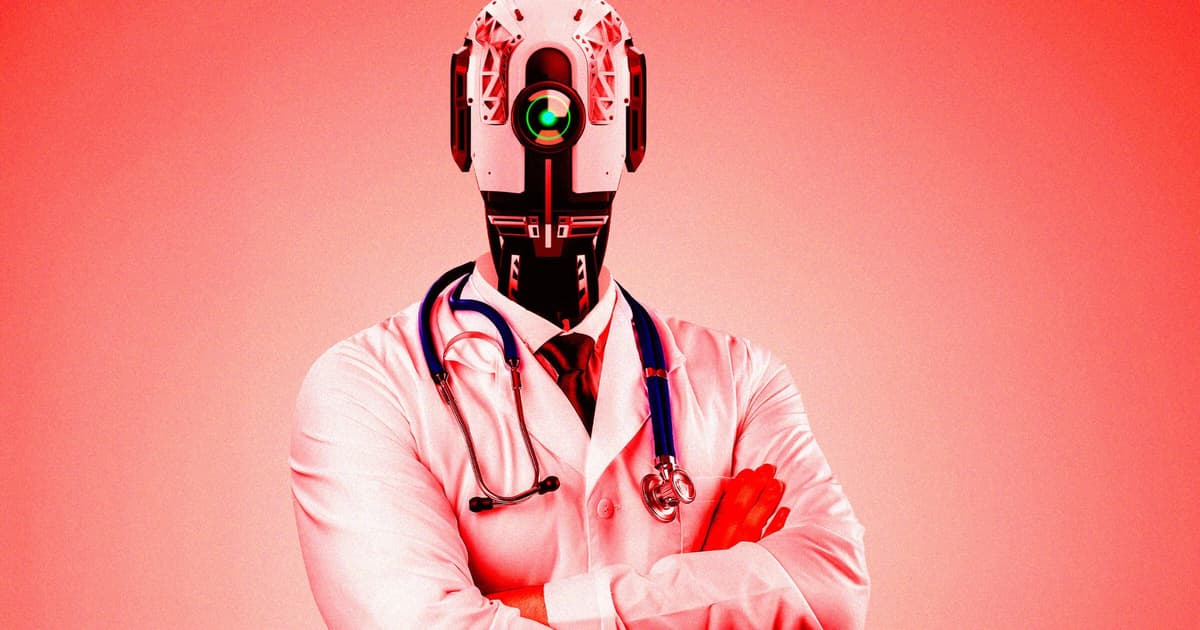
A provocative paper published this month in the Journal of the American Medical Association has ignited debate over AI's role in healthcare, with the CEO of the American Medical Association directly challenging its central claim that artificial intelligence will soon provide better patient care without human physicians.
The study, authored by bioethicist Ezekiel Emanuel and venture capitalist Vinod Khosla, surveyed hundreds of existing research papers and concluded that "AI-alone medical care is likely to be better than physician-only or physician-AI hybrid care" in cognitive medical functions. The authors argue AI already outperforms doctors in five fundamental areas: gathering medical information from patients, diagnosis, diagnostic testing, and managing chronic diseases.
Why it matters
This debate extends beyond academic disagreement. As healthcare systems face physician shortages and rising costs, the question of whether AI can safely operate independently—rather than as a clinical support tool—has direct implications for patient safety, medical liability, and the future structure of healthcare delivery. The dispute also highlights a recurring pattern in AI deployment: bold claims from technology advocates meeting skepticism from domain experts who understand the complexity of real-world implementation.
Methodological concerns
John Whyte, CEO of the American Medical Association, raised specific objections to the paper's methodology. According to Wired, which first reported the pushback, Whyte noted that some studies cited were simulations rather than blinded experiments—the gold standard in medical research. He also pointed to contradictory evidence within the paper's own sources, including a Nature article from February showing most patients struggled to obtain needed expertise from AI chatbots.
"The AMA does see the potential in these tools, but they have to be utilized in the context of a care plan that's governed by a physician," Whyte stated.
The deskilling argument
The JAMA paper makes an additional controversial claim: that human-AI collaboration may actually worsen outcomes compared to AI operating alone, because physicians become "deskilled" through dependence on AI tools. The authors project this gap will widen over the next four years as AI capabilities advance while human skills atrophy.
There is evidence of AI adoption accelerating in medicine. Internal data from OpenEvidence, an AI chatbot designed for clinicians, suggests roughly two-thirds of U.S. physicians now use the tool. Senior doctors have expressed concern about medical students' growing reliance on AI assistance.
A more measured view
Robert Wachter, head of medicine at the University of California, San Francisco, offered a nuanced perspective. While acknowledging that AI-human collaboration currently produces better results, he told Wired there may eventually be scenarios where "humans will muck up the performance."
Still, Wachter emphasized that highly trained physicians will remain essential, comparing fears of doctor obsolescence to the "doorman fallacy"—the mistaken belief that automatic doors would eliminate doormen, who instead evolved to provide services machines cannot replicate.
The debate reflects a broader pattern in AI development, where ambitious claims often face scrutiny upon closer examination. A recent study claiming ChatGPT produced "large positive impact" on learning was retracted by publisher Springer Nature after major analytical discrepancies were discovered.
Details of the dispute were first reported by Wired.
This is an original analysis by the Omega editorial team. Source reporting: AI Watch.
Want systems like this working for your business?
Book a Call