Altman Disputes AI Water Usage Concerns, Cites Data Center Data
The OpenAI CEO argues modern facilities consume no more water than office buildings, while critics point to regional water stress.
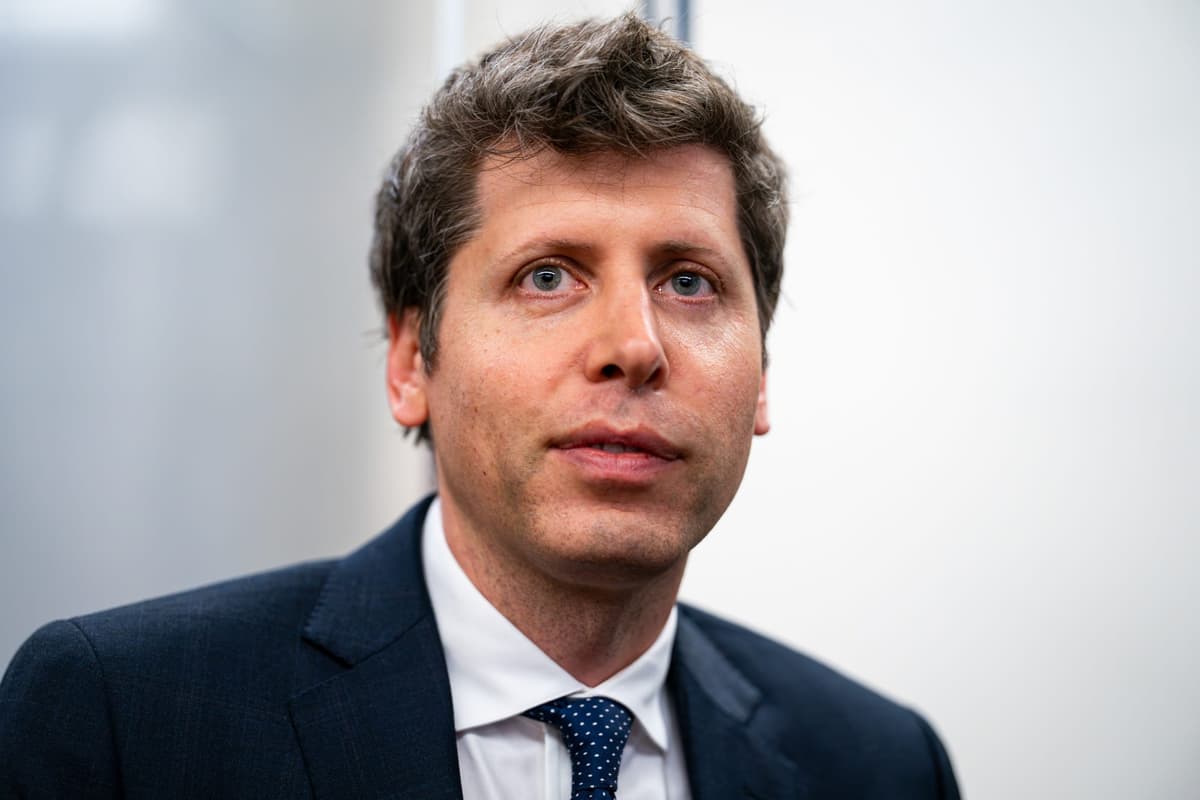
OpenAI CEO challenges water consumption narrative
Sam Altman has pushed back against widespread concerns about artificial intelligence's water footprint, calling worries about data center consumption a persistent but inaccurate "meme" that doesn't withstand scrutiny.
Speaking on the Sources podcast with Alex Heath, Altman pointed to a 2024 Virginia state government commission report showing most data centers use the same amount of water or less than a typical large office building. Virginia hosts a significant concentration of data center facilities, making its findings particularly relevant to the national conversation.
The public perception problem
The disconnect between industry claims and public sentiment remains stark. A Gallup survey from May revealed that 71% of Americans oppose data center construction in their communities, with 70% citing environmental concerns. Half of respondents specifically worried about resource consumption, and 18% named water as a primary concern.
Altman acknowledged this perception gap, noting that despite data showing comparable water use to office buildings, the reputation has proven "difficult to disprove."
Comparing AI queries to agriculture
To illustrate his point, Altman drew a comparison to California almond farming, a notoriously water-intensive agricultural practice. He claimed that growing a single almond requires more water than thousands of ChatGPT queries.
Available research supports the general magnitude of this comparison. Altman has previously stated the average ChatGPT query uses approximately 0.32 milliliters of water, while Google reports Gemini text prompts consume about 0.26 milliliters. A 2019 study by researchers affiliated with the US Geological Survey found that growing one California almond requires an average of 3.56 liters of water—roughly a gallon per nut.
Regional water stress remains a concern
While Altman's office-building comparison may hold for many facilities, the picture is more complex in water-stressed regions. Business Insider previously reported that data centers have contributed to water crises in the Western United States, partly due to evaporative cooling techniques that consume significant volumes.
The Data Center Coalition, an industry trade group, maintains that developers employ various cooling methods, including closed-loop and waterless systems, and prioritize water efficiency based on local availability.
Why it matters
The debate over AI infrastructure's environmental impact will shape where and how quickly the technology can expand. As companies race to build computing capacity for AI models, community opposition based on resource concerns could slow deployment in key markets. Altman's acknowledgment that the industry must "deliver value" to win public support suggests OpenAI recognizes that technical rebuttals alone won't resolve the tension between AI growth and local environmental priorities.
Altman concluded that changing public perception requires demonstrating clear benefits: "I think the right way to get people to like something is to deliver them value," adding that the industry needs to make AI products easier to use and more obviously valuable.
These details were first reported by Business Insider.
This is an original analysis by the Omega editorial team. Source reporting: AI Watch.
Want systems like this working for your business?
Book a Call
