Alibaba to Build AI Model With Up to 10 Trillion Parameters
Chinese tech giant also unveils what it calls the country's most powerful AI chip, targeting 2027 mass production.
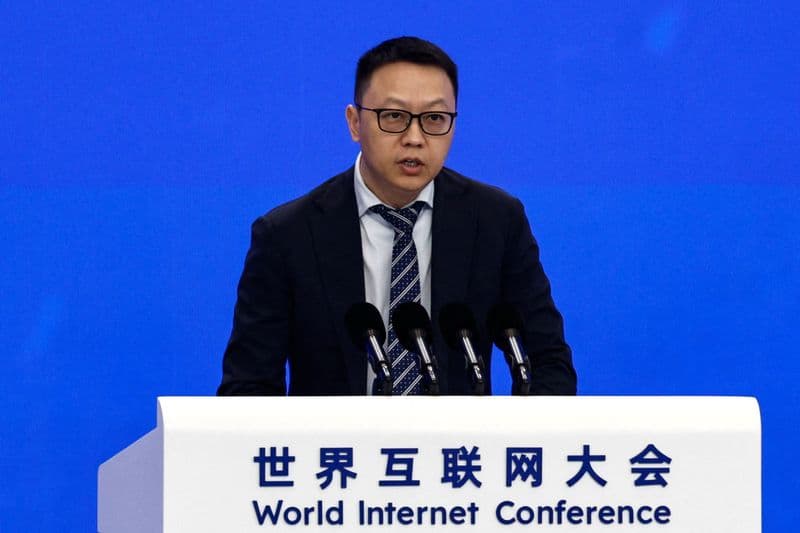
Alibaba Targets Massive AI Model as China Races for Chip Independence
Alibaba Group announced plans to develop an artificial intelligence model containing between 5 trillion and 10 trillion parameters—up to four times larger than its current flagship system—as the Chinese technology giant accelerates its push across the entire AI stack. The company also introduced the Zhenwu V900, a new AI processor it describes as China's most powerful chip to date.
The dual announcements, made at Alibaba Cloud's annual Apsara conference in Hangzhou, sent the company's Hong Kong-listed shares up 5.1 percent to their highest level in a month, according to details first reported by Reuters.
Why it matters
Alibaba's chip and model ambitions reflect China's broader strategic imperative to build domestic AI infrastructure as U.S. export restrictions tighten access to advanced semiconductors from Nvidia and other Western suppliers. The scale of the planned model—potentially reaching 10 trillion parameters—would position it among the world's largest AI systems, though parameter count alone doesn't guarantee superior performance. For enterprises watching the global AI race, these moves signal that Chinese firms are investing heavily in both the silicon and software layers needed for competitive large-scale AI deployment.
Pursuing Artificial Superintelligence
Chief Executive Eddie Wu said Alibaba's Qwen team plans to train the new model to handle "more complex, longer-horizon tasks" as part of the company's pursuit of artificial superintelligence—AI that surpasses human capabilities. Alibaba's current flagship model, Qwen 3.8 Max, contains 2.4 trillion parameters, which serve as a rough proxy for an AI system's size and capability.
In a separate statement, Alibaba confirmed it is currently training Qwen 4, with future iterations Qwen 4.5 and Qwen 5 expected to scale to the 5-10 trillion parameter range. Wu noted that the Qwen team has made meaningful progress in developing models that can improve themselves by identifying weaknesses, conducting experiments, and generating training data with limited human involvement.
Wu predicted machines would eventually produce more than 1,000 times the "thinking" of all humanity, up from less than 3 percent today, calling the current moment comparable to the Industrial Revolution.
New Chip Targets 2027 Production
The Zhenwu V900 chip, developed by Alibaba's T-Head semiconductor unit, delivers three times the performance of its predecessor, the M890, which launched in May. Wu said the processor can be linked in clusters of up to 500,000 chips to train and run the largest AI models.
The chip is scheduled for mass production and commercial release in the first quarter of 2027. Wu said Alibaba expects "significant growth" in annual AI chip shipments as Chinese technology companies race to develop domestic alternatives to Nvidia's processors amid tightening U.S. export controls.
Capacity Expansion Despite Constraints
Wu set a target for Alibaba Cloud's global data center capacity to surpass 20 gigawatts by 2032, noting that customer demand for AI is "exceptionally robust" and accelerating the cloud division's revenue growth. However, he acknowledged that supply chain constraints limit the pace of expansion.
"The industry's mid-to-long-term demand far outpaces our supply capabilities," Wu said, adding that Alibaba Cloud would begin bringing its AI supernodes online at commercial scale this quarter.
Wu compared AI coding to the light bulb of the electrical age—an early application rather than the breakthrough product that would define the era.
These details were first reported by Reuters correspondents Liam Mo and Eduardo Baptista.
This is an original analysis by the Omega editorial team. Source reporting: AI Watch.
Want systems like this working for your business?
Book a Call